Get your free personalized podcast brief
We scan new podcasts and send you the top 5 insights daily.
Waabi's CEO argues that achieving Level 4 (eyes-off) autonomy isn't a linear progression from Level 2 (driver-assist). They are entirely different safety problems. L4 requires a purpose-built technology stack from day one, as the absence of a human driver introduces challenges that cannot be solved by simply improving an L2 system.

Related Insights
Creating the Dot delivery robot wasn't just a hardware challenge. DoorDash had to build the vehicle hardware, a custom L4 autonomy software stack, integrate them, and then plug the entire system into its complex logistics and merchant platform—a multi-year, first-principles effort.

Frame AI independence like self-driving car levels: 'Human-in-the-loop' (AI as advisor), 'Human-on-the-loop' (AI acts with supervision), and 'Human-out-of-the-loop' (full autonomy). This tiered model allows organizations to match the level of AI independence to the specific risk of the task.

Unlike typical tech development that focuses on capabilities first, Waymo embeds safety as a "non-negotiable foundation" from the start. This means building safety into the model architecture and team mindset, as the approach to achieving 90% performance is fundamentally different from reaching the final "nines" of reliability.
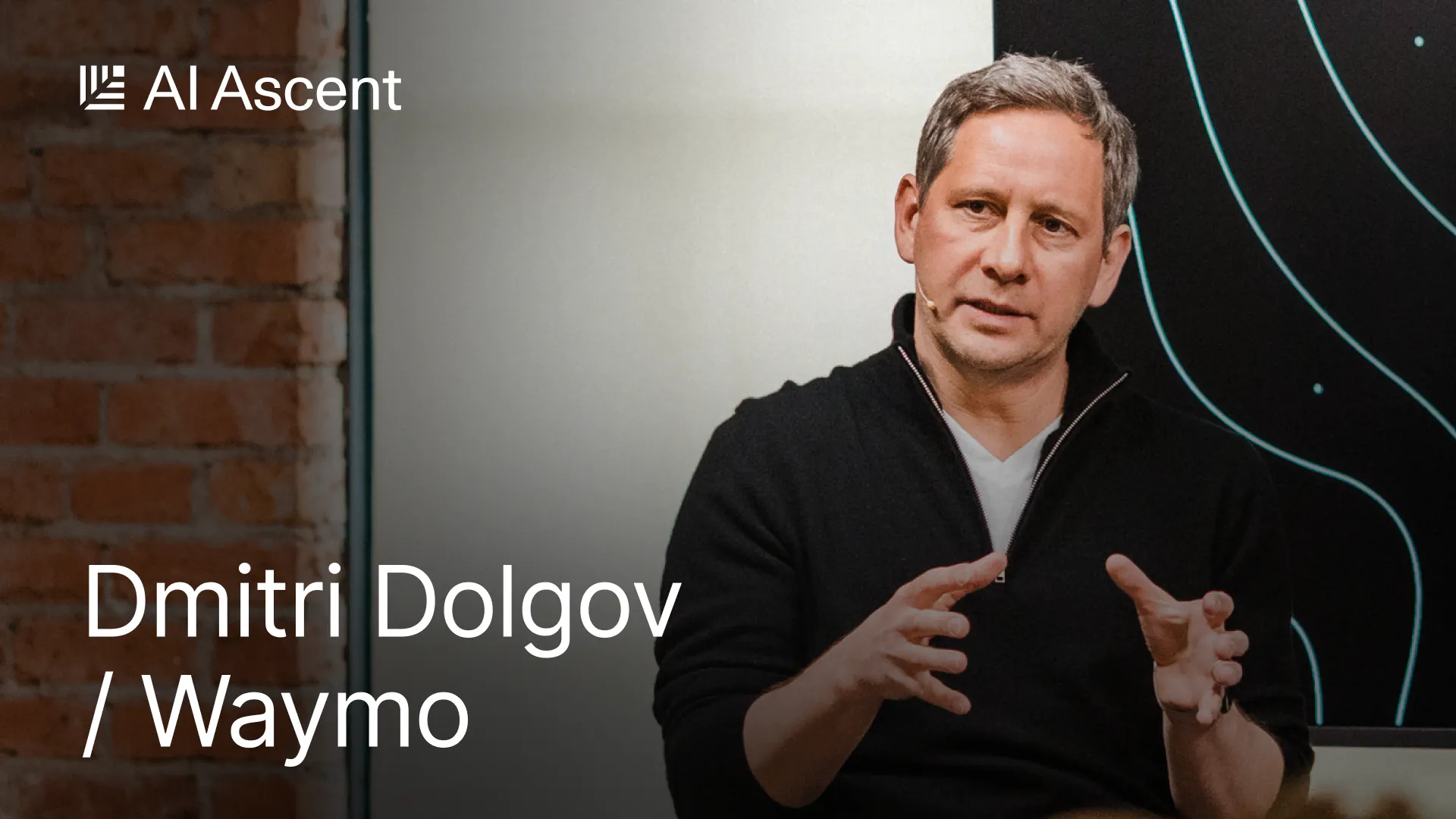
Waymo's co-CEO argues that Level 4/5 autonomy will not emerge by incrementally improving Level 2/3 driver-assist systems. The hardest challenges of operating without a human driver are entirely absent in assist systems, requiring a "qualitative jump" and a completely different approach from the outset.
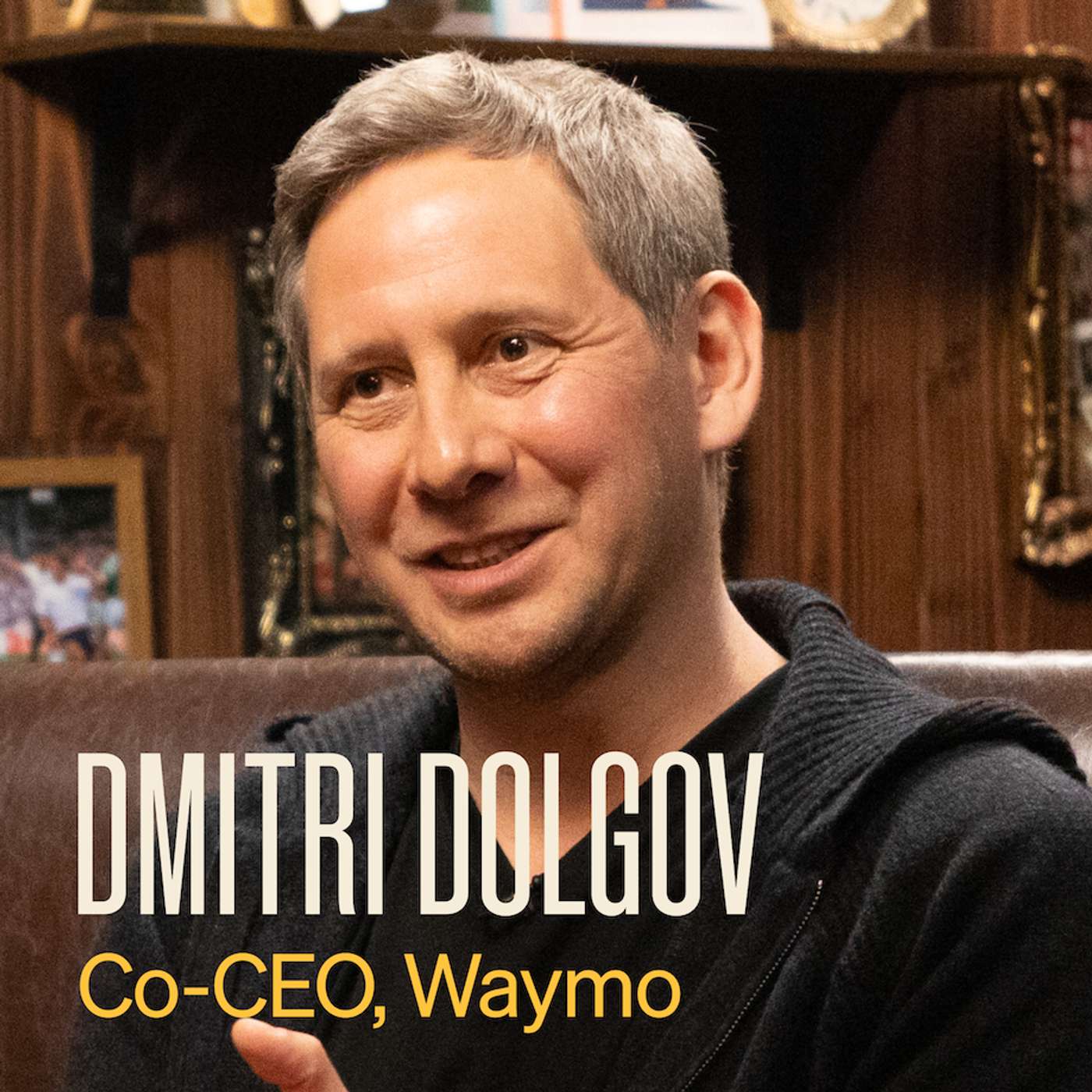
Waymo's CEO argues it is a deceptive assumption that Level 2/3 driver-assist systems exist on a continuous spectrum with Level 4/5 full autonomy. The hardest parts of building a 'rider only' system are fundamentally different, requiring a qualitative jump in technology.

Wave CEO Alex Kendall clarifies the liability question for self-driving cars. For 'hands-off' systems (L2), the driver remains liable. For 'eyes-off' (L3) or fully driverless systems (L4), liability shifts to the manufacturer or operator. This creates a clear delineation that will shape insurance and regulatory frameworks.
Waabi's CEO explains that for physical AI, world models must go beyond just creating realistic simulations. The critical feature is 'controllability'—the ability to precisely generate and manipulate specific, safety-critical scenarios for testing. This is a fundamental difference from world models used for generating creative media or games.
The leap to Level 4 AI is the shift from executing pre-defined, human-designed tasks to pursuing a high-level goal. An autonomous agent can refine its own methods based on performance feedback, while Level 3 automation requires a human to manually update its logic.

Self-driving company Wave found that automakers want one technology partner for the entire autonomy spectrum, from driver-assist (L2) to full self-driving (L4). This streamlines integration, speeds up development, and allows data from lower-level systems to improve the higher-level ones, creating a powerful flywheel.
Traditional vehicles have complex, disparate wiring and compute systems. Applied Intuition first simplifies this into a centralized "one box" architecture, which is a necessary step before they can effectively deploy advanced autonomy and AI capabilities, much like developing apps for a modern smartphone.