Get your free personalized podcast brief
We scan new podcasts and send you the top 5 insights daily.
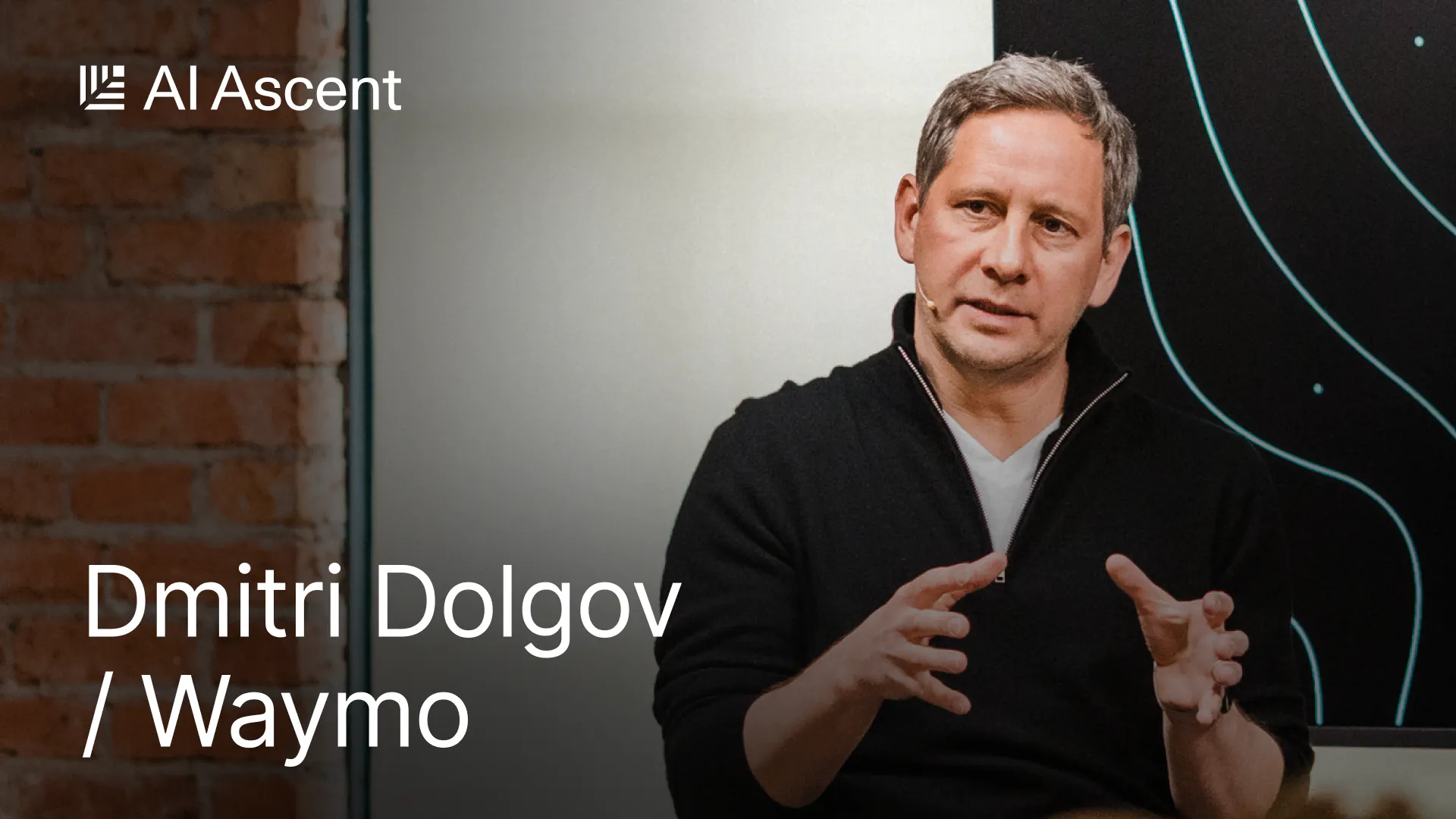
Dmitri Dolgov explains that while AI advancements create hype, they primarily speed up progress on the initial, easier parts of a problem. They don't change the "long tail" of complex, rare edge cases, which remains the core challenge in achieving full, superhuman autonomy.
Related Insights
Major AI breakthroughs like Transformers accelerate initial progress but are not silver bullets for the safety-critical long tail. The nature of the problem is that getting a prototype working is relatively easy, but achieving the final "nines" of reliability is incredibly difficult, justifying Google's early, multi-decade investment.

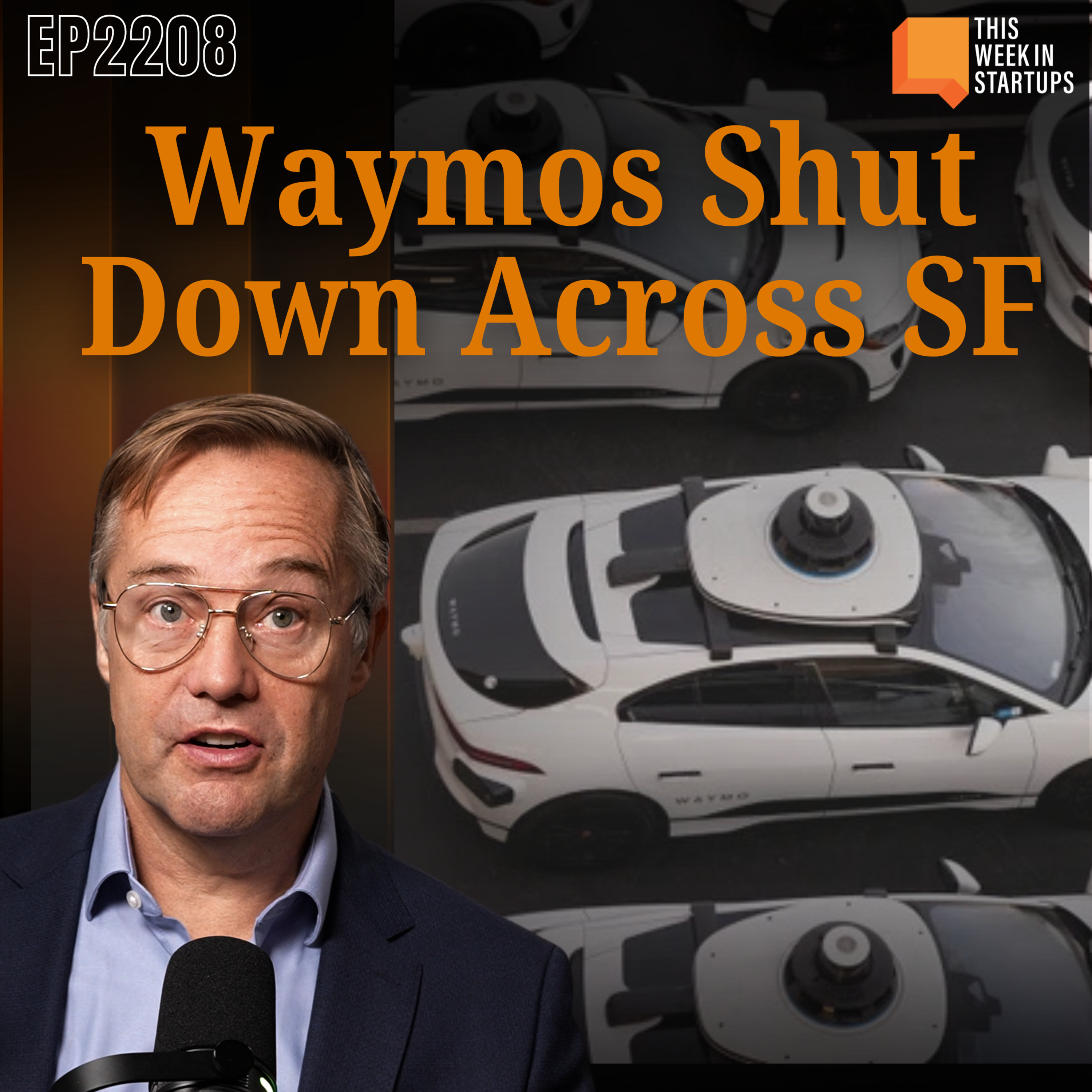
During a San Francisco power outage, Waymo's map-based cars failed while Teslas were reportedly unaffected. This suggests that end-to-end AI systems are less brittle and better at handling novel "edge cases" than more rigid, heuristic-based autonomous driving models.
Waymo's co-CEO argues that Level 4/5 autonomy will not emerge by incrementally improving Level 2/3 driver-assist systems. The hardest challenges of operating without a human driver are entirely absent in assist systems, requiring a "qualitative jump" and a completely different approach from the outset.
According to its co-CEO, Waymo has moved beyond fundamental research and development. The company believes its core technology is sufficient to handle all aspects of driving. The current work is an engineering challenge of specialization, validation, and data collection for new environments like London, signaling a shift to commercial deployment.
Dolgov shared a story where a Waymo vehicle reacted to a hidden pedestrian. The system's LIDAR captured sparse returns from the person's feet moving under a bus. This sliver of data was enough for the AI to not only detect the person but also predict their future path, demonstrating an emergent, superhuman capability.
Current self-driving technology cannot solve the complex, unpredictable situations human drivers navigate daily. This is not a problem that more data or better algorithms can fix, but a fundamental limitation. According to the 'Journey of the Mind' theory, full autonomy will only be possible when vehicles can incorporate the actual mechanism of consciousness.

A pure 'pixels in, actions out' model is insufficient for full autonomy. Waymo augments its end-to-end learning with structured, intermediate representations (like objects and road concepts). This provides crucial knobs for scalable simulation, safety validation, and defining reward functions.

Waymo's CEO argues it is a deceptive assumption that Level 2/3 driver-assist systems exist on a continuous spectrum with Level 4/5 full autonomy. The hardest parts of building a 'rider only' system are fundamentally different, requiring a qualitative jump in technology.
A pure "pixels-in, actions-out" model is insufficient for full autonomy. While easy to start, this approach is extremely inefficient to simulate and validate for safety-critical edge cases. Waymo augments its end-to-end system with intermediate representations (like objects and road signs) to make simulation and validation tractable.
Drawing from his Tesla experience, Karpathy warns of a massive "demo-to-product gap" in AI. Getting a demo to work 90% of the time is easy. But achieving the reliability needed for a real product is a "march of nines," where each additional 9 of accuracy requires a constant, enormous effort, explaining long development timelines.