Get your free personalized podcast brief
We scan new podcasts and send you the top 5 insights daily.
SpaceX is strategically delaying its Mars ambitions to first establish a permanent, 'self-growing' city on the moon. Elon Musk now views this as a more practical 10-year goal, with the moon serving as an essential staging ground for materials and deeper space exploration, rather than a direct-to-Mars approach.

Related Insights
The debate around Jared Isaacman's nomination for NASA head highlights the central conflict in space policy: prioritizing the Moon (Artemis, countering China) versus Mars (SpaceX's goal). This strategic choice about celestial bodies, not political affiliation, is the defining challenge for NASA's next leader, with massive implications for funding and geopolitics.

The long-term vision isn't just launching data centers, but manufacturing them on the moon. This would utilize lunar resources and electromagnetic mass drivers to deploy satellites, making Earth's launch costs and gravity well irrelevant for deep space expansion.
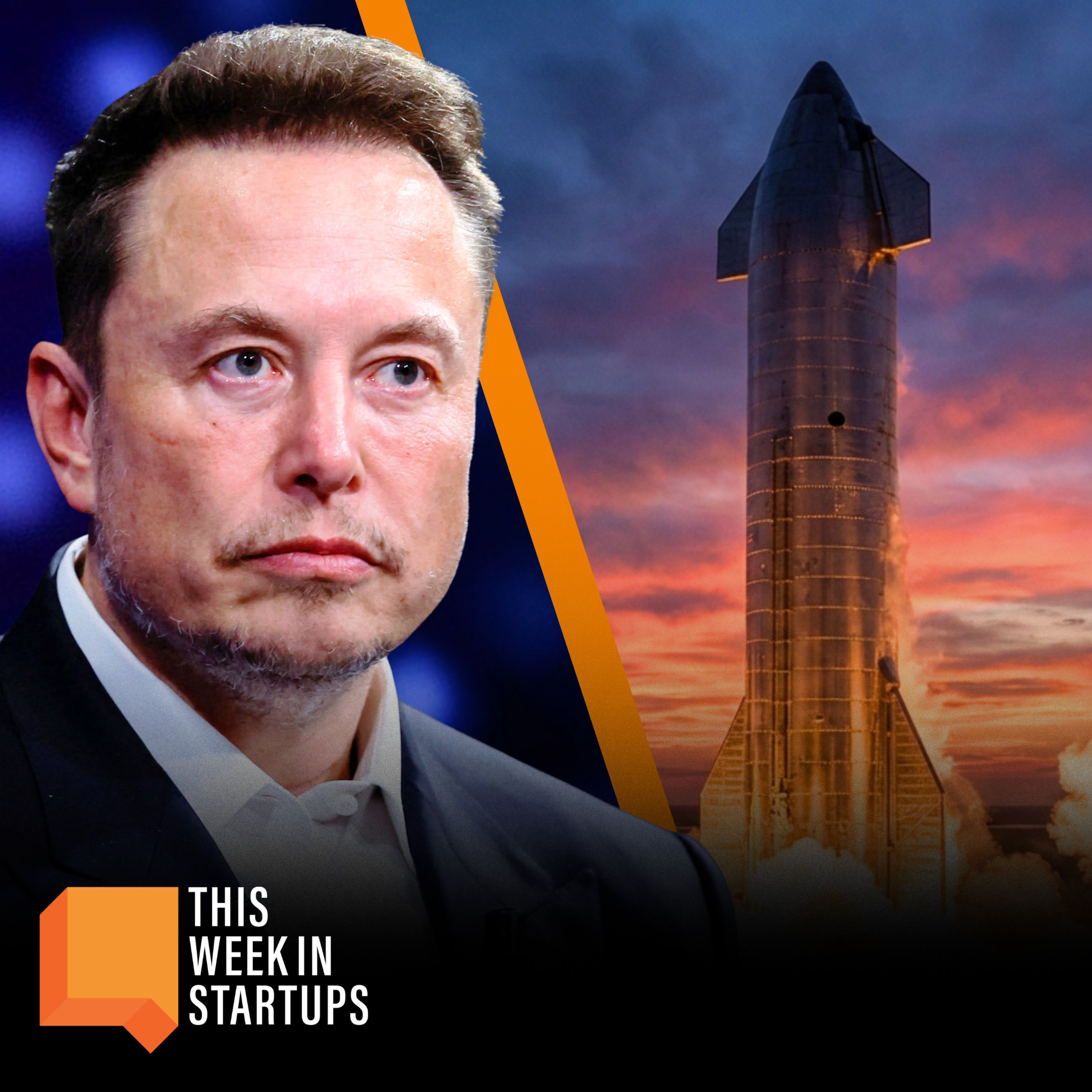
Musk's long-standing resistance to a SpaceX IPO has shifted due to the rise of AI. The massive capital raise is primarily aimed at establishing a network of space-based data centers, a strategic convergence of his space and AI ventures, rather than solely funding Mars colonization.

Skepticism around orbital data centers mirrors early doubts about Starlink, which was initially deemed economically unfeasible. However, SpaceX drastically reduced satellite launch costs by 20x, turning a "pipe dream" into a valuable business. This precedent suggests a similar path to viability exists for space-based AI compute.

The expansion of humanity to the Moon and Mars, using robotics for base-building and mining, will necessitate vast, local computing resources. It is more efficient to process data in space than to transmit it to Earth, creating an inevitable new frontier for data infrastructure.

The confirmation of NASA's administrator hinges on a fundamental strategic question: Moon or Mars? This isn't just a scientific debate but a political and economic one, affecting different contractors, constituents, and geopolitical goals, like counterbalancing China's progress on the moon. The choice dictates NASA's entire focus.

Contrary to his long-held anti-IPO stance, Elon Musk is reportedly racing to take SpaceX public. The primary driver is the immense capital required to build AI data centers in space, a strategic pivot from Mars colonization to competing in the orbital computing infrastructure race against rivals like Jeff Bezos.

Unlike tech giants dominating terrestrial markets like search or e-commerce, SpaceX's near-monopoly on space launch makes it the gatekeeper to the entire physical universe. This reframes its potential from a niche industry player to a foundational utility for all future off-planet endeavors.

Musk's ambitious plan for space-based data centers is more than a technological dream; it's a strategic response to rising terrestrial opposition. Growing local backlash against data centers creates a future scenario where building on Earth becomes so politically difficult that expensive off-world alternatives become a viable option.

A key rationale for merging SpaceX and Elon Musk's XAI is to fund the development of data centers in orbit. The logic is that space provides free, extreme cooling and unlimited solar energy, solving two of the biggest cost and physical constraints of terrestrial AI infrastructure.
