Get your free personalized podcast brief
We scan new podcasts and send you the top 5 insights daily.
The recent lack of anti-China rhetoric from the Trump administration, including zero mentions at the State of the Union, is a deliberate tactical truce. The goal is to stabilize relations and create a favorable environment for an upcoming presidential summit with Xi Jinping, which the administration wants to be a major success.

Related Insights
While the US administration celebrated a deal, China's official media has remained silent, only mentioning a need to finalize follow-up steps. This discrepancy suggests Beijing views the agreement as a tentative pause, waiting to see US actions before fully committing.
While publicly announcing a trade truce with China, the Trump administration simultaneously signed deals with other Asian nations to diversify supply chains and bolster defense partnerships, effectively preparing for future confrontation with Beijing.
The shift to a less adversarial China policy may be a strategic maneuver to avoid supply chain disruptions. The U.S. appears to be biding its time—likely for 5+ years—to wean itself off dependence on Chinese rare earth minerals, which are critical for both industry and defense manufacturing.

The recent trade truce is a transactional deal focused on marketable items like soybeans and TikTok. It conveniently sidesteps fundamental, long-term conflicts such as China's industrial policy, semiconductor competition, and military tensions, making the truce fragile and the broader relationship unstable.
After initially planning a hardline stance, the second Trump administration was checkmated by China’s control over rare earth minerals. This forced a significant policy climb-down, leading to concessions on export controls and attempts to mollify Beijing.

Beijing's leadership believes President Trump is the American leader most likely to strike a deal favorable to them. They perceive him as non-ideological and primarily focused on trade balances, rather than on challenging China's 'core interests' such as human rights or geopolitical ambitions.
Beijing believes that as the U.S. midterm elections approach, the Trump administration will feel increasing pressure to secure a tangible "win" or deal. By prolonging negotiations, China aims to maximize its leverage and extract more favorable terms, mapping this strategy from the first trade war.
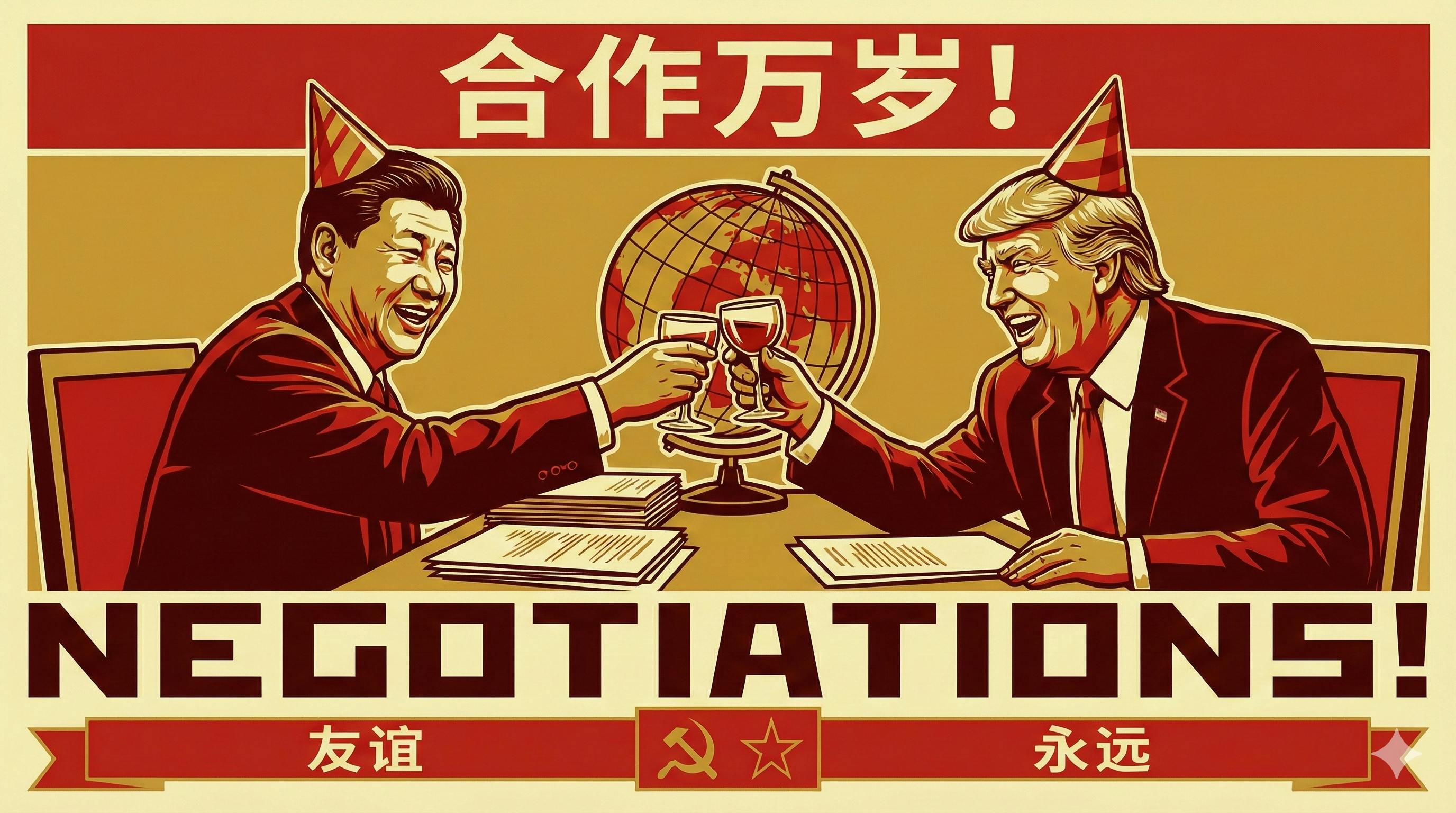
The upcoming US-China summit is expected to produce optics over substance. More importantly for traders, the FX market lacks a clear playbook for any outcome. The People's Bank of China (PBOC) has firmly anchored the Yuan, removing any 'trade war risk premium' from the currency and rendering the event largely untradable for FX.

The latest U.S. National Security Strategy drops confrontational rhetoric about China as an ideological threat, instead framing the relationship around economic rivalry and rebalancing. This shift prioritizes tangible deals over promoting American values globally, marking a departure from Reagan-era foreign policy.
President Xi Jinping used a phone call with President Trump not just for bilateral issues, but to strategically signal displeasure with Japan's hawkish stance on Taiwan. This "shadow play" diplomacy shows China leveraging its relationship with the U.S. to indirectly manage and warn other nations, making the U.S. a channel for its geopolitical messaging.
