Get your free personalized podcast brief
We scan new podcasts and send you the top 5 insights daily.
After initially planning a hardline stance, the second Trump administration was checkmated by China’s control over rare earth minerals. This forced a significant policy climb-down, leading to concessions on export controls and attempts to mollify Beijing.

Related Insights
Beijing's expansive export controls on rare earths were not an overplay but a calculated risk to shift from a defensive to an offensive posture. They correctly bet that the U.S. administration would ultimately seek to de-escalate and preserve the diplomatic track, thereby validating China's proactive strategy.
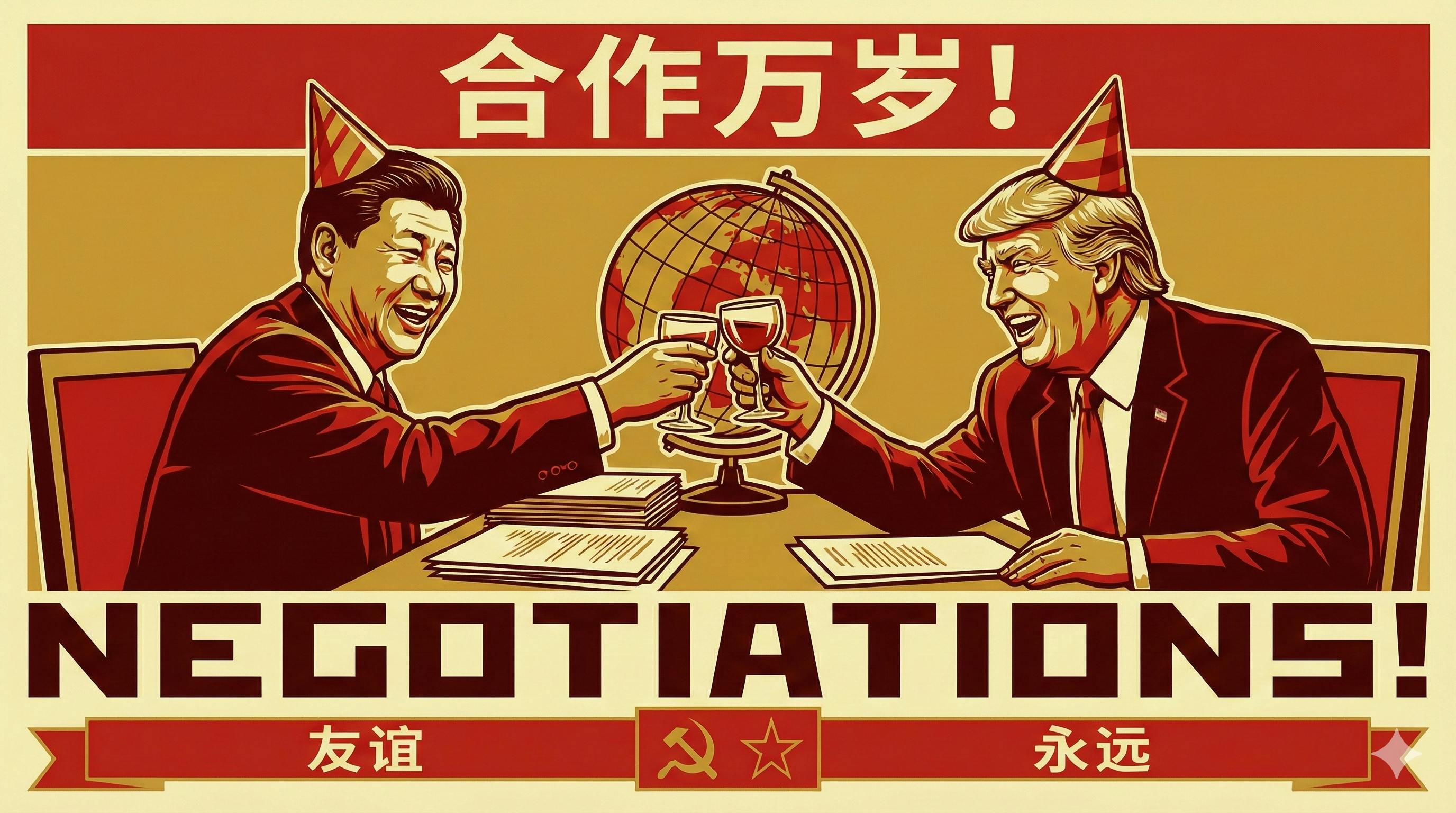
The shift to a less adversarial China policy may be a strategic maneuver to avoid supply chain disruptions. The U.S. appears to be biding its time—likely for 5+ years—to wean itself off dependence on Chinese rare earth minerals, which are critical for both industry and defense manufacturing.

China is leveraging its 90% control over rare earth processing not just against the US, but globally. By requiring licenses from any company worldwide, it creates a chokehold on high-tech manufacturing and establishes a new template for economic coercion.

China demonstrated its significant leverage over the U.S. by quickly pressuring the Trump administration through a partial embargo on rare earth metals. This showcased a powerful non-tariff weapon rooted in its control of critical mineral supply chains, which are also vital for defense applications.

While headlines focus on advanced chips, China’s real leverage comes from its strategic control over less glamorous but essential upstream inputs like rare earths and magnets. It has even banned the export of magnet-making technology, creating critical, hard-to-solve bottlenecks for Western manufacturing.

Unlike the first trade war, where Beijing was caught flat-footed, it entered the second with a prepared policy plan and emotional resolve. China developed a toolkit of retaliatory measures, such as the rare earth card, and seized the initiative rather than simply reacting to U.S. actions.
Facing China's export restrictions on rare earth metals, the U.S. immediate strategy is "ally-shoring": striking a major deal with Australia. This secures the supply chain through geopolitical partnerships as a faster, more pragmatic alternative to the long process of building domestic capacity from scratch.

The latest U.S. National Security Strategy drops confrontational rhetoric about China as an ideological threat, instead framing the relationship around economic rivalry and rebalancing. This shift prioritizes tangible deals over promoting American values globally, marking a departure from Reagan-era foreign policy.
Despite escalating rhetoric, the U.S. and China are unlikely to fully decouple their supply chains. Their relationship is maintained by a fragile equilibrium where the U.S. provides semiconductor chips in exchange for China's critical rare earth minerals, making a return to the status quo the most probable outcome.

The latest US-China trade talks signal a shift from unilateral US pressure to a negotiation between equals. China is now effectively using its control over critical exports, like rare earth minerals, as a bargaining chip to compel the U.S. to pause its own restrictions on items like semiconductors.
