Get your free personalized podcast brief
We scan new podcasts and send you the top 5 insights daily.
Beijing's leadership believes President Trump is the American leader most likely to strike a deal favorable to them. They perceive him as non-ideological and primarily focused on trade balances, rather than on challenging China's 'core interests' such as human rights or geopolitical ambitions.

Related Insights
China's key learning from the past year is not that the U.S. lacks economic leverage, but that it lacks the political will to use it. Beijing perceives an unwillingness in Washington to endure domestic consequences, like higher consumer prices during an election year, to win a trade war.
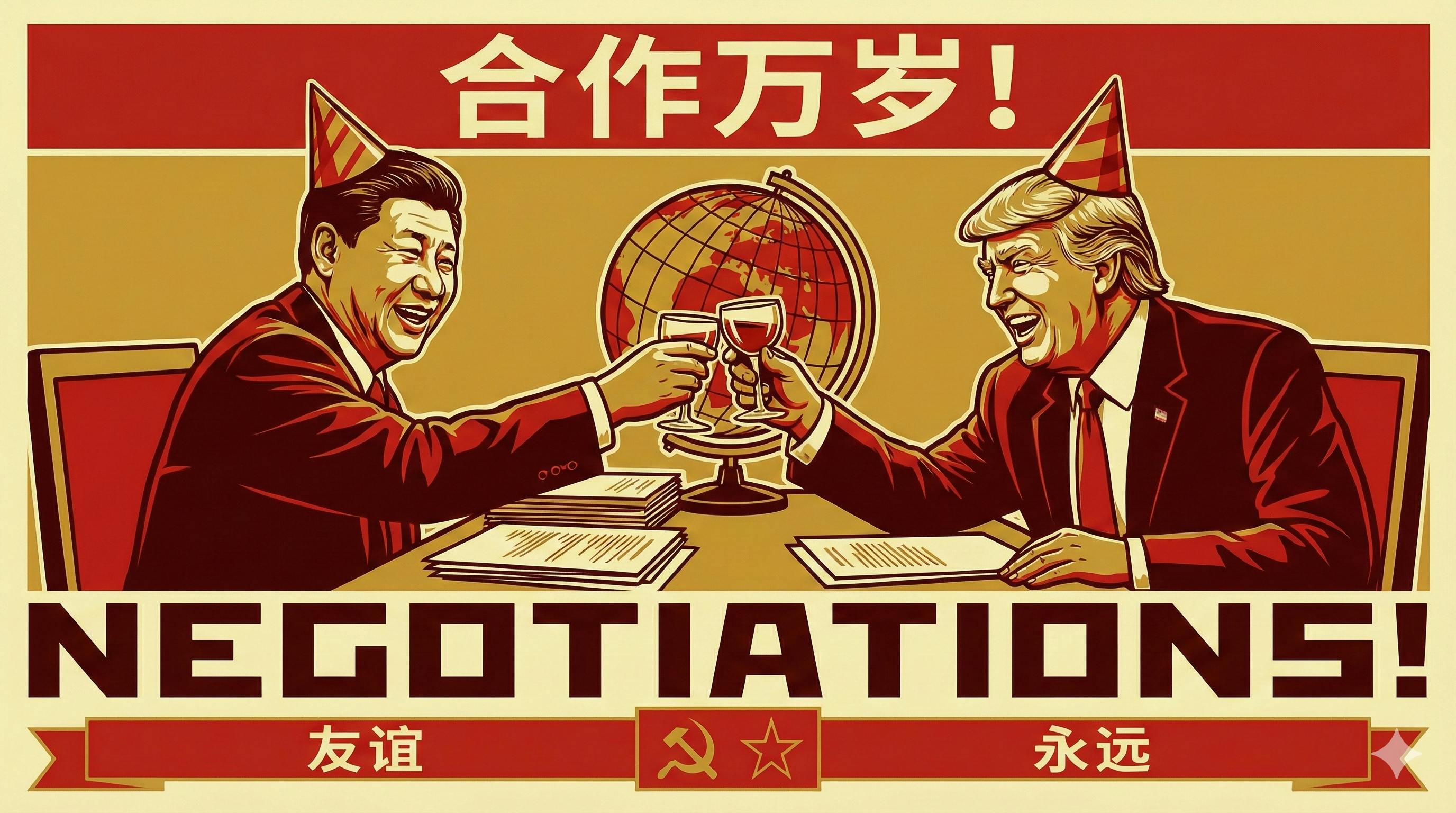
While the US administration celebrated a deal, China's official media has remained silent, only mentioning a need to finalize follow-up steps. This discrepancy suggests Beijing views the agreement as a tentative pause, waiting to see US actions before fully committing.
The recent lack of anti-China rhetoric from the Trump administration, including zero mentions at the State of the Union, is a deliberate tactical truce. The goal is to stabilize relations and create a favorable environment for an upcoming presidential summit with Xi Jinping, which the administration wants to be a major success.
Contrary to widespread fear, the probability of a Chinese invasion of Taiwan before 2028 is extremely low (~5%). China believes its goal of 'peaceful reunification' is progressing, its military is in disarray after deep purges, and it views President Trump as an accommodating US leader on the Taiwan issue.
Beijing believes that as the U.S. midterm elections approach, the Trump administration will feel increasing pressure to secure a tangible "win" or deal. By prolonging negotiations, China aims to maximize its leverage and extract more favorable terms, mapping this strategy from the first trade war.
The latest U.S. National Security Strategy drops confrontational rhetoric about China as an ideological threat, instead framing the relationship around economic rivalry and rebalancing. This shift prioritizes tangible deals over promoting American values globally, marking a departure from Reagan-era foreign policy.

Contrary to popular belief, Trump's trade strategy isn't protectionism. He uses reciprocity, leverage, and executive flexibility to force other countries to lower their own trade barriers, ultimately aiming for a world with freer trade for the U.S.

A core element of Trump's worldview is the belief that global affairs can be managed through personal relationships and deals between powerful leaders, bypassing institutions. This 'great power condominium' approach explains his attempts to charm leaders like Putin and Xi, believing his personal diplomacy can resolve complex structural issues.

The US Trade Representative is reportedly exploring a radical shift in trade policy towards a 'managed trade' system with China. This would function like a barter arrangement, where the two countries agree on specific import and export volumes, abandoning free-market principles to directly control the trade deficit.
China effectively steered talks away from major macroeconomic imbalances and unfair trade practices. Instead, the focus has been "whittled down" to sector-specific issues like TikTok or soybean purchases, allowing China to manage concessions without addressing core U.S. grievances in a game of "whack-a-mole."