Get your free personalized podcast brief
We scan new podcasts and send you the top 5 insights daily.
Initially frustrated with consultants, Eric Samson later realized they were giving good advice for challenges his company would face two years in the future. The insight is to diagnose your immediate bottleneck and hire experts who specialize in that specific stage, not generalists who may be solving for a different part of the journey.

Related Insights
Hiring an AI change management consultant creates value based on organizational readiness, not the project phase. Many companies are not prepared for strategic change, instead focusing only on immediate tool adoption like ChatGPT licenses.

When making business decisions, it is crucial to weigh the source of the advice. Vaynerchuk advocates for prioritizing guidance from "executors"—people who have actually built and run businesses—over "educators" or acquaintances who offer theoretical opinions without practical experience.

Founders waste time seeking tactical solutions for growth plateaus. The real breakthrough comes from correctly diagnosing the root cause. Once the specific reason for the plateau is identified—of which there are only a handful—the necessary actions become clear.

Instead of fulfilling a request for a complex, expensive solution, the most valuable act is to identify a far simpler alternative. This builds immense long-term trust and positions you as a strategic partner, ensuring repeat business for future, more appropriate challenges, even at the cost of short-term revenue.

Focus on the root cause (the "first-order issue") rather than symptoms or a long to-do list. Solving this core problem, like fixing website technology instead of cutting content, often resolves multiple downstream issues simultaneously.

Instead of pre-emptively hiring a full team, Vivian Tu waited until the workload in a specific area became unmanageable. She hired an attorney only when contracts were too complex and a manager when her inbox overflowed. This ensures you hire for a real, present need, not a perceived future one.

Activities like discovery interviews and seeking design partners often feel productive and validating. However, they are frequently designed to make founders feel comfortable and avoid the difficulty of real selling and deep immersion. True progress comes from uncomfortable, direct actions, not feel-good processes.

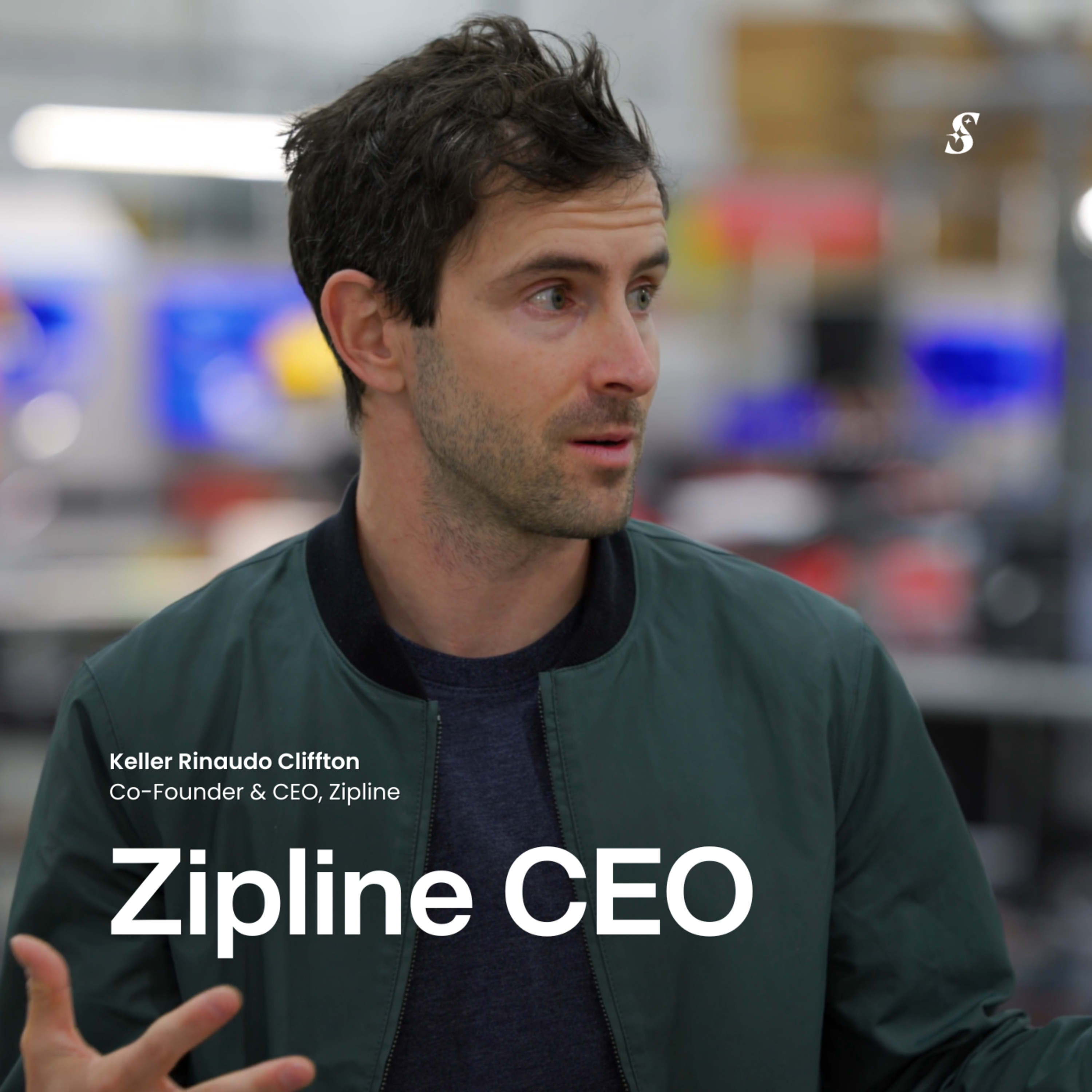
For years, global health experts told Zipline their idea was stupid and would fail. The breakthrough came from listening to a customer—Rwanda's Minister of Health—who gave them a single, critical problem to solve: "Just do blood." This narrow focus was the key to proving their value against broad expert dismissal.
Clients often present a long list of surface-level problems. An effective advisor identifies the foundational issues—like team mindset or role definition—that, once fixed, will naturally resolve the other ten symptoms. This approach demonstrates strategic value far beyond simple, itemized problem-solving.

Applying the Theory of Constraints, a startup's growth is limited by a single bottleneck in its factory (pipeline, sales, or delivery). Improving onboarding is useless if you have one sales call a month. All focus must be on solving that single constraint to make progress.
