Get your free personalized podcast brief
We scan new podcasts and send you the top 5 insights daily.
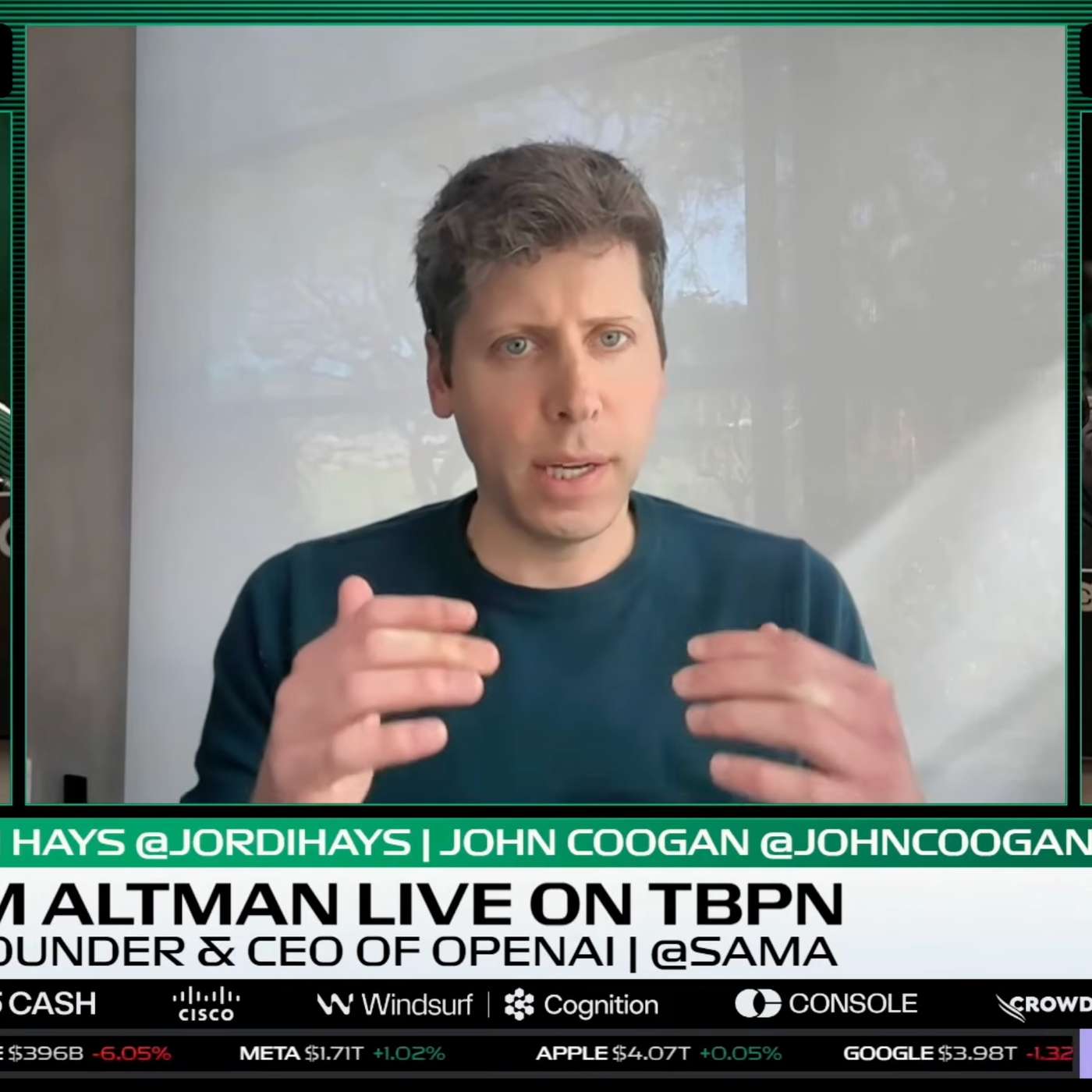
Sam Altman observes that AI adoption follows a counterintuitive path where simple applications like booking haircuts gain traction before complex ones like solving physics problems. He calls this a collective "failure of imagination" that is ultimately corrected by a creative developer ecosystem exploring the technology's full potential on their own.

Related Insights
The barrier to executing complex ideas is lowering thanks to AI. Individuals who were previously just "idea guys" can now handle design, product management, and engineering themselves, turning concepts into reality with unprecedented speed and capability, as noted by OpenAI's CEO.

Even as AI models become vastly more powerful, widespread adoption is throttled by the slow evolution of users' mental models of what AI can do. People rely on a system based on past experiences, and it takes a 'magical' result to expand their belief in its capabilities for new, complex tasks.

Sam Altman believes incumbents who just add AI features to existing products (like search or messaging) will lose to new, AI-native products. He argues true value comes not from summarizing messages, but from creating proactive agents that fundamentally change user workflows from the ground up.

While AI capabilities advance, OpenAI's Chief Economist argues the next productivity step-change will stem from widespread adoption of existing tools. Many powerful features, like agentic workflows, are underutilized, meaning huge gains are possible with current technology.

Sam Altman argues there is a massive "capability overhang" where models are far more powerful than current tools allow users to leverage. He believes the biggest gains will come from improving user interfaces and workflows, not just from increasing raw AI intelligence.
The idea that AI has no learning curve is a myth. Users faced with a blank 'type anything' box are often paralyzed. Showcasing unconventional applications, like a broccoli farmer using GPT-5.6, helps people understand the tool's potential beyond obvious tasks.

The primary hurdle for potential AI agent users isn't the technical setup; it's the inability to imagine what to do with the tool. Even technically proficient individuals get stuck on the "what can I do with this?" question, indicating that mainstream adoption requires clear, relatable examples and blueprints, not just easier installation.
The initial success of AI in coding is a natural outcome. Like early PC users who built tools for computers, software developers, as the primary early adopters of LLMs, logically focused on applying the new technology to their own workflows first.

AI tools are already powerful enough for most problems. The real challenge is a psychological one: training users to recognize that nearly any problem they face, from planning a house move to tracking promises, can be framed as a task for an AI to solve.

OpenAI's CEO believes a significant gap exists between what current AI models can do and how people actually use them. He calls this "overhang," suggesting most users still query powerful models with simple tasks, leaving immense economic value untapped because human workflows adapt slowly.