Get your free personalized podcast brief
We scan new podcasts and send you the top 5 insights daily.
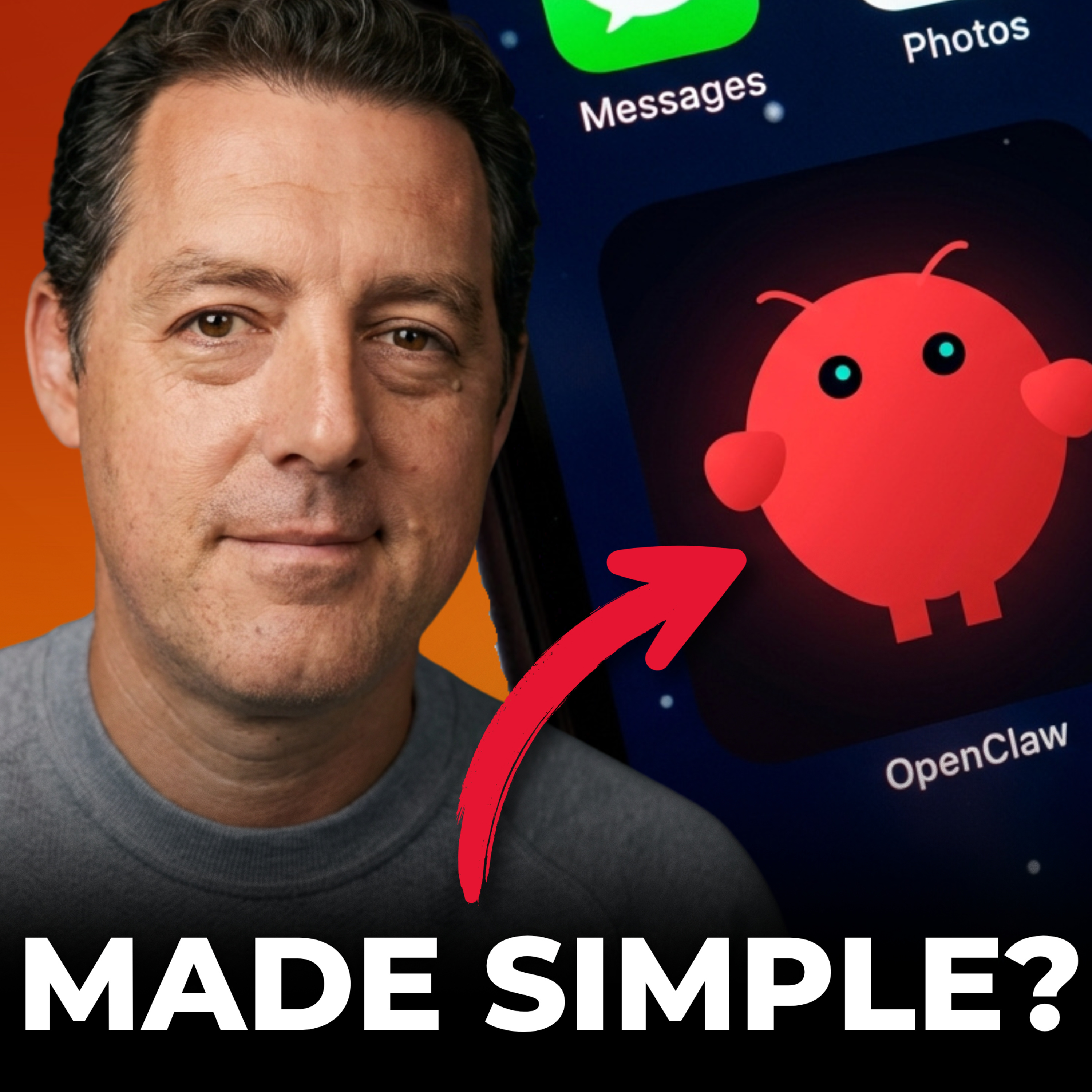
The primary hurdle for potential AI agent users isn't the technical setup; it's the inability to imagine what to do with the tool. Even technically proficient individuals get stuck on the "what can I do with this?" question, indicating that mainstream adoption requires clear, relatable examples and blueprints, not just easier installation.
Related Insights
While AI's technical capabilities advance exponentially, widespread organizational adoption is slowed by human factors like resistance to change, lack of urgency, and abstract understanding. This creates a significant gap between potential and reality.

Most users don't want abstract tools like 'agents' or 'connectors.' Successful AI products for the mainstream must solve specific, acute pain points and provide a 'golden path' to a solution. Selling a general platform to non-technical users often fails because it requires them to imagine the use case.

The biggest resistance to adopting AI coding tools in large companies isn't security or technical limitations, but the challenge of teaching teams new workflows. Success requires not just providing the tool, but actively training people to change their daily habits to leverage it effectively.

The question 'What can AI do?' is broad and overwhelming. A more practical approach is to identify existing, time-consuming tasks and ask, 'Can AI do this for me?' This reframes AI as a personal efficiency tool for specific problems, rather than a complex technology to master.

Despite the power of new AI agents, the primary barrier to adoption is human resistance to changing established workflows. People are comfortable with existing processes, even inefficient ones, making it incredibly difficult for even technologically superior systems to gain traction.

Anthropic's Cowork isn't a technological leap over Claude Code; it's a UI and marketing shift. This demonstrates that the primary barrier to mass AI adoption isn't model power, but productization. An intuitive UI is critical to unlock powerful tools for the 99% of users who won't use a command line.
A major hurdle in AI adoption is not the technology's capability but the user's inability to prompt effectively. When presented with a natural language interface, many users don't know how to ask for what they want, leading to poor results and abandonment, highlighting the need for prompt guidance.

The main barrier to AI's impact is not its technical flaws but the fact that most organizations don't understand what it can actually do. Advanced features like 'deep research' and reasoning models remain unused by over 95% of professionals, leaving immense potential and competitive advantage untapped.
To get mainstream users to adopt AI, you can't ask them to learn a new workflow. The key is to integrate AI capabilities directly into the tools and processes they already use. AI should augment their current job, not feel like a separate, new task they have to perform.
Recent dips in AI tool subscriptions are not due to a technology bubble. The real bottleneck is a lack of 'AI fluency'—users don't know how to provide the right prompts and context to get valuable results. The problem isn't the AI; it's the user's ability to communicate effectively.
