Get your free personalized podcast brief
We scan new podcasts and send you the top 5 insights daily.
While AI capabilities advance, OpenAI's Chief Economist argues the next productivity step-change will stem from widespread adoption of existing tools. Many powerful features, like agentic workflows, are underutilized, meaning huge gains are possible with current technology.

Related Insights
Turing's CEO argues that frontier models are already capable of much more than enterprises are demanding. The bottleneck isn't the AI's ability, but the "first mile and last mile schlep" of integration. Massive productivity gains are possible even without further model improvements.

Even with superhuman AI, Dario Amodei argues the economic revolution won't be instant. The real-world bottleneck is "economic diffusion": the messy, human process of enterprise adoption, including legal reviews, security compliance, and change management, which creates a fast but not infinite adoption curve.

The significant gap between AI's theoretical potential and its actual business implementation represents a massive market opportunity. Companies that help others integrate AI and become 'AI native' will win, not necessarily those with the most advanced models.

Even if AI progress stopped today, it would take 10-20 years for the economy to fully absorb and implement current capabilities. This growing gap between what's technologically possible and what's adopted in the market creates a massive, long-term opportunity for innovators.

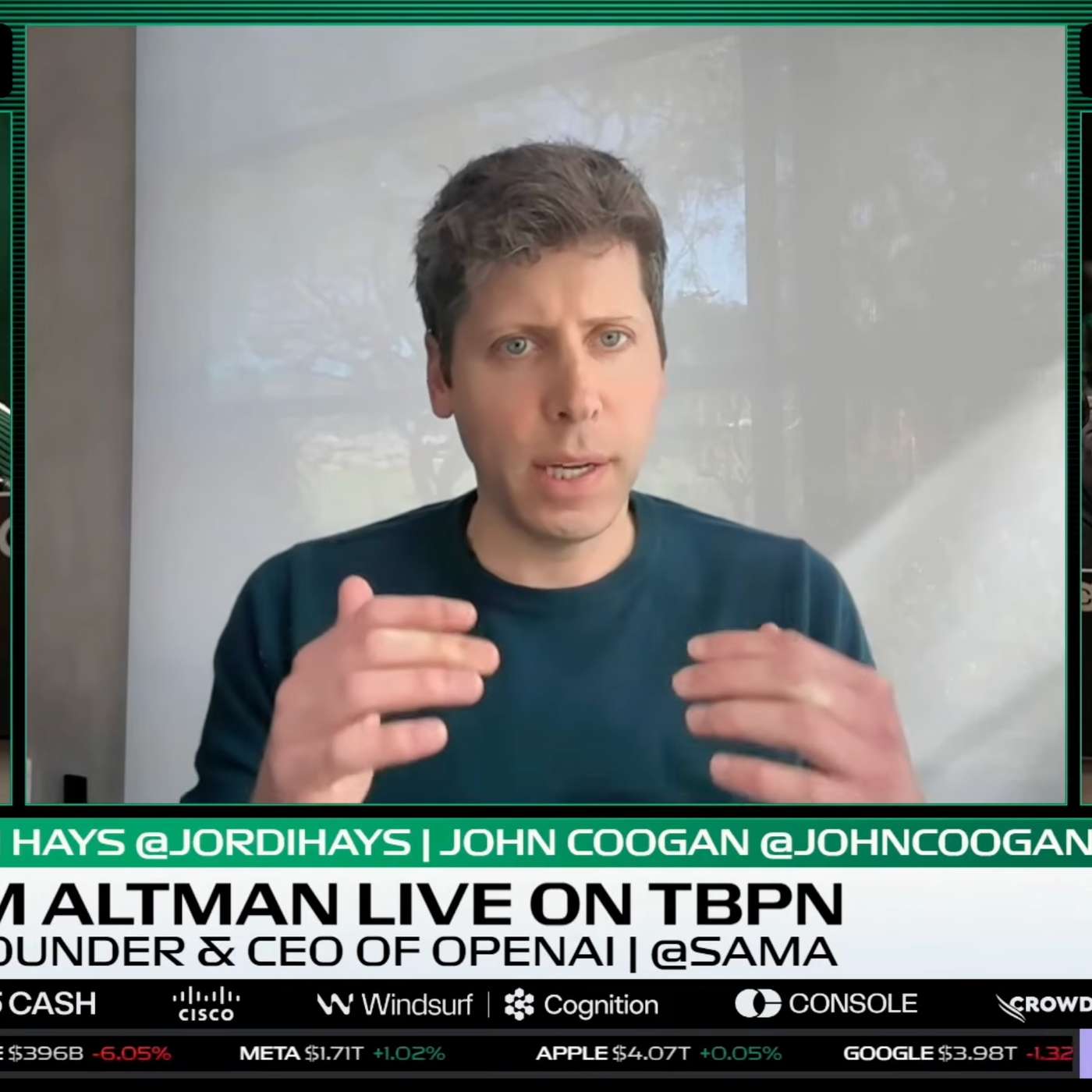
Sam Altman argues there is a massive "capability overhang" where models are far more powerful than current tools allow users to leverage. He believes the biggest gains will come from improving user interfaces and workflows, not just from increasing raw AI intelligence.
The main barrier to AI's impact is not its technical flaws but the fact that most organizations don't understand what it can actually do. Advanced features like 'deep research' and reasoning models remain unused by over 95% of professionals, leaving immense potential and competitive advantage untapped.

The hype around future model improvements overshadows a key reality: current models are already "sufficiently intelligent" for countless valuable tasks. Even if all AI innovation stopped today, we could still unlock trillions in economic value just by integrating existing technology across the economy.

A major drag on AI's impact is the "capability gap"—the chasm between what AI can do and what people know it can do. AI companies are now shifting from simply improving models to actively educating the market by releasing tool suites that demonstrate specific, practical applications to accelerate adoption by closing this awareness gap.

Just as electricity's impact was muted until factory floors were redesigned, AI's productivity gains will be modest if we only use it to replace old tools (e.g., as a better Google). Significant economic impact will only occur when companies fundamentally restructure their operations and workflows to leverage AI's unique capabilities.

OpenAI's CEO believes a significant gap exists between what current AI models can do and how people actually use them. He calls this "overhang," suggesting most users still query powerful models with simple tasks, leaving immense economic value untapped because human workflows adapt slowly.
