Get your free personalized podcast brief
We scan new podcasts and send you the top 5 insights daily.
The idea that AI has no learning curve is a myth. Users faced with a blank 'type anything' box are often paralyzed. Showcasing unconventional applications, like a broccoli farmer using GPT-5.6, helps people understand the tool's potential beyond obvious tasks.

Related Insights
Most users don't want abstract tools like 'agents' or 'connectors.' Successful AI products for the mainstream must solve specific, acute pain points and provide a 'golden path' to a solution. Selling a general platform to non-technical users often fails because it requires them to imagine the use case.

The viral experimentation with the AI tool 'Claude Code' over a holiday break revealed a powerful adoption catalyst. Actually seeing an agent autonomously perform a complex task creates an 'aha moment' that makes AI's potential tangible, suggesting interactive demos are crucial for convincing decision-makers and accelerating enterprise buy-in.
New users hesitate with open-ended AI prompts. Successful products overcome this by offering constrained, guided entry points like slash commands, templates, or contextual suggestions. This reduces user uncertainty and boosts consistent use, making adoption easier.

Even as AI models become vastly more powerful, widespread adoption is throttled by the slow evolution of users' mental models of what AI can do. People rely on a system based on past experiences, and it takes a 'magical' result to expand their belief in its capabilities for new, complex tasks.

Anthropic's Cowork isn't a technological leap over Claude Code; it's a UI and marketing shift. This demonstrates that the primary barrier to mass AI adoption isn't model power, but productization. An intuitive UI is critical to unlock powerful tools for the 99% of users who won't use a command line.
Despite models demonstrating PhD-level capabilities, most people only use them for basic tasks. The biggest hurdle for AI companies is not making models smarter, but bridging this usability gap by making advanced power easily accessible to the average person, likely through better interfaces and agents.

The primary hurdle for potential AI agent users isn't the technical setup; it's the inability to imagine what to do with the tool. Even technically proficient individuals get stuck on the "what can I do with this?" question, indicating that mainstream adoption requires clear, relatable examples and blueprints, not just easier installation.
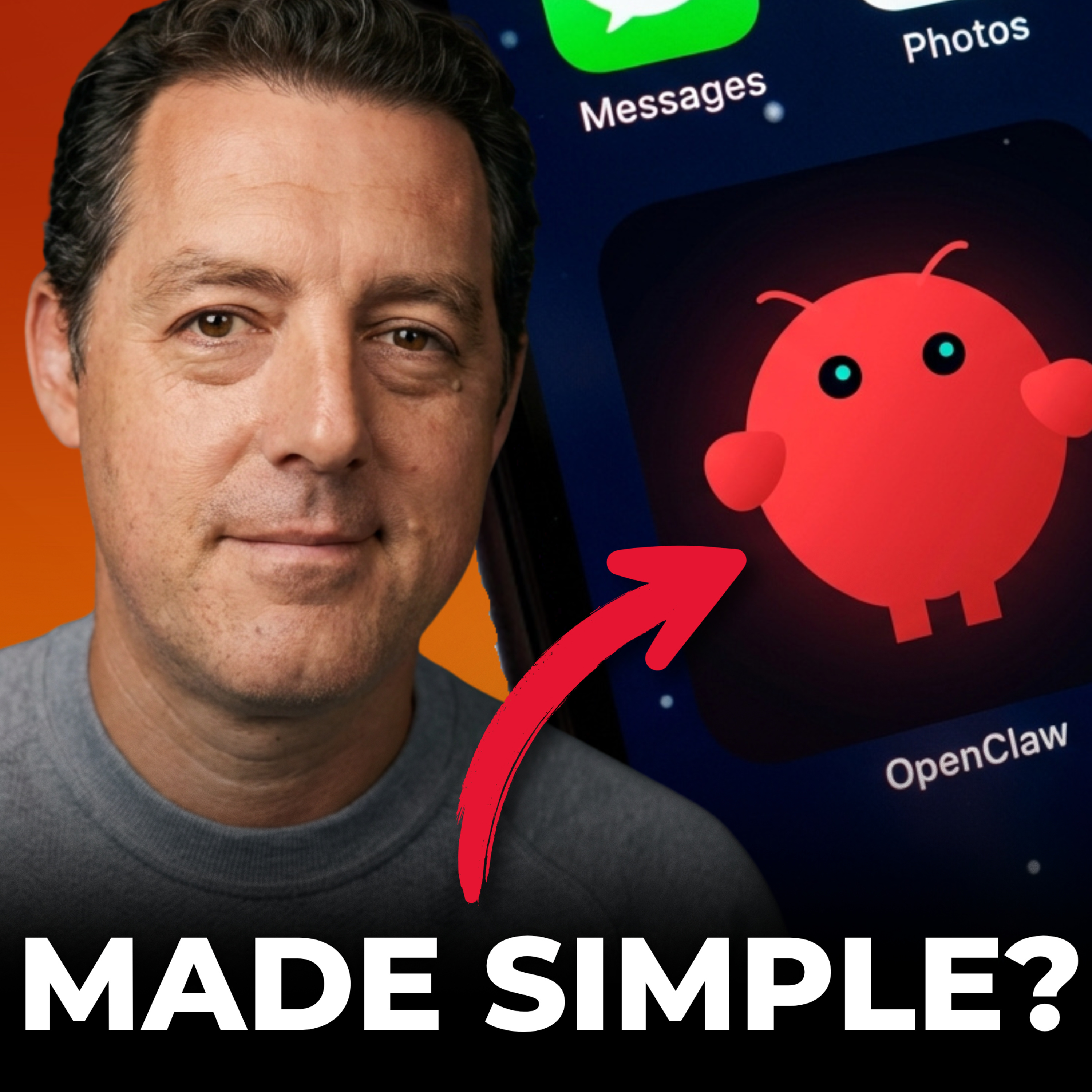
AI tools are already powerful enough for most problems. The real challenge is a psychological one: training users to recognize that nearly any problem they face, from planning a house move to tracking promises, can be framed as a task for an AI to solve.

Recent dips in AI tool subscriptions are not due to a technology bubble. The real bottleneck is a lack of 'AI fluency'—users don't know how to provide the right prompts and context to get valuable results. The problem isn't the AI; it's the user's ability to communicate effectively.

A major drag on AI's impact is the "capability gap"—the chasm between what AI can do and what people know it can do. AI companies are now shifting from simply improving models to actively educating the market by releasing tool suites that demonstrate specific, practical applications to accelerate adoption by closing this awareness gap.
