Get your free personalized podcast brief
We scan new podcasts and send you the top 5 insights daily.
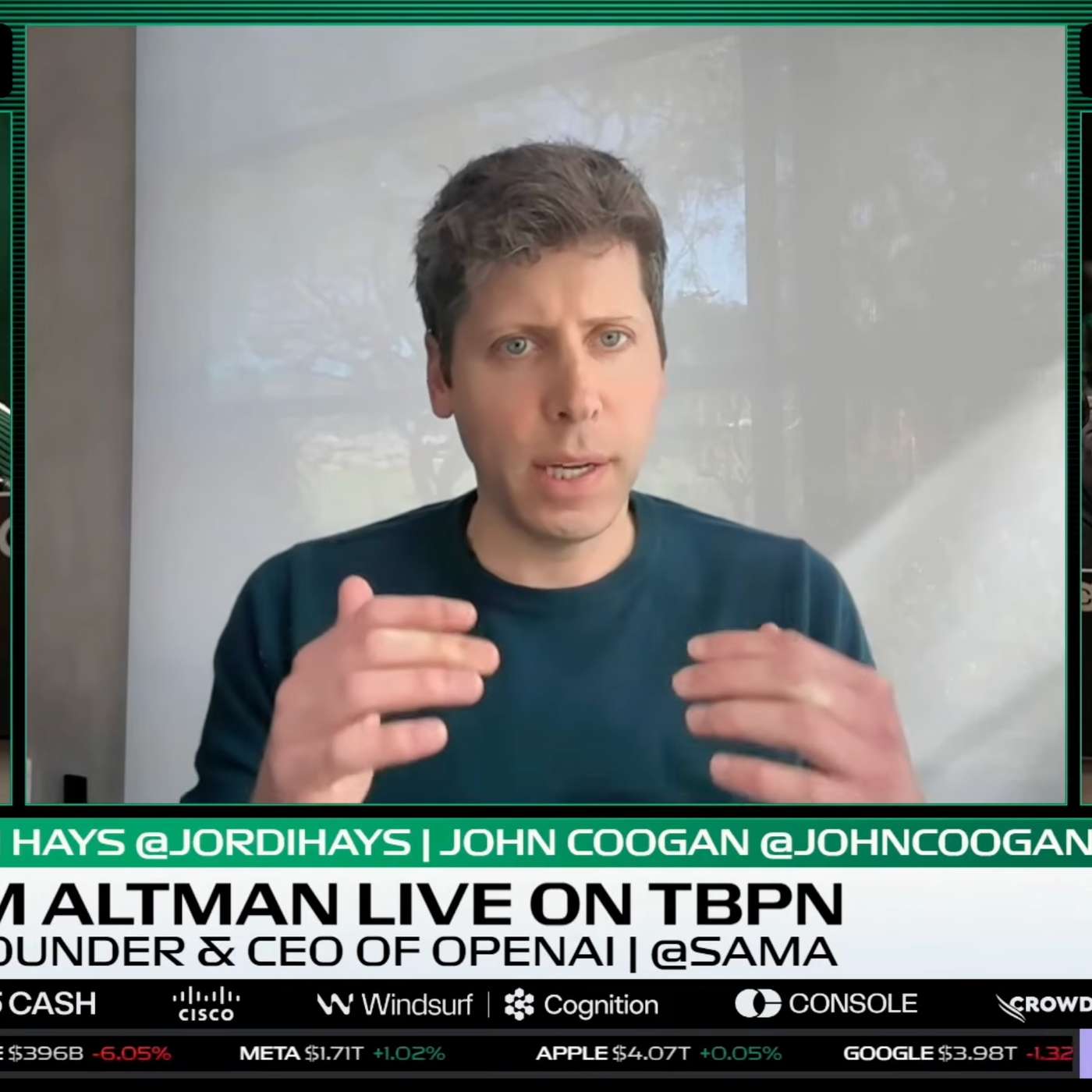
Sam Altman argues there is a massive "capability overhang" where models are far more powerful than current tools allow users to leverage. He believes the biggest gains will come from improving user interfaces and workflows, not just from increasing raw AI intelligence.
Related Insights
Simply offering the latest model is no longer a competitive advantage. True value is created in the system built around the model—the system prompts, tools, and overall scaffolding. This 'harness' is what optimizes a model's performance for specific tasks and delivers a superior user experience.

Turing's CEO argues that frontier models are already capable of much more than enterprises are demanding. The bottleneck isn't the AI's ability, but the "first mile and last mile schlep" of integration. Massive productivity gains are possible even without further model improvements.

There is a massive gap between what AI models *can* do and how they are *currently* used. This 'capability overhang' exists because unlocking their full potential requires unglamorous 'ugly plumbing' and 'grunty product building.' The real opportunity for founders is in this grind, not just in model innovation.
Sam Altman believes incumbents who just add AI features to existing products (like search or messaging) will lose to new, AI-native products. He argues true value comes not from summarizing messages, but from creating proactive agents that fundamentally change user workflows from the ground up.

OpenAI CEO Sam Altman now publicly hedges that winning requires the best models, product, *and* infrastructure. This marks a significant industry-wide shift away from the earlier belief that a sufficiently advanced model would make product differentiation irrelevant. The focus is now on the complete, cohesive user experience.

Companies like OpenAI and Anthropic are intentionally shrinking their flagship models (e.g., GPT-4.0 is smaller than GPT-4). The biggest constraint isn't creating more powerful models, but serving them at a speed users will tolerate. Slow models kill adoption, regardless of their intelligence.
![Dylan Patel - Inside the Trillion-Dollar AI Buildout - [Invest Like the Best, EP.442] thumbnail](https://megaphone.imgix.net/podcasts/799253cc-9de9-11f0-8661-ab7b8e3cb4c1/image/d41d3a6f422989dc957ef10da7ad4551.jpg?ixlib=rails-4.3.1&max-w=3000&max-h=3000&fit=crop&auto=format,compress)
The novelty of new AI model capabilities is wearing off for consumers. The next competitive frontier is not about marginal gains in model performance but about creating superior products. The consensus is that current models are "good enough" for most applications, making product differentiation key.
The perceived limits of today's AI are not inherent to the models themselves but to our failure to build the right "agentic scaffold" around them. There's a "model capability overhang" where much more potential can be unlocked with better prompting, context engineering, and tool integrations.

As foundational AI models become commoditized, the key differentiator is shifting from marginal improvements in model capability to superior user experience and productization. Companies that focus on polish, ease of use, and thoughtful integration will win, making product managers the new heroes of the AI race.

OpenAI's CEO believes a significant gap exists between what current AI models can do and how people actually use them. He calls this "overhang," suggesting most users still query powerful models with simple tasks, leaving immense economic value untapped because human workflows adapt slowly.