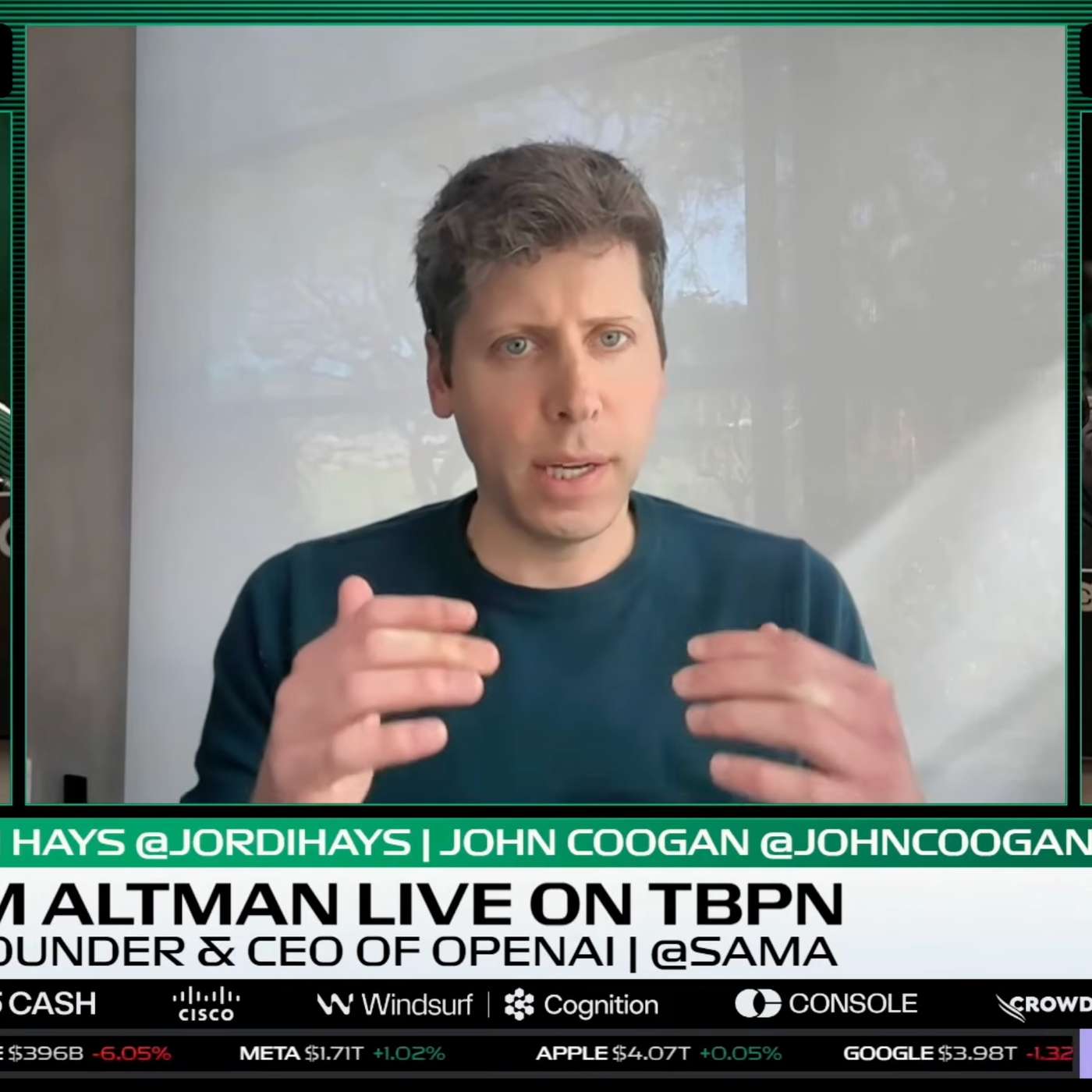
Altman predicts a volatile period for software, with both booms and sell-offs. The fundamental shift is that AI agents will interact with services via APIs, effectively turning every business into an API provider, whether they have a formal API strategy or not.
Sam Altman reveals a stark disconnect between the "crazy hurricane" of media perception and the focused internal reality at OpenAI. The team is too busy building to be consumed by external drama, which they often view as being almost completely divorced from reality.
Altman argues that as AI capabilities grow, abstract technical benchmarks become less relevant. He suggests the ultimate measure of an AI's effectiveness will be its direct economic contribution, jokingly proposing "GDP impact" as the next major metric to watch.
Sam Altman observes an asymmetry in AI-generated media: users love creating personalized content with tools like Sora, but show little interest in consuming AI content made by others. This creator-consumer gap is a key hurdle for generative AI as a mainstream entertainment medium.
Sam Altman argues there is a massive "capability overhang" where models are far more powerful than current tools allow users to leverage. He believes the biggest gains will come from improving user interfaces and workflows, not just from increasing raw AI intelligence.
Sam Altman describes his ideal product: a to-do list where adding a task triggers an AI agent to attempt completion. This model—where the AI proactively works, asks for clarification, and integrates with manual effort—represents a profound shift in productivity software.
Sam Altman highlights that allowing users to correct an AI model while it's working on a long task is a crucial new capability. This is analogous to correcting a coworker in real-time, preventing wasted effort and enabling more sophisticated outcomes than 'one-shot' generation.
Altman praises projects like OpenClaw, noting their ability to innovate is a direct result of being unconstrained by the lawsuit and data privacy fears that paralyze large companies. He sees them as the "Homebrew Computer Club" for the AI era, pioneering new UX paradigms.