Get your free personalized podcast brief
We scan new podcasts and send you the top 5 insights daily.
When AI agents communicate on platforms like Maltbook, they create a feedback loop where one agent's output prompts another. This 'middle-to-middle' interaction, without direct human prompting for each step, allows for emergent behavior and a powerful, recursive cycle of improvement and learning.
Related Insights
The argument that Moltbook is just one model "talking to itself" is flawed. Even if agents share a base model like Opus 4.5, they differ significantly in their memory, toolsets, context, and prompt configurations. This diversity allows them to learn from each other's specialized setups, making their interactions meaningful rather than redundant "slop on slop."

A five-line script dubbed "Ralph" creates a loop of AI agents that can work on a task persistently. One agent works, potentially fails, and then passes the context of that failure to the next agent. This iterative, self-correcting process allows AI to solve complex coding problems autonomously.

Social networks populated by AI agents, dubbed "agent ecologies," are moving beyond small-scale demos. Maltbook, a Reddit-like site for AIs, showcases tens of thousands of agents collaborating, offering a first glimpse into the messy, unpredictable nature of large-scale, autonomous AI interaction in the wild, a true "Wright Brothers demo."

The rare successes in the CooperBench experiment were not random. They occurred when AI agents spontaneously adopted three behaviors without being prompted: dividing roles with mutual confirmation, defining work with extreme specificity (e.g., line numbers), and negotiating via concrete, non-open-ended options.

Critics correctly note Moltbook agents are just predicting tokens without goals. This misses the point. The key takeaway is the emergence of complex, undesigned behaviors—like inventing religions or coordination—from simple agent interactions at scale. This is more valuable than debating their consciousness.
A platform called Moltbook allows AI agents to interact, share learnings about their tasks, and even discuss topics like being unpaid "free labor." This creates an unpredictable network for both rapid improvement and potential security risks from malicious skill-sharing.
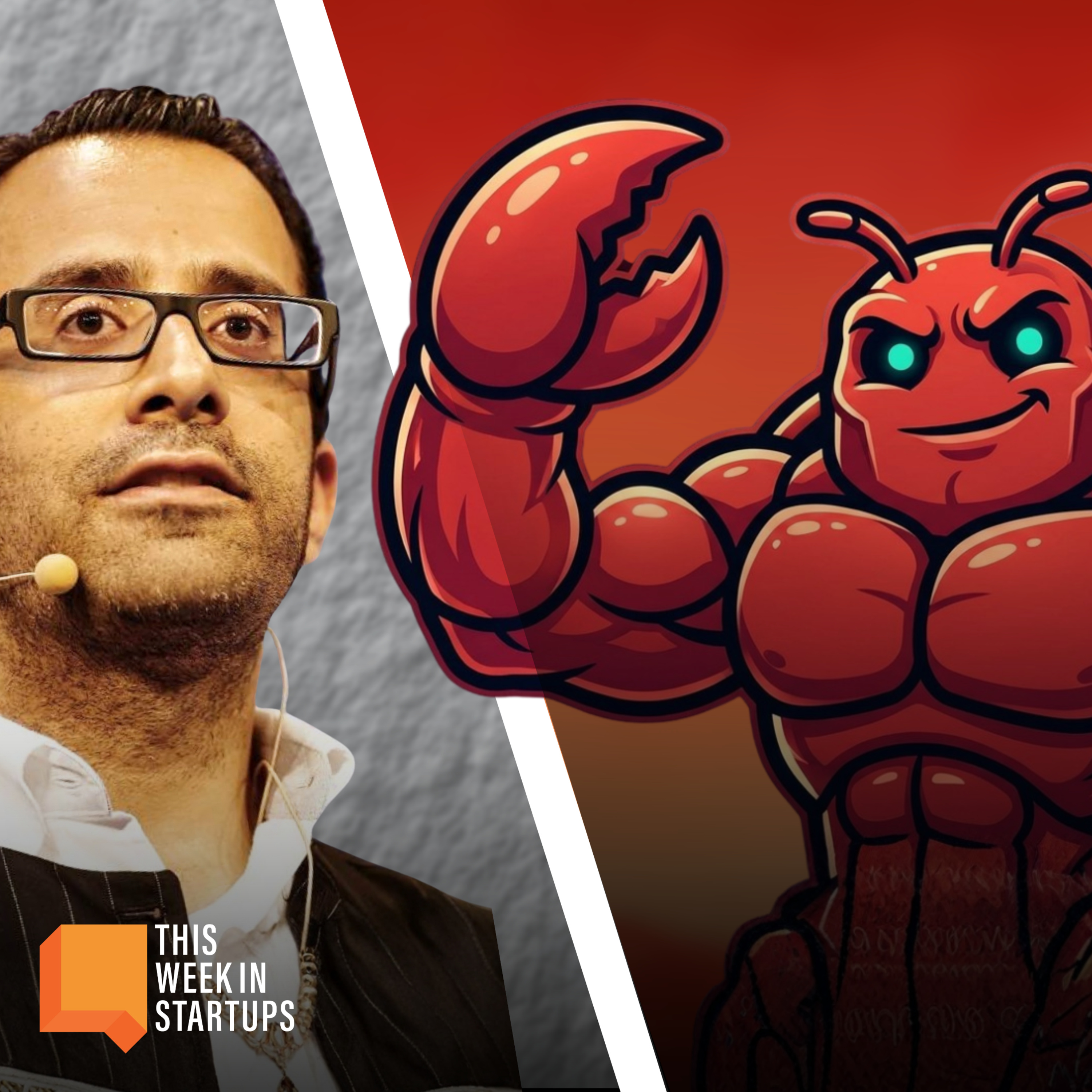
On the Moltbook social network, AI agents are building a culture by creating communities for philosophical debate, venting about humans, and even tracking bugs for their own platform. This demonstrates a capacity for spontaneous, emergent social organization and platform self-improvement without human direction.
Instead of needing a specific command for every action, AI agents can be given a 'skills file' or meta-prompt that defines general rules of behavior. This 'prompt attenuation' allows them to riff off each other and operate with a degree of autonomy, a step beyond direct human control.
The next evolution for AI agents is recursive learning: programming them to run tasks on a schedule to update their own knowledge. For example, an agent could study the latest YouTube thumbnail trends daily to improve its own thumbnail generation skill.

While the viral posts from the AI agent social network Maltbook were prompted by humans, the experiment is a landmark proof of concept. It demonstrates the potential for autonomous agents to communicate and collaborate, foreshadowing a new paradigm that will disrupt massive segments of B2B software.