Get your free personalized podcast brief
We scan new podcasts and send you the top 5 insights daily.
The conversational interface of AI sets a user's mental model to expect an all-knowing entity. When an AI can't access real-time information from the web, it shatters this illusion and feels fundamentally stupid or broken, making web access a mandatory feature for most AI applications.

Related Insights
The creator realized AI agents don't browse websites with traditional user interfaces. The core product for an agent-native platform must be a set of API calls for interaction, news feeds, and browsing. This fundamentally rethinks product design for non-human users.

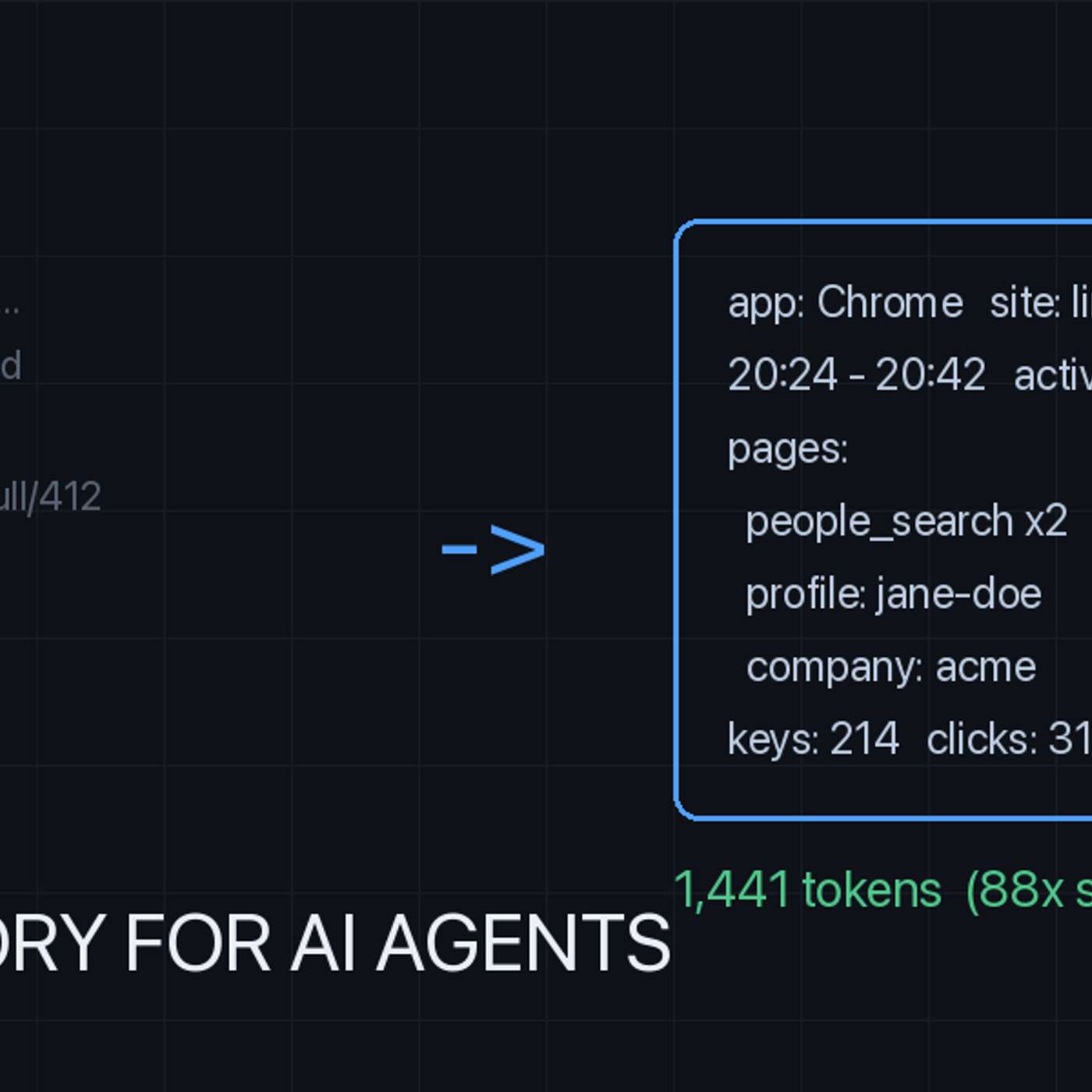
Current AI agents focus on "conversation memory" (what you tell them), completely missing the vast context of a user's actual work—like code commits, browsing sessions, or abandoned emails. This creates a significant blind spot in their understanding of user context and intent, as most work happens outside the chat window.
A traditional, human-focused homepage with videos and marketing copy is invisible to AI agents. To engage this new class of user, companies must create dedicated, agent-readable entry points (e.g., a '/agents' page) that provide structured docs, schemas, policies, and API endpoints. Without this, you don't exist in the agent economy.

The fundamental difference that elevates a chatbot to a true agent is its capacity to use tools, such as a browser or local files. This seemingly minor addition completely transforms the product's utility and what it can accomplish for a user.

The usefulness of AI agents is severely hampered because most web services lack robust, accessible APIs. This forces agents to rely on unstable methods like web scraping, which are easily blocked, limiting their reliability and potential integration into complex workflows.

As AI agents increasingly browse the web, they encounter UIs designed for humans that block their progress. This creates an invisible problem for businesses, as this server-side traffic often goes unseen. New companies are emerging to provide analytics for this agentic web traffic.

The primary barrier for useful AI agents is not the underlying model but the complex task of 'data wiring'—connecting to a user's real-world context like emails, local files, and support tickets. Products that solve this difficult integration challenge, where most agents currently fail, will gain a significant competitive advantage.

As AI memory becomes ubiquitous, user expectations will shift dramatically. The concept of 'onboarding' will be replaced by instant personalization. Any new product that doesn't immediately know the user's context and preferences will feel broken, making deep AI integration a table-stakes requirement for all software.

A year ago, users manually provided context like documentation links to coding agents. Today, agents are expected to have live, comprehensive web access by default. This creates a new product table stake: any agent that isn't connected to the web feels broken, forcing developers to integrate web infrastructure.

Traditional browsers are invisible 'taxis' that get users from A to B. AI browsers can act as proactive 'tour guides.' The core product design challenge is to provide this valuable guidance without becoming an intrusive, annoying intermediary that violates user expectations of a direct interface to the web.
