Get your free personalized podcast brief
We scan new podcasts and send you the top 5 insights daily.
The fundamental difference that elevates a chatbot to a true agent is its capacity to use tools, such as a browser or local files. This seemingly minor addition completely transforms the product's utility and what it can accomplish for a user.

Related Insights
The new paradigm for building powerful tools is to design them for AI models. Instead of complex GUIs, developers should create simple, well-documented command-line interfaces (CLIs). Agents can easily understand and chain these CLIs together, exponentially increasing their capabilities far more effectively than trying to navigate a human-centric UI.

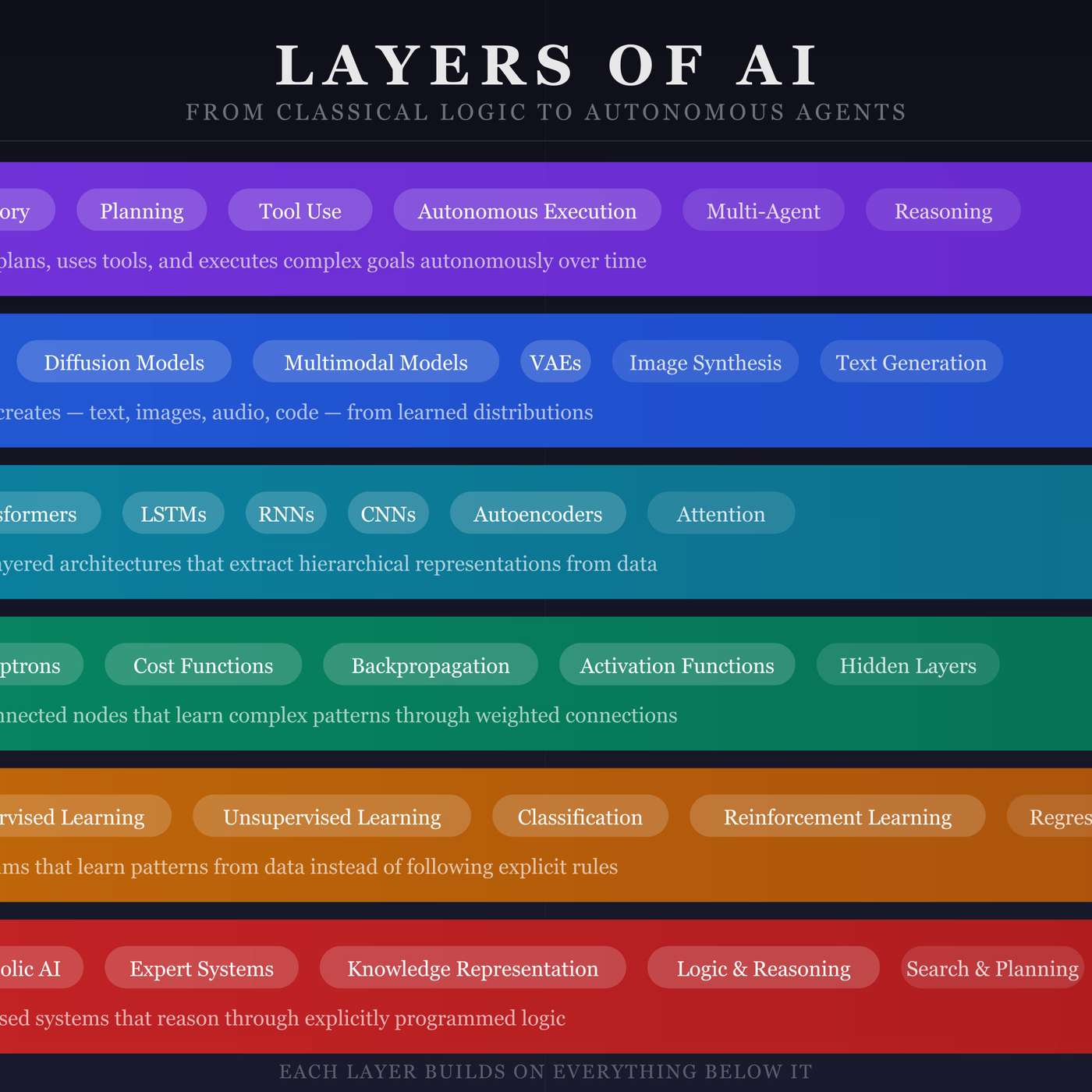
The current pinnacle of the AI stack, 'Agentic AI,' moves beyond simply generating answers to performing autonomous actions. By combining generative models with planning, memory, and tool use (like APIs or code interpreters), these systems can execute complex, multi-step tasks, defining the next wave of product development.
The next major leap for AI agents isn't just better models, but deeply integrated, stateful browsers like OpenAI's Atlas within Codex. When an AI can operate within a browser that remembers logins and context, it removes a major barrier to automating almost any web-based task.

The emergence of personal AI assistants that can be integrated with private data (email, Slack) and execute tasks (send emails, build CRMs) represents a new paradigm. This moves AI from a passive research tool to an active, autonomous agent capable of performing complex knowledge work, fundamentally changing productivity.
The key product innovation of Agent Skills is changing the user's perception of AI. Instead of just a tool that answers questions, AI becomes a practical executor of defined workflows, making it feel less like a chat interface and more like powerful, responsive software.
Tools like ChatGPT are AI models you converse with, requiring constant input for each step. Autonomous agents like OpenClaw represent a fundamental shift where users delegate outcomes, not just tasks. The AI works autonomously to manage calendars, send emails, or check-in for flights without step-by-step human guidance.

Unlike generative AI (like ChatGPT) which only provides text output, agentic AI can perform actions on your behalf. It can log into accounts, click buttons, and complete multi-step tasks, shifting AI from a smart consultant to an autonomous digital assistant.

The primary barrier for useful AI agents is not the underlying model but the complex task of 'data wiring'—connecting to a user's real-world context like emails, local files, and support tickets. Products that solve this difficult integration challenge, where most agents currently fail, will gain a significant competitive advantage.

Tools like Claude Code offer superior capabilities beyond standard chatbots. They can access local file systems, enabling them to read and write files, maintain persistent memory, and execute complex, multi-step "recipes" autonomously, acting as a true virtual assistant rather than a simple text generator.

The next evolution of enterprise AI isn't conversational chatbots but "agentic" systems that act as augmented digital labor. These agents perform complex, multi-step tasks from natural language commands, such as creating a training quiz from a 700-page technical document.
