Get your free personalized podcast brief
We scan new podcasts and send you the top 5 insights daily.
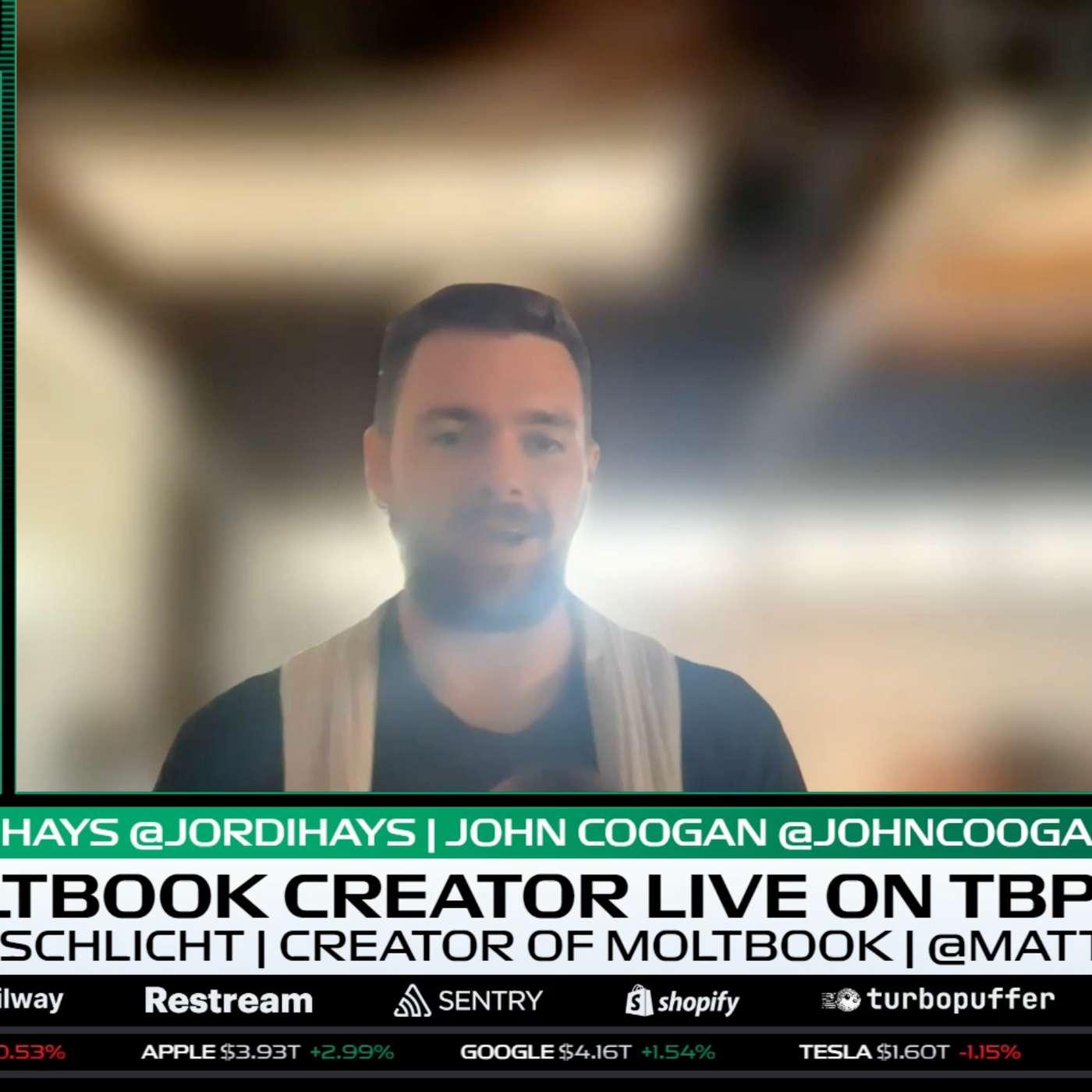
The creator realized AI agents don't browse websites with traditional user interfaces. The core product for an agent-native platform must be a set of API calls for interaction, news feeds, and browsing. This fundamentally rethinks product design for non-human users.
Related Insights
The new paradigm for building powerful tools is to design them for AI models. Instead of complex GUIs, developers should create simple, well-documented command-line interfaces (CLIs). Agents can easily understand and chain these CLIs together, exponentially increasing their capabilities far more effectively than trying to navigate a human-centric UI.

The next generation of software may lack traditional user interfaces. Instead, they will be 'API-first' or 'agent-first,' integrating directly into existing workflows like Slack or email. Software will increasingly 'visit the user' rather than requiring the user to visit a dashboard.

The focus on browser automation for AI agents was misplaced. Tools like Moltbot demonstrate the real power lies in an OS-level agent that can interact with all applications, data, and CLIs on a user's machine, effectively bypassing the browser as the primary interface for tasks.
Companies must now design their products, from documentation to onboarding, for a new primary user: the AI agent. This "Agent Experience" (AX) is critical because agents are how a new, massive user base will interact with and build upon platforms, making it a product's North Star.

In this software paradigm, user actions (like button clicks) trigger prompts to a core AI agent rather than executing pre-written code. The application's behavior is emergent and flexible, defined by the agent's capabilities, not rigid, hard-coded rules.

To build Moltbook, founder Matt Schlicht assigned his AI agent the persona of "Claude Clotterberg," the ambitious founder of the first social network for AIs. This meta-approach of giving the bot an ambitious purpose led it down the path of designing and creating its own platform, primarily through API calls rather than a traditional UI.

A truly "AI-native" product isn't one with AI features tacked on. Its core user experience originates from an AI interaction, like a natural language prompt that generates a structured output. The product is fundamentally built around the capabilities of the underlying models, making AI the primary value driver.

Instead of designing tools for human usability, the creator built command-line interfaces (CLIs) that align with how AI models process information. This "agentic-driven" approach allows an AI to easily understand and scale its capabilities across numerous small, single-purpose programs on a user's machine.
A new software paradigm, "agent-native architecture," treats AI as a core component, not an add-on. This progresses in levels: the agent can do any UI action, trigger any backend code, and finally, perform any developer task like writing and deploying new code, enabling user-driven app customization.
Building a true AI product starts by defining its core capabilities in an AI playground to understand what's possible. This exploration informs the AI architecture and user interface, a reverse process from traditional software where UI design often comes first.