Get your free personalized podcast brief
We scan new podcasts and send you the top 5 insights daily.
A single Trump term was viewed globally as an aberration, but a second would force a permanent recalculation of America's reliability. All countries will adjust their relationship with the US, making it significantly more challenging for any future administration to sustain America's traditional global leadership role.

Related Insights
The US has shifted from anchoring a liberal international order to signaling it stands for nothing beyond its own power and interests. This amoral, transactional stance has alienated democratic allies and eroded the nation's soft power on the world stage.

Trump's re-election shatters the perception that his first term was an aberration. Allies now see his brand of foreign policy as a persistent feature of the American political landscape. Any future US administration, even a traditional one, will face deep skepticism as partners anticipate the pendulum could swing back.
Contrary to expectations of isolationism, the "America First" movement led to an acceleration of U.S. interventionism. The administration's actions were driven by a complex mix of macroeconomic constraints and personality-driven goals, not a simple withdrawal from the world stage.

The true danger of 'predatory hegemony' is not an immediate, catastrophic failure but a gradual degradation of American power, wealth, and influence. This slow fraying of alliances and trust is harder to perceive in the short term but risks leaving the US in a permanently weakened global position over time.
The true 'mega risk' is not a single policy but a fundamental shift in the US global role. The post-1945 global economic system, including free trade and dollar dominance, has been built on a foundation of US security and leadership. If that leadership is withdrawn, the entire international order could change fundamentally.

China is successfully capitalizing on perceptions of American political instability. By presenting itself as a rational, stable power with a long-term vision, it is attracting allies who are weary of the US's perceived chaotic and unhinged behavior on the world stage.

Despite claims of being 'realist,' Trump's foreign policy is fundamentally anti-realist. By alienating allies, cutting R&D, and acting imprudently, it undermines the very sources of long-term American power—partnerships and technological superiority—that a true realist would seek to preserve.
President Trump repeatedly takes actions that foreign policy experts predict will be catastrophic. When these gambles do not result in the worst-case scenario, it reinforces his unconventional approach in the public eye and erodes the credibility of traditional institutions and their warnings.
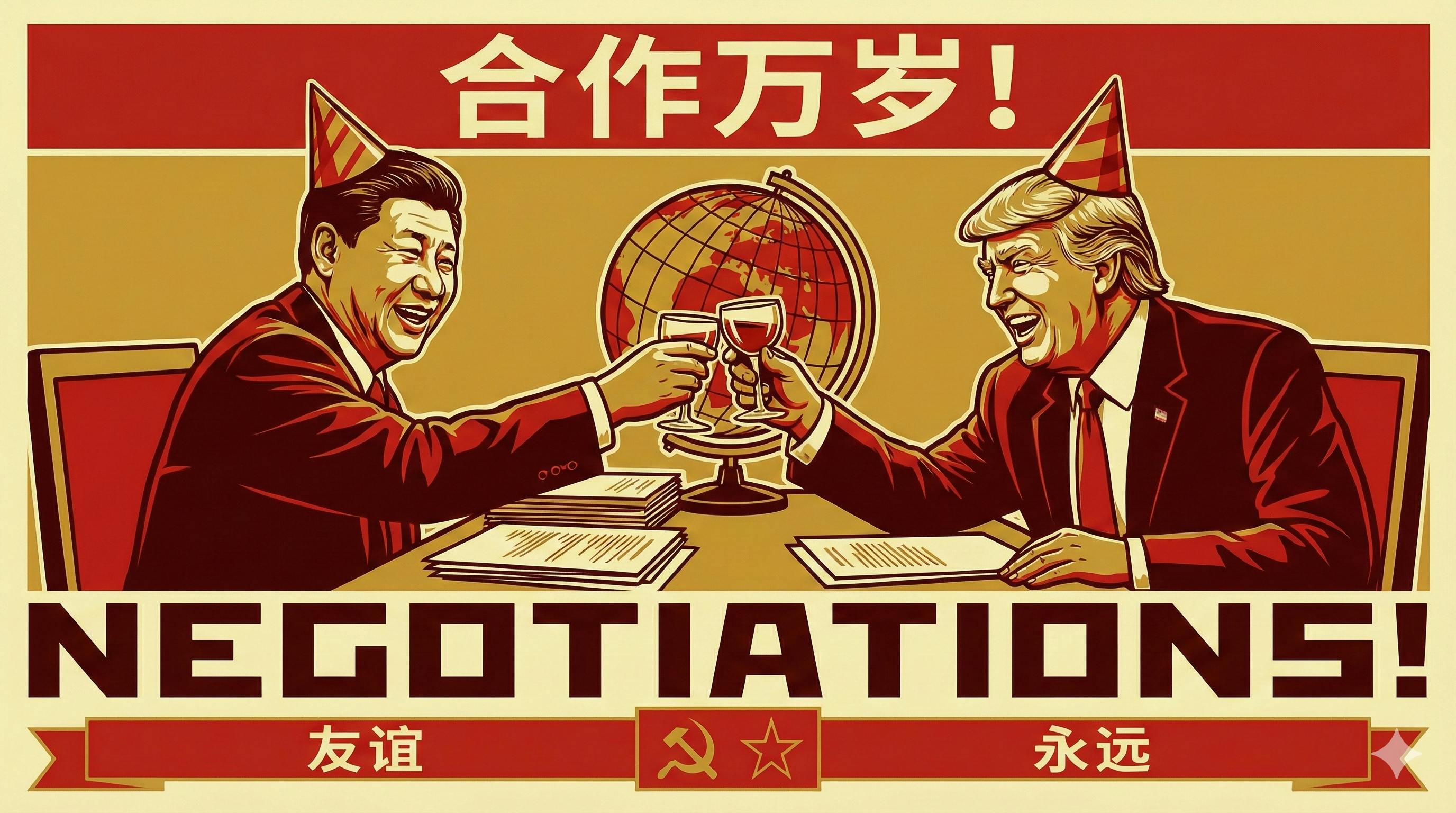
Trump’s signature strategy of building up military force while simultaneously offering diplomatic solutions creates a coercive environment. While it projects short-term strength, it damages long-term relationships, making allies and adversaries alike view the U.S. as an unpredictable and untrustworthy bully.

Misinterpreting Trump's actions as typical political maneuvering for short-term wins is a mistake. His high-risk, world-altering gambles are driven by the ambition to be a consequential president carved onto Mount Rushmore, not just to win the next election. He is playing for a complete reordering of the world.