Get your free personalized podcast brief
We scan new podcasts and send you the top 5 insights daily.
Despite claims of being 'realist,' Trump's foreign policy is fundamentally anti-realist. By alienating allies, cutting R&D, and acting imprudently, it undermines the very sources of long-term American power—partnerships and technological superiority—that a true realist would seek to preserve.

Related Insights
Trump's re-election shatters the perception that his first term was an aberration. Allies now see his brand of foreign policy as a persistent feature of the American political landscape. Any future US administration, even a traditional one, will face deep skepticism as partners anticipate the pendulum could swing back.
The United States' greatest strategic advantage over competitors like China is its vast ecosystem of over 50 wealthy, advanced, allied nations. China has only one treaty ally: North Korea. Weakening these alliances through punitive actions is a critical foreign policy error that erodes America's primary source of global strength.

By dismantling the post-WWII global order, the Trump administration forces allies to realign with China. As the U.S. retreats from global partnerships, China is positioned to dominate key industries like renewable energy, making the 21st century "the China century" by default as the world moves on without America.

The true danger of 'predatory hegemony' is not an immediate, catastrophic failure but a gradual degradation of American power, wealth, and influence. This slow fraying of alliances and trust is harder to perceive in the short term but risks leaving the US in a permanently weakened global position over time.
Viewing Trump's actions as part of a grand strategic plan is flawed. According to inside sources, his administration's policy is purely tactical and present-focused, lacking memory of past decisions or a vision for the future. The mantra is, 'There is no yesterday. There is no tomorrow. There is only the now.'

President Trump repeatedly takes actions that foreign policy experts predict will be catastrophic. When these gambles do not result in the worst-case scenario, it reinforces his unconventional approach in the public eye and erodes the credibility of traditional institutions and their warnings.
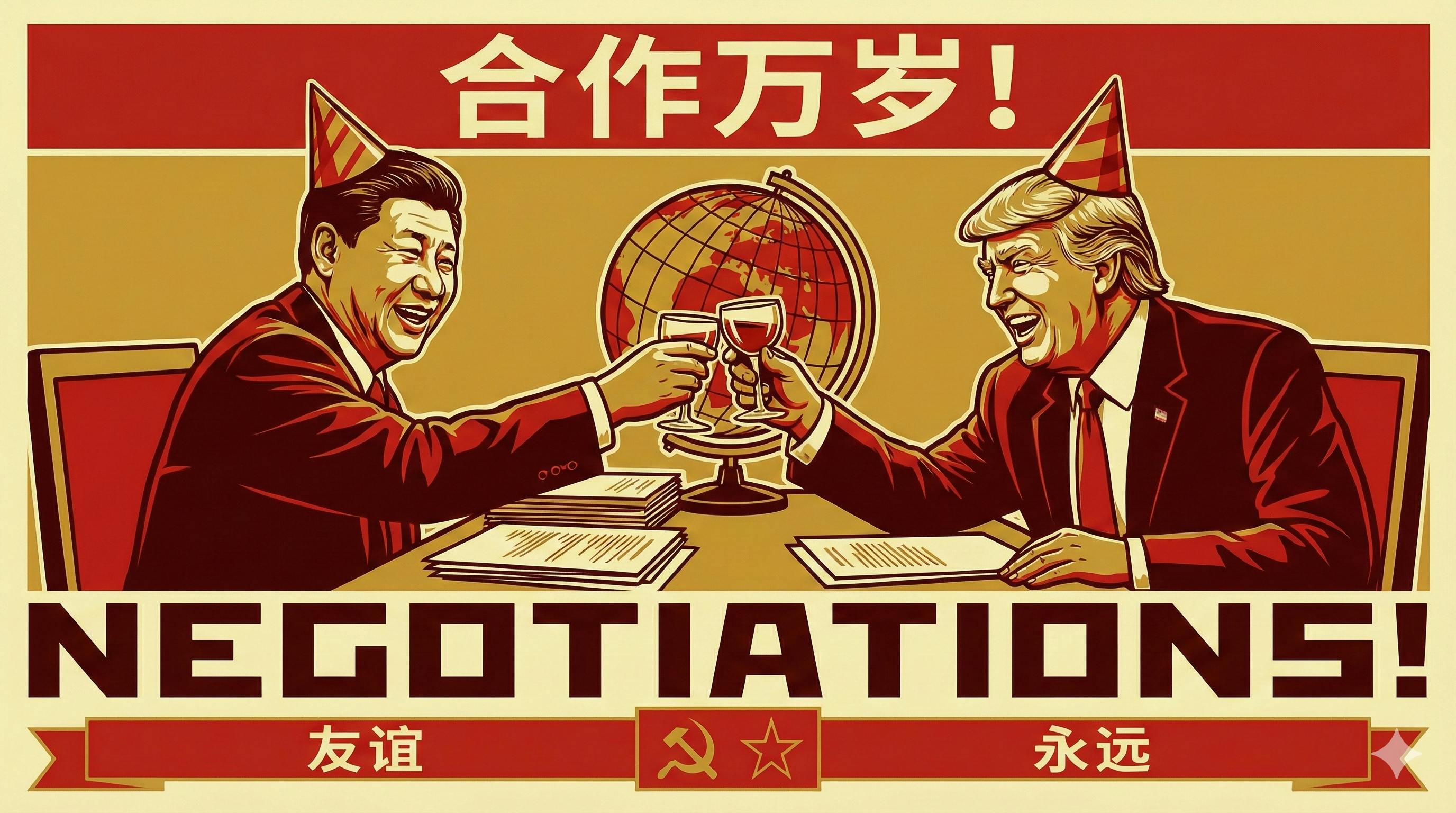
The US's global power is eroding due to debt and inflation. Trump's aggressive foreign policy is not random; it's a high-risk strategy to press America's current advantage and re-establish dominance before rivals like China can take over. The only alternative is accepting a managed decline.

Marco Rubio articulated Trump's foreign policy as a 'spheres of influence' model, a modern Monroe Doctrine. This framework cedes global leadership, envisioning a world where the U.S. controls the West, Russia controls its territory and Europe, and China controls Asia. This marks a fundamental shift from America's post-WWII role as a global superpower to a regional one.

Stephen Walt defines Trump's foreign policy as 'predatory hegemony,' a unique strategy where a dominant power uses its leverage to extract concessions and tribute from everyone, including long-standing allies. This departs from traditional great power politics, which is typically predatory only toward rivals.
The administration's aggressive, unilateral actions are pushing European nations toward strategic autonomy rather than cooperation. This alienates key partners and fundamentally undermines the 'Allied Scale' strategy of building a collective economic bloc to counter adversaries like China.
