Get your free personalized podcast brief
We scan new podcasts and send you the top 5 insights daily.
Protests in Iran, if they disrupt the regime, could halt cheap oil flows to China. This would force China to buy from more expensive, US-friendly markets, strengthening the US dollar's global dominance and isolating anti-Western powers without direct US intervention.

Related Insights
While Venezuela is a minor oil supplier to China, Iran is a substantial source of crude and heavy oil used for infrastructure projects like asphalt. A regime change in Iran could lead to the country selling its oil to the West instead of China, creating a significant economic and geopolitical destabilization for Beijing.

The US freezing Russian assets and cutting SWIFT access during the Ukraine war demonstrated the risks of relying on the dollar. This prompted countries like China to accelerate their diversification into gold, viewing it as a geopolitically neutral asset to reduce their vulnerability to US foreign policy and sanctions.
The US dollar's dominance is less about its role in oil transactions (petrodollar) and more about its deep integration into global banking and financial plumbing via the Eurodollar system. This structural entrenchment makes it incredibly difficult to displace.

China's frantic deployment of solar is a strategic move to reduce dependence on oil imported through sea lanes it doesn't control, such as the Strait of Malacca. By becoming an 'electrostate,' China aims to neutralize a key point of economic and military leverage held by the U.S. and its allies.

The primary risk for the U.S. is not the inevitable decline of the dollar's dominance, which could rebalance the economy. The danger lies in trying to fight this trend, leading to a disorderly and painful collapse rather than a graceful, managed transition from a position of strength.

A clean, external removal of Iran's leadership, similar to what occurred in Venezuela, is unlikely. Iran's population is nearly four times larger, it is geographically distant, and the American political psyche associates the Middle East with costly military entanglements, creating a much higher barrier to intervention.

Each time the U.S. uses financial sanctions, it demonstrates the risks of relying on the dollar system. This incentivizes adversaries like Russia and China to accelerate the development of parallel financial infrastructure, weakening the dollar's long-term network effect and dominance.
The current Iranian protests are uniquely potent because the regime is at its weakest geopolitically. The loss of regional proxies like Hezbollah and Hamas, coupled with key ally Russia's preoccupation with Ukraine, has left the Iranian government more isolated and vulnerable than during any previous wave of unrest.
While US sanctions are a factor, the Iranian currency's freefall is largely due to structural corruption. The economy is dominated by the military and clerical foundations, a political-economic model that stifles growth and fuels public anger—a problem sanctions relief alone cannot solve.
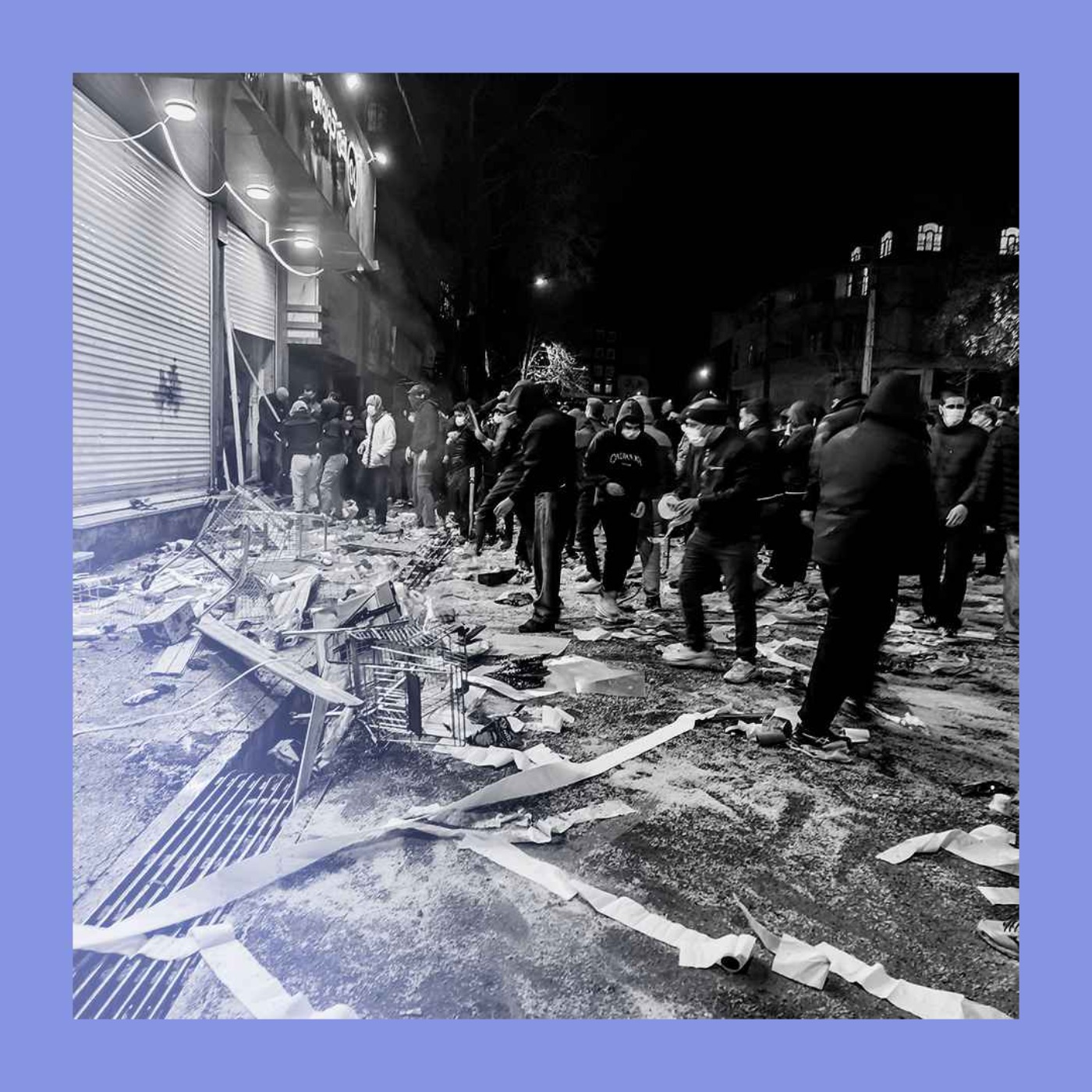
Despite widespread internal protests and instability, history shows that an external attack is one of the few things that can unify the Iranian population. A potential Israeli strike, meant to weaken the regime, could backfire by creating a 'rally 'round the flag' effect that shores up support for the Ayatollah.