Get your free personalized podcast brief
We scan new podcasts and send you the top 5 insights daily.
Any behavior, emotion, or belief satisfying at least three of the six core human needs (certainty, uncertainty, significance, connection, growth, contribution) will become an addiction. This model explains the compulsive nature of both positive habits and destructive behaviors like violence or online trolling.

Related Insights
Humans evolved to have different "drugs of choice" as a survival mechanism. If everyone sought the same rewards, groups would quickly deplete a single resource. This once-adaptive trait now makes us vulnerable to a wide array of modern, hyper-stimulating temptations.
Modern society turns normal behaviors like eating or gaming into potent drugs by manipulating four factors: making them infinitely available (quantity/access), more intense (potency), and constantly new (novelty). This framework explains how behavioral addictions are engineered, hijacking the brain’s reward pathways just like chemical substances.
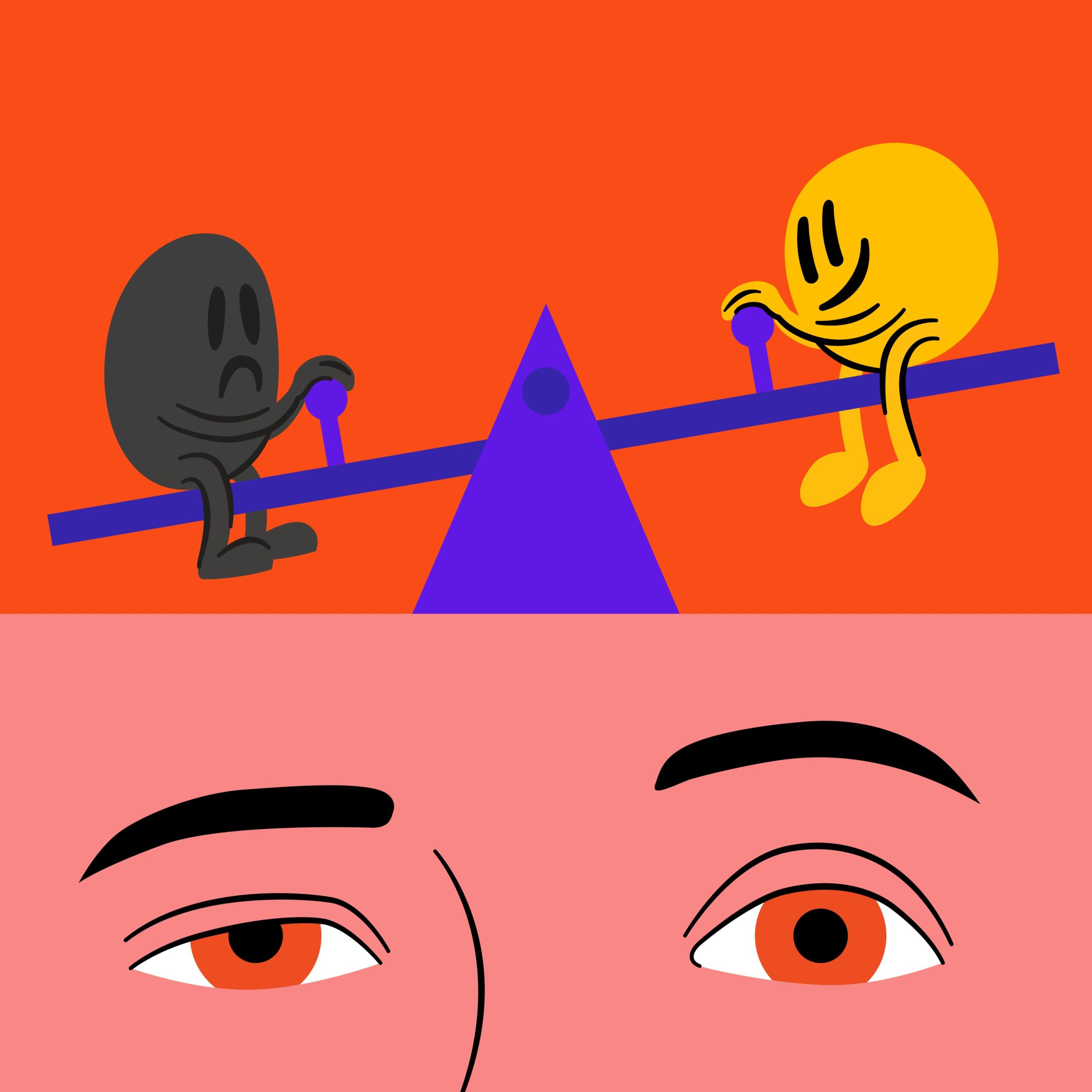
A compelling theory frames addiction as a learning disorder. While most brains downgrade a behavior's value as negative consequences pile up, the addict's brain gets stuck on the initial reward signal, failing to update the calculation that the behavior is no longer beneficial.

A powerful definition of addiction is the gradual shrinking of a person's sources of joy. As the addiction takes hold, natural rewards like relationships, work, and hobbies fall away until the substance or behavior becomes the only thing left that provides a feeling of reward, creating a powerful psychological dependency.

Addiction isn't defined by the pursuit of pleasure. It's the point at which a behavior, which may have started for rational reasons, hijacks the brain’s reward pathway and becomes compulsive. The defining characteristic is the inability to stop even when the behavior no longer provides pleasure and begins causing negative consequences.
Initially, addictive behaviors are pursued for a pleasurable dopamine rush. Over time, the brain's dopamine system adapts and down-regulates, diminishing the pleasure. The behavior then becomes a compulsive habit driven not by a desire for a high, but by the urgent need to avoid the anxiety and physical discomfort of withdrawal.

Psychiatrist Anna Lemke details her own obsession with romance novels, which began innocently but escalated to needing more graphic content, hiding her reading, and losing interest in family and work. Her story shows how any highly reinforcing behavior, not just illicit drugs, can become a true addiction.
Addiction isn't just about substances; it's a pattern. Any thought, emotion, or action that reliably satisfies at least three of the six human needs (certainty, variety, significance, love, growth, contribution) will become a compulsion, whether positive or negative.

We mistakenly think kids are drawn to screens for pleasure. Neuroscience shows dopamine drives the desire and craving for an activity, creating a compulsion loop even when the activity itself ceases to be enjoyable or even becomes negative. It's the brain's 'do-it-again' button, not its 'feel-good' button.

The biggest addiction isn't drugs, but problems. The deepest human fear is being 'not enough' and therefore unlovable. Identifying with a 'big problem' provides an external excuse for shortcomings, protecting the ego from this core fear and becoming a primary way to connect with others.