Get your free personalized podcast brief
We scan new podcasts and send you the top 5 insights daily.
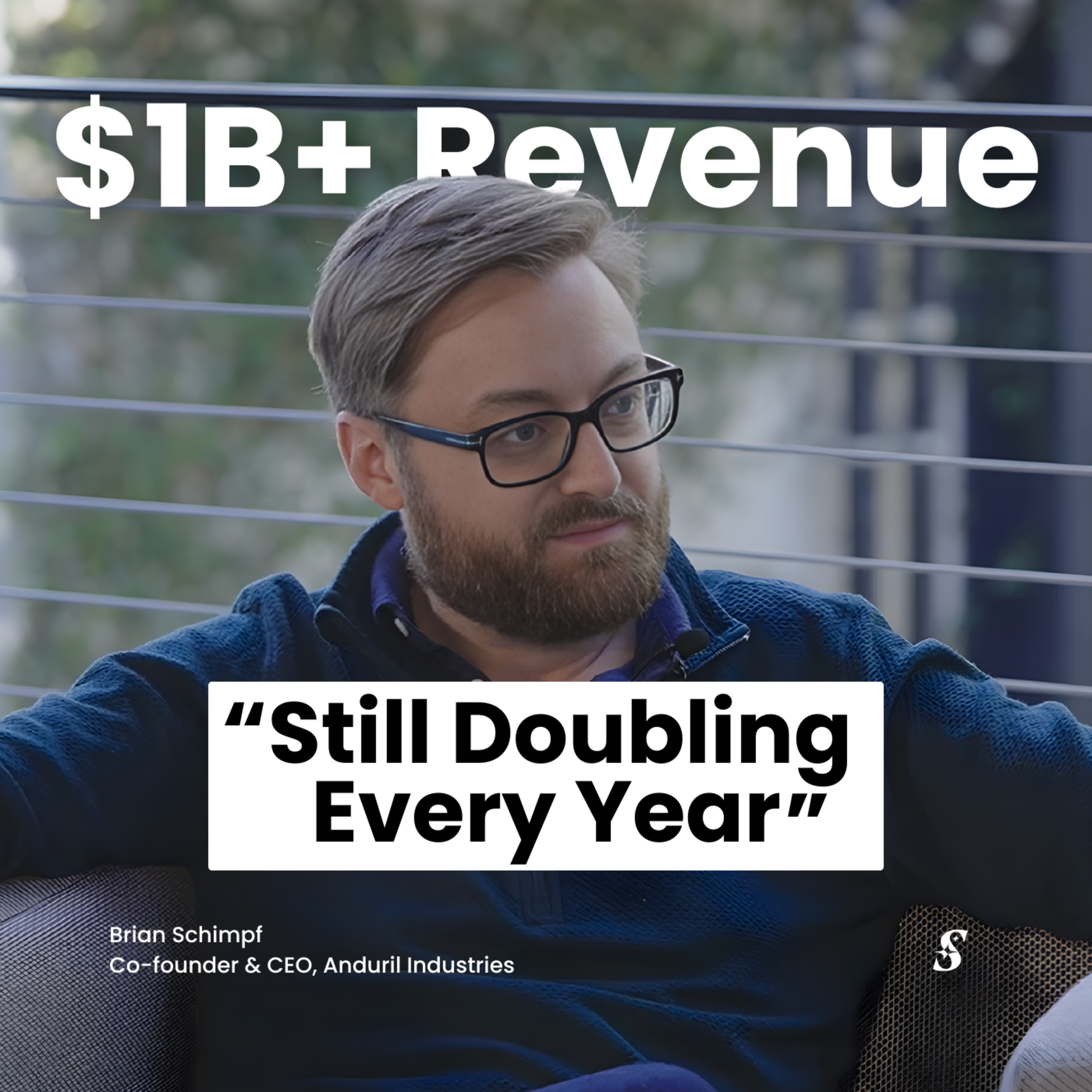
Robert McNamara's efficiency-focused systems in the 1960s unintentionally suffocated the US's industrial capacity. By introducing massive friction and layers of "bean counters," it made building anything slow and expensive, a systemic problem that persists today and which Anduril was built to counteract.

Related Insights
The Pentagon has created separate innovation verticals (like DIU, AFWERX) that are isolated from core operations. This structure mirrors Enron's ornamental risk division, offloading responsibility for adaptation without integrating learning into the decision-making cycle, leading to institutional stagnation.

The DoD's global R&D share has plummeted from 36% to under 1%, so it can no longer dictate cutting-edge specs. Anduril funds its own R&D to solve a mission, then sells the finished capability, flipping the traditional government-funded, built-to-spec model on its head.
The US defense industry's error was creating a separate, "exquisite" industrial base. The solution is designing weapons that can be built using existing, scalable commercial manufacturing techniques, mirroring the successful approach used during World War II.
Historically, major defense innovations like ICBMs and the U-2 spy plane succeeded when a builder ("founder") was shielded by an internal military champion ("maverick"). This pairing provides the political cover and resources needed to navigate and overcome institutional inertia.
The belief that China builds fast only because it's a dictatorship is flawed. Democratic America built a B-24 bomber every hour during WWII, while today it struggles with basic infrastructure. This shows that bureaucratic decay, not the form of government, is the true barrier to rapid execution.

The defense procurement system was built when technology platforms lasted for decades, prioritizing getting it perfect over getting it fast. This risk-averse model is now a liability in an era of rapid innovation, as it stifles the experimentation and failure necessary for speed.

The decisive advantage in future conflicts will not be just technological superiority, but the ability to mass-produce weapons efficiently. After decades of offshoring manufacturing, re-industrializing the US to produce hardware at scale is Anduril's core strategic focus, viewing the factory itself as the ultimate weapon.

Under Secretary of War Emil Michael states the biggest barrier for defense startups isn't technology, but navigating procurement bureaucracy. By reforming requirements and shifting to commercial-style, fixed-cost contracts, the Pentagon aims to favor product innovation over process navigation.

Anduril's co-founder argues America's atrophied manufacturing base is a critical national security vulnerability. The ultimate strategic advantage isn't a single advanced weapon, but the ability to mass-produce "tens of thousands of things" efficiently. Re-industrializing is therefore a core pillar of modern defense strategy.

The Department of War's 'peacetime speed' isn't just bureaucratic inertia. It traces back to a 'Last Supper' event where Pentagon leaders intentionally told industry to slow innovation and consolidate. This historical context reveals the deep-seated cultural challenges in accelerating defense procurement today.
