Get your free personalized podcast brief
We scan new podcasts and send you the top 5 insights daily.
Tom cites Tocqueville's observation that monarchy and revolution destroyed intermediate bodies, leaving Jacobin departments ruled from Paris. With no regional release valve, French anger has only two gears: an elected-monarch president or shutting the country down. That pushes protests toward the barricades rather than bargaining.

Related Insights
Widespread violence, like the French riots, is not random. It's an inevitable outcome when a society faces a "shrinking pie" economy and lacks a strong, shared national identity to unify its diverse populations. Populism and conflict are the predictable results.
Contrary to being pure chaos, the institutions of the Terror centralized power, stabilized the economy with price controls, and successfully prosecuted the war. It created a stronger central government in France than had existed for years, demonstrating its function as a tool of state consolidation.

Tom says student complaints are legitimate, but calling the unrest student riots is nonsensical. Once students barricade schools, other groups with grievances pour in because the cost of rioting has dropped. A small spark becomes a wildfire that absorbs many causes.
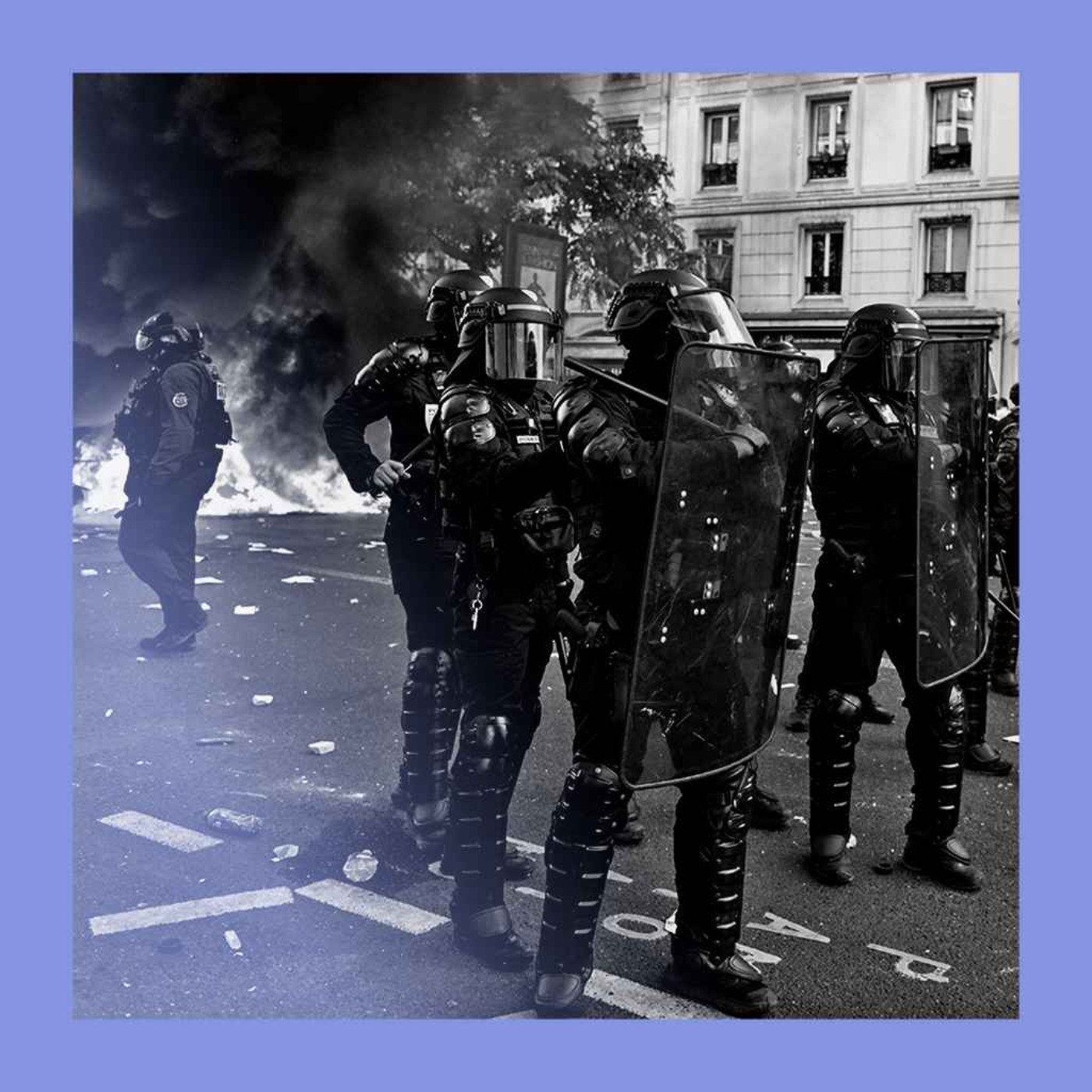
Sophie Petter says the government blamed the far left, while both extremes blamed police numbers. Interior Minister Lorne Nunez acknowledged police lost control and offered to resign; his resignation was not accepted, showing authorities underestimated turnout and violence. That admission captures how badly the state was caught off guard.

The so-called "federalist uprising" was not a royalist conspiracy, but a rebellion by the revolution's original supporters. The mercantile middle classes and artisans in cities like Lyon, who had been the bedrock of the revolution, rose up against what they saw as the tyranny of Parisian extremists.
Secondary school demonstrations in France began over narrow, operational issues like exam formatting, facility disrepair, and teacher absences. However, the movement rapidly surged to over 250,000 protesters because it absorbed deep national anxiety. With a 5% budget deficit, bond market pressure demanding spending cuts, and an impending presidential election, local school dissatisfaction became an outlet for wider political tension and resistance to government austerity.
Throughout the revolution, radical factions consistently pushed the agenda further left. Hébert's attempted insurrection in March 1794 was the first to fail, signaling that the revolutionary energy of the Paris streets had been exhausted and tamed by the centralized power of the governing committees.
History demonstrates a direct, causal link between widening inequality and violent societal collapse. When a large portion of the population finds the system unbearable, it leads to events like the French Revolution—a blunt cause-and-effect relationship often sanitized in modern discourse.

Tom notes French public spending is 57% of GDP and one in five workers is a civil servant. Reform means a visible income hit to millions of organized people who are ready to march and burn, while future beneficiaries like young workers are scattered and voiceless.
Sophie Petter says the violence lets everyone blame the government for losing control, but it especially helps Marine Le Pen's law-and-order presidential campaign. The far left can also point to state failure, yet she says Le Pen benefits most. This dynamic turns disorder into electoral fuel for the extremes.