Get your free personalized podcast brief
We scan new podcasts and send you the top 5 insights daily.
Secondary school demonstrations in France began over narrow, operational issues like exam formatting, facility disrepair, and teacher absences. However, the movement rapidly surged to over 250,000 protesters because it absorbed deep national anxiety. With a 5% budget deficit, bond market pressure demanding spending cuts, and an impending presidential election, local school dissatisfaction became an outlet for wider political tension and resistance to government austerity.
Related Insights
Populism gains traction because the average person struggles to make ends meet. This political pressure leads to fiscally irresponsible policies and promises, which in turn exacerbate the economic problems, creating a self-reinforcing downward spiral.

The primary functions of protest are to publicly signal that a situation is not normal and to act as an incubator for building practical infrastructure, like the carpooling network during the Montgomery bus boycott. It is a gateway to organized, sustained action, not just a performative measure.

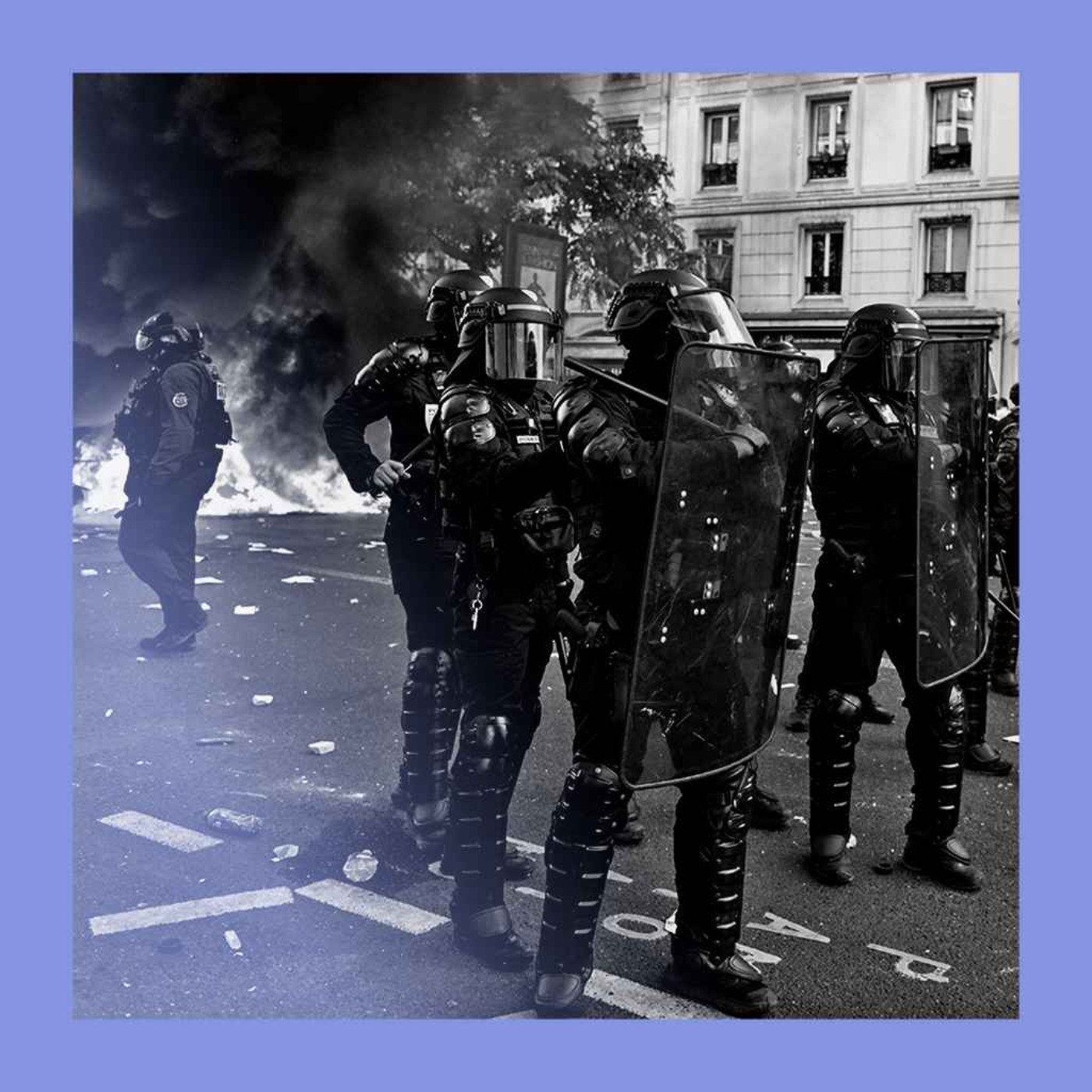
Widespread violence, like the French riots, is not random. It's an inevitable outcome when a society faces a "shrinking pie" economy and lacks a strong, shared national identity to unify its diverse populations. Populism and conflict are the predictable results.
History, particularly the French Revolution, shows that when a society reaches a point where the working class cannot afford basic necessities despite their labor, the risk of violent upheaval skyrockets. This reflects a simmering rage against a perceived obscene wealth gap.

History shows that the combination of economic stagnation, social instability (often linked to cultural and demographic shifts), and a loss of faith in the political class creates a predictable environment for conflict, violence, and civil unrest.

The Commune expected Paris's working-class sans-culottes to rise up in Robespierre's defense as they had in previous crises, but the streets remained quiet. The government had alienated ordinary citizens by enforcing harsh wage caps, prosecuting striking workers, and even banning celebratory neighborhood street parties as counter-revolutionary. When ideological leaders impose severe economic austerity and suppress everyday community life, grassroots loyalty inevitably evaporates.

Public backlash and student protests over failing institutional systems cannot be resolved simply by increasing budgets. Looking at European school riots, Bilyeu emphasizes that nations already spending above average still fail because funding is absorbed by administrative expansion rather than teaching talent. Real institutional revitalization demands assessing tangible skill outcomes, reducing bureaucratic overhead, and keeping educational content aligned with market utility.
History demonstrates a direct, causal link between widening inequality and violent societal collapse. When a large portion of the population finds the system unbearable, it leads to events like the French Revolution—a blunt cause-and-effect relationship often sanitized in modern discourse.

Contrary to cynicism that protests achieve little, research shows a strong correlation between mass participation and electoral outcomes. For example, high turnout in the 2017 Women's Marches had a powerful predictive effect on the diversity of candidates and the Democratic "blue wave" in the 2018 midterm elections.
Despite relatively low inflation, French political instability is causing widespread economic uncertainty. This leads businesses to delay hiring and investment, and prompts ordinary citizens to increase their savings rates as a hedge against an unpredictable future.