Get your free personalized podcast brief
We scan new podcasts and send you the top 5 insights daily.
Sophie Petter says the government blamed the far left, while both extremes blamed police numbers. Interior Minister Lorne Nunez acknowledged police lost control and offered to resign; his resignation was not accepted, showing authorities underestimated turnout and violence. That admission captures how badly the state was caught off guard.

Related Insights
Aggressive state tactics like internet shutdowns and physical baton strikes often backfire by radicalizing casual observers. Young citizens who originally encountered satirical online content become hardened, recurring street demonstrators once they experience unprovoked police brutality against themselves and their peers.
Contrary to romanticized views, violent uprisings historically hurt the working and middle classes most. The French Revolution's Reign of Terror executed thousands of middle-class citizens—lawyers, merchants, and farmers—not just aristocrats. The elite often have the resources to escape, while the masses bear the brunt of the chaos.

French debt market stress is not driven by unanticipated fiscal deterioration, as France has run structural deficits for decades. Instead, investors are repricing political risk, fearing that even a presidential victory by Marine Le Pen in 2027 will lead to a fractured, ungovernable parliament incapable of passing budgets.

The key instruments of the Reign of Terror, such as the Revolutionary Tribunal and the Committee of Public Safety, were not part of a preconceived blueprint. They were created on an ad hoc basis in the spring of 1793 in panicked response to overlapping military, economic, and internal crises.

The descent into violence was not an organic accident but a series of deliberate choices. Radical activists organized provocative marches specifically to "show the dirt" under the system. In response, loyalists chose to ambush them with nail-studded cudgels. Both sides actively chose confrontation over de-escalation, believing it served their political interests.
A study of Spain's 15M movement showed that an episode of violence had little effect on core supporters but caused a 12% drop in support from sympathetic but unaligned citizens. This hinders a movement’s ability to grow its base, a key factor for success.

The host argues that modern riots are an echo of a "feminized" culture where policy focuses excessively on compassion and root causes. This leads to weak law enforcement and a failure to set hard boundaries, inadvertently permitting destructive behavior.

In France, centrist parties are trapped. Treating the populist National Rally as a pariah has failed to stop its growth. Conversely, treating it as a respectable political opponent has also boosted its popularity, creating a strategic dead-end for the mainstream.

Secondary school demonstrations in France began over narrow, operational issues like exam formatting, facility disrepair, and teacher absences. However, the movement rapidly surged to over 250,000 protesters because it absorbed deep national anxiety. With a 5% budget deficit, bond market pressure demanding spending cuts, and an impending presidential election, local school dissatisfaction became an outlet for wider political tension and resistance to government austerity.
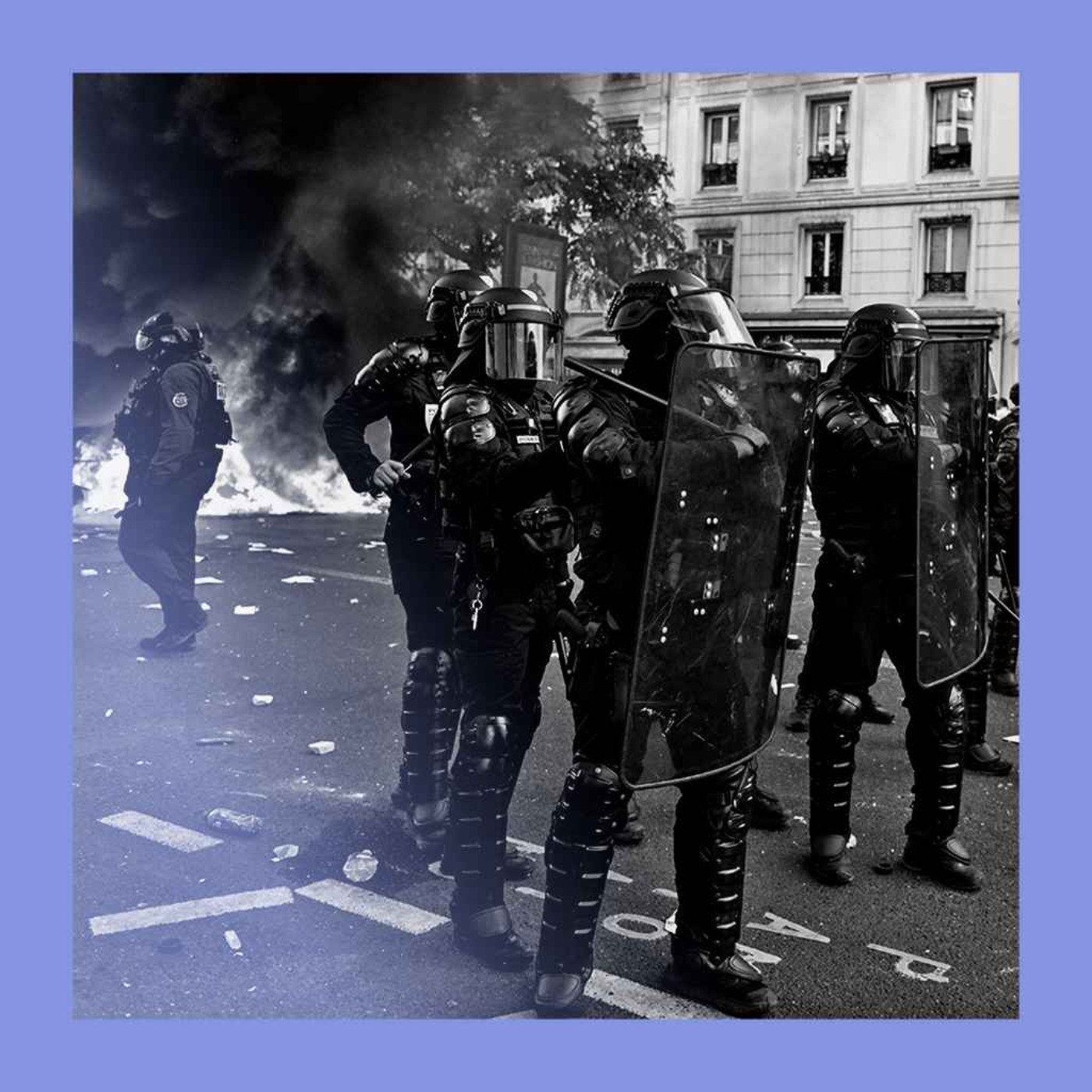
Sophie Petter says the violence lets everyone blame the government for losing control, but it especially helps Marine Le Pen's law-and-order presidential campaign. The far left can also point to state failure, yet she says Le Pen benefits most. This dynamic turns disorder into electoral fuel for the extremes.