Get your free personalized podcast brief
We scan new podcasts and send you the top 5 insights daily.
Tom says student complaints are legitimate, but calling the unrest student riots is nonsensical. Once students barricade schools, other groups with grievances pour in because the cost of rioting has dropped. A small spark becomes a wildfire that absorbs many causes.

Related Insights
Tom cites Tocqueville's observation that monarchy and revolution destroyed intermediate bodies, leaving Jacobin departments ruled from Paris. With no regional release valve, French anger has only two gears: an elected-monarch president or shutting the country down. That pushes protests toward the barricades rather than bargaining.
Widespread violence, like the French riots, is not random. It's an inevitable outcome when a society faces a "shrinking pie" economy and lacks a strong, shared national identity to unify its diverse populations. Populism and conflict are the predictable results.
Mass support for political violence creates a crucial motivator for volatile individuals: social approval. The expectation that their actions will be celebrated by millions nudges them over the edge to commit violent acts, a dynamic amplified by social media.

History shows that the combination of economic stagnation, social instability (often linked to cultural and demographic shifts), and a loss of faith in the political class creates a predictable environment for conflict, violence, and civil unrest.

Civil unrest and destructive populist outbreaks reflect an underlying collapse in national cohesion, trust, and shared values. When historical narratives focus exclusively on national guilt and institutions abandon social assimilation, citizens lose common ground and devolve from reasoning individuals into destructive hordes. Resolving surface flashpoints like school policy fails to stop unrest without restoring foundational cultural trust.
The descent into violence was not an organic accident but a series of deliberate choices. Radical activists organized provocative marches specifically to "show the dirt" under the system. In response, loyalists chose to ambush them with nail-studded cudgels. Both sides actively chose confrontation over de-escalation, believing it served their political interests.

The primary problem isn't the small number of violent extremists, but the far larger population that sympathizes with them. This mass support normalizes and encourages violence, creating the environment for it to flourish, as seen in conflicts from Northern Ireland to the US.
Secondary school demonstrations in France began over narrow, operational issues like exam formatting, facility disrepair, and teacher absences. However, the movement rapidly surged to over 250,000 protesters because it absorbed deep national anxiety. With a 5% budget deficit, bond market pressure demanding spending cuts, and an impending presidential election, local school dissatisfaction became an outlet for wider political tension and resistance to government austerity.
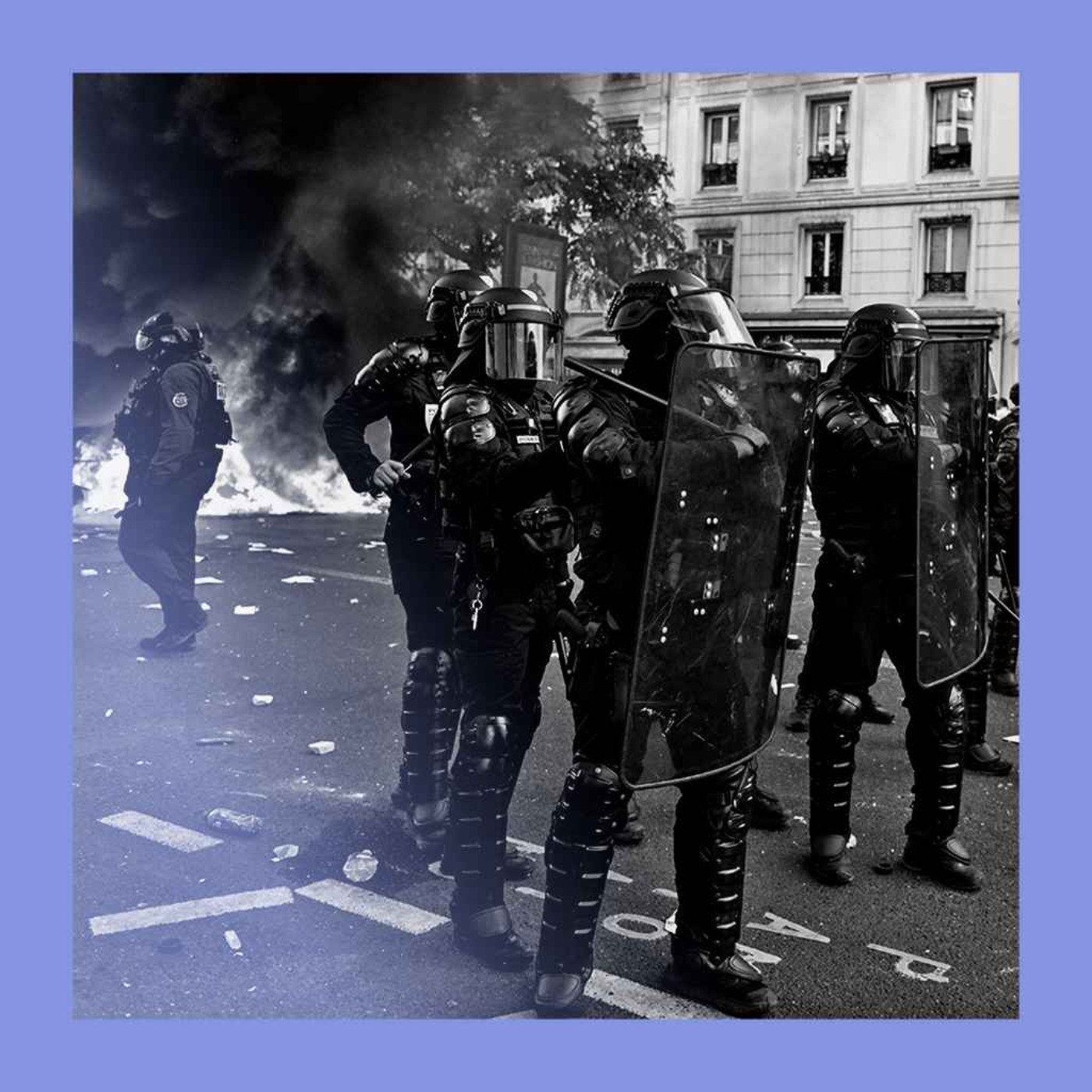
Tom notes French public spending is 57% of GDP and one in five workers is a civil servant. Reform means a visible income hit to millions of organized people who are ready to march and burn, while future beneficiaries like young workers are scattered and voiceless.
Widespread public support for political violence acts like combustible material. It may lie dormant, but it can be ignited into a wildfire of action by a single focal point, such as a contested election result or the certification of a vote.