Get your free personalized podcast brief
We scan new podcasts and send you the top 5 insights daily.
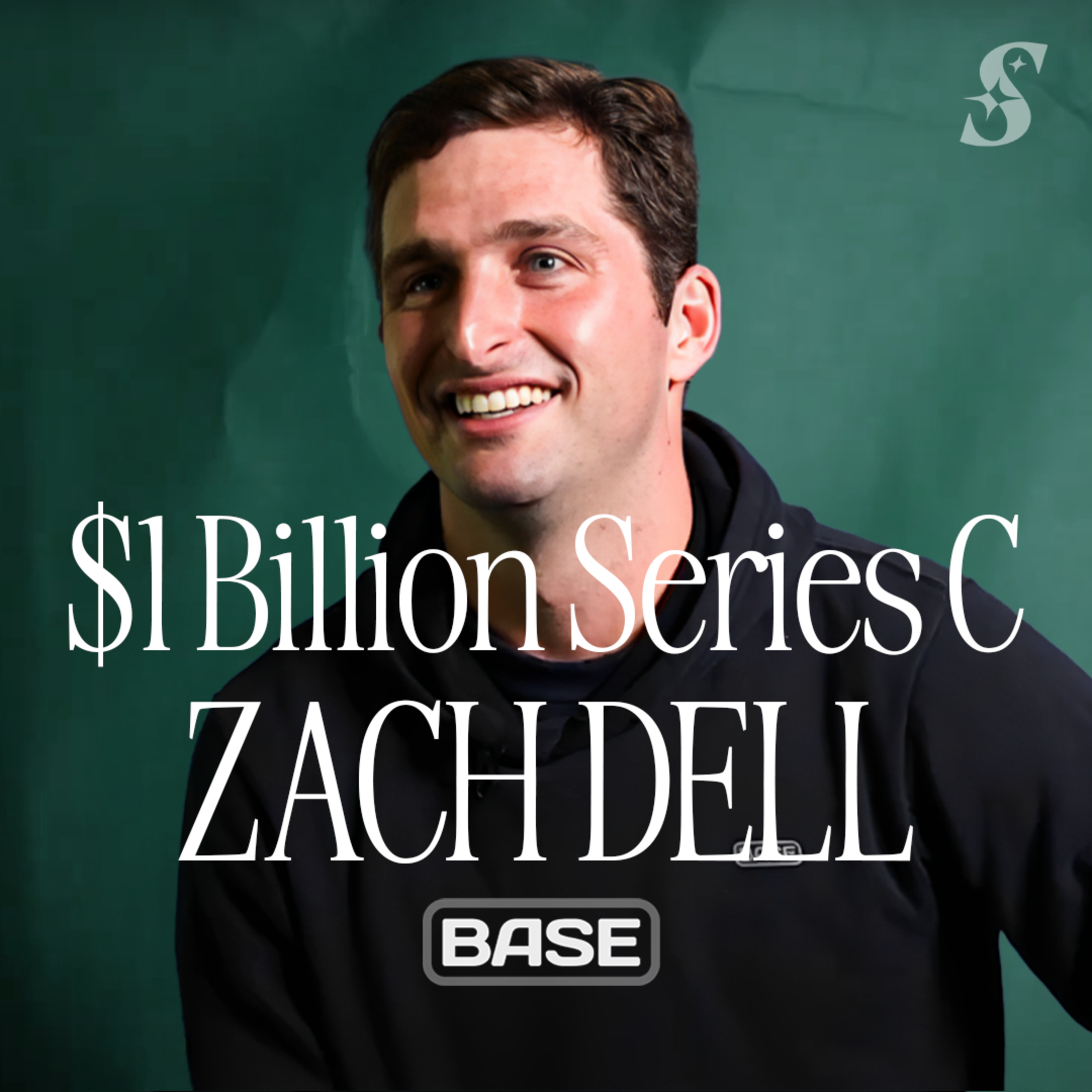
For Base, a $1B fundraise serves a dual purpose: funding capital-intensive growth and acting as a powerful recruiting tool. The massive round signals to top-tier engineers and operators that the company is playing on a global stage, making it a more compelling career destination than less capitalized competitors.
Related Insights
A massive valuation for a "seed" round can be misleading. Often, insiders have participated in several unannounced, cheaper tranches. The headline number is just the final, most expensive tier, used to create FOMO and set a high watermark for new investors.

Base intentionally constructs its cap table with a mix of investor types: growth funds for pattern matching, sector funds for domain expertise, strategic partners for market access (e.g., homebuilders), and endowments for long-term stability. This turns the cap table into an active asset beyond just capital.
Raise capital when you can clearly see upcoming growth and need resources to service it. Tying your timeline to operational milestones, like onboarding new customers, creates genuine urgency and momentum. This drives investor FOMO and helps close deals more effectively than an arbitrary deadline.

To win highly sought-after deals, growth investors must build relationships years in advance. This involves providing tangible help with hiring, customer introductions, and strategic advice, effectively acting as an investor long before deploying capital.
![David George - Building a16z Growth, Investing Across the AI Stack, and Why Markets Misprice Growth - [Invest Like the Best, EP.450] thumbnail](https://megaphone.imgix.net/podcasts/8da7dbd8-ceeb-11f0-941c-ef83bcdd4c9f/image/d44107bc94719f78fbe91befb141073e.jpg?ixlib=rails-4.3.1&max-w=3000&max-h=3000&fit=crop&auto=format,compress)
In capital-intensive sectors, the idea is secondary to the founder's ability to act as a magnet. Their primary function is to relentlessly attract elite talent and secure continuous funding to survive long development timelines before revenue.
For startups experiencing hyper-growth, the optimal strategy is to raise capital aggressively and frequently—even multiple times a year—regardless of current cash reserves. This builds a war chest, solidifies a high valuation based on momentum, and effectively starves less explosive competitors of investor attention and capital.

The true differentiator for top-tier companies isn't their ability to attract investors, but how efficiently they convert invested capital into high-margin, high-growth revenue. This 'capital efficiency' is the key metric Karmel Capital uses to identify elite performers among a universe of well-funded businesses.

Bootstrapping is often a capital constraint that limits a founder's full potential. Conversely, venture capital removes this constraint, acting as a forcing function that immediately reveals a founder's true capabilities in recruiting, product, and fundraising. It's the equivalent of 'going pro' by facing the raw question: 'How good am I?'

Founders mistakenly believe large funding rounds create market pull. Instead, raise minimally to survive until you find a 'wave' or 'dam.' Once demand is so strong you can't keep up with demo requests, then raise a large round to scale operations and capture the opportunity.
