Get your free personalized podcast brief
We scan new podcasts and send you the top 5 insights daily.
Canada's leadership faces a paradox: to achieve long-term economic independence from the U.S., it must first secure a trade deal with the Trump administration. This deal is needed to create the stability and investment environment necessary to reorient its economy towards other global partners.

Related Insights
In response to America's predatory and unpredictable policies, allies are not just complaining; they are actively diversifying their economic relationships to reduce their vulnerability. This is seen in new trade deals like EU-Mercosur and Canada-Indonesia, which consciously bypass the US to build resilience.

Due to perceived US instability, traditional allies in Europe and Canada are proactively diversifying their partnerships. They are creating alternative trade and security networks (e.g., EU-India, Canada-EU) to reduce their dependence on the United States.

Actions like the Greenland affair are alienating allies like Canada and the EU. This pushes them to pursue independent, softer trade policies with China to secure economic benefits, seeing it as diversification rather than a strategic pivot away from the US.

Canada's long-term economic strategy is built on the belief that the era of increasing integration with the US is permanently over. The leadership anticipates that future American politicians will find it difficult to remove trade barriers, necessitating a fundamental, long-term pivot for Canada's economy away from US dependency.
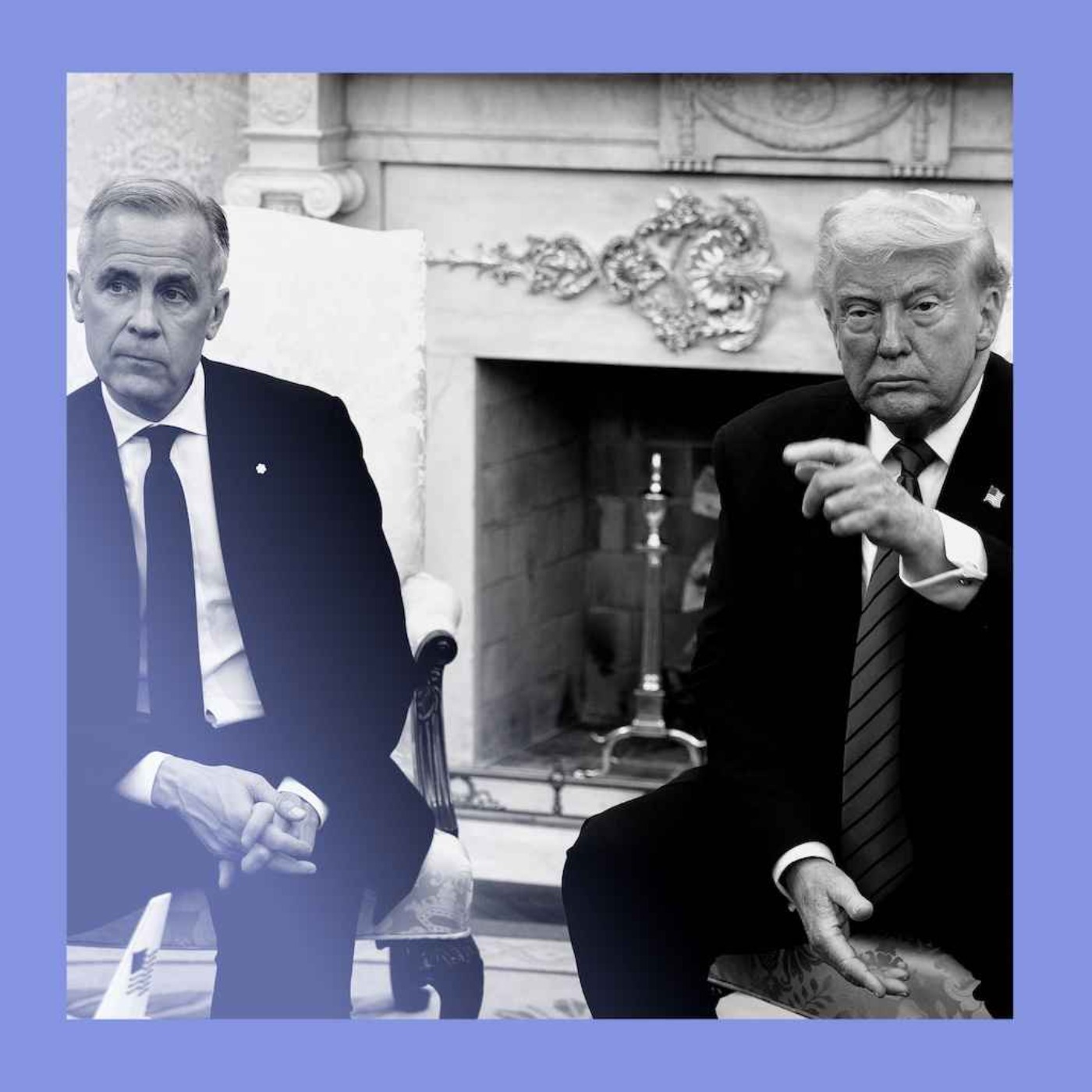
Canada's vast natural resources, particularly oil, are a strategic asset that should be used as leverage in negotiations with the United States. This approach can secure tariff-free trade and counter an increasingly isolationist American foreign policy by highlighting mutual dependency and strategic importance.

To counteract US trade barriers, Canada's long-term strategy involves removing its own internal trade barriers between provinces. This move is projected to boost GDP by a quarter of a trillion dollars, enough to offset even a complete breakdown of the US trade deal.
A central contradiction exists in Trump's vision for a dominant North American economic bloc. His master plan requires deep cooperation with Canada and Mexico, yet his first actions involved voiding trade agreements and publicly alienating the very leaders whose partnership he needs for the plan to succeed.

For a country dependent on a powerful neighbor like the U.S., the path to a fairer relationship is creating leverage. This is achieved by developing independent infrastructure, like pipelines and LNG terminals, to sell resources to other world markets. With viable alternatives, the country can negotiate from a position of strength, not desperation.

When trade policies force allies like Canada to find new partners, it's not a temporary shift. They build new infrastructure and relationships that won't be abandoned even if the political climate changes. The trust is broken, making the economic damage long-lasting and difficult to repair.

During NAFTA talks with the Trump administration, Canada didn't just deal with the executive branch. It actively engaged Congress, governors, unions, and businesses to build broad support for the relationship, effectively creating a network of influence around a single, powerful counterpart.