Get your free personalized podcast brief
We scan new podcasts and send you the top 5 insights daily.
Initially a hardware company, Theseus evolved into a software provider that enhances drone reliability. By offering a solution that runs on commodity hardware like a Raspberry Pi, they solve the core problem of autonomy in contested environments without getting bogged down in manufacturing.
Related Insights
Successful "American Dynamism" companies de-risk hardware development by initially using off-the-shelf commodity components. Their unique value comes from pairing this accessible hardware with sophisticated, proprietary software for AI, computer vision, and autonomy. This approach lowers capital intensity and accelerates time-to-market compared to traditional hardware manufacturing.

Instead of building expensive, bespoke military hardware, the company retrofits commercially available vehicles like the Ford F-150 with autonomy. This strategy creates "affordable mass" for the military, deploying robust systems at a fraction of the cost without risking human lives in commercial-grade vehicles on the battlefield.

For decades, hardware startups failed because building the necessary bespoke software was too difficult and expensive. The rise of general-purpose AI provides a powerful, adaptable software layer "out of the box." This dramatically lowers the barrier to scaling for hardware-intensive businesses like robotics and drones, making them more attractive for creative financing.

A new category of agile tech companies is winning major defense contracts by offering cheaper, software-driven, and nimbler solutions like drones and AI, directly challenging established giants like Lockheed Martin.
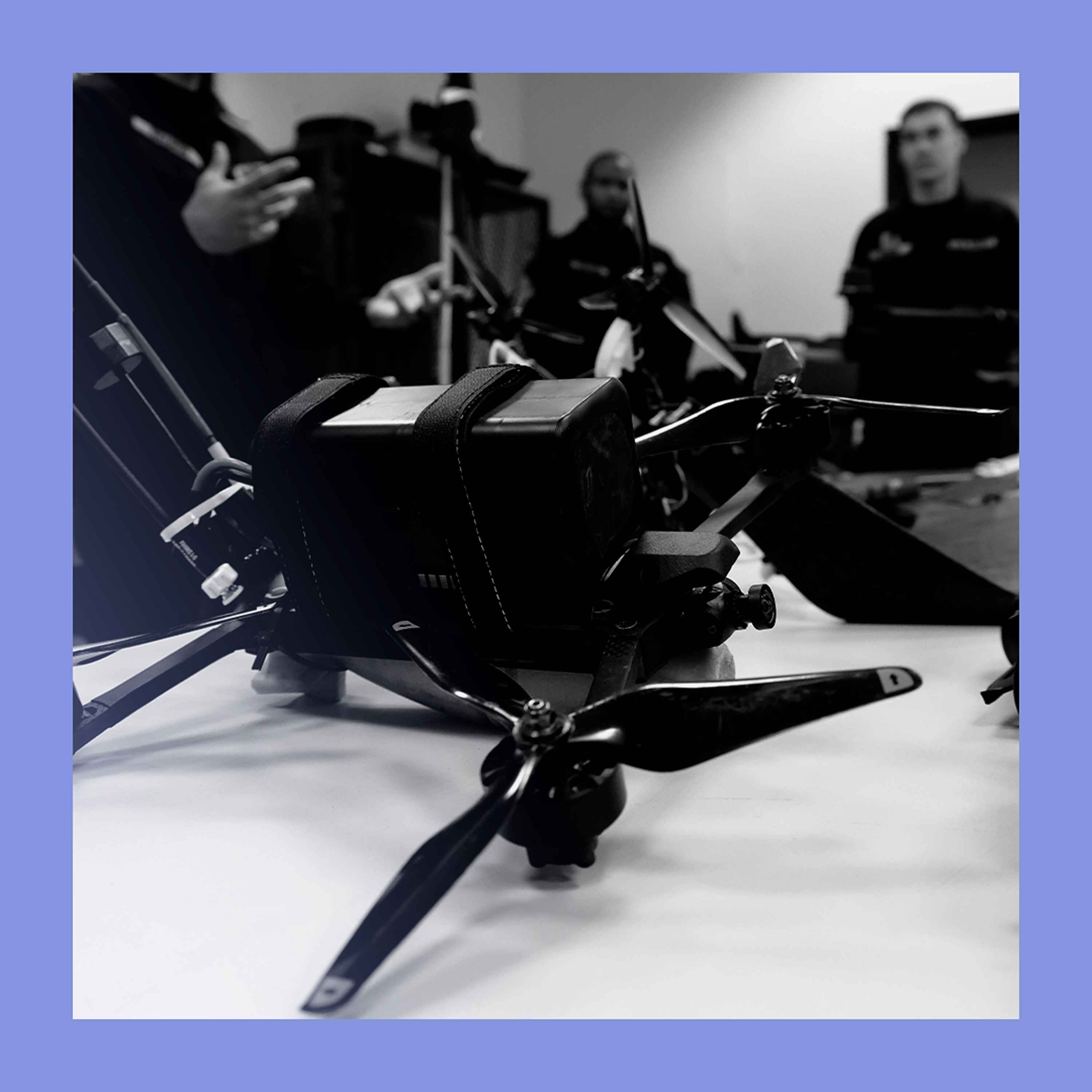
As drone hardware becomes commoditized, the key strategic value is shifting to software. Companies creating hardware-agnostic 'middleware' platforms to orchestrate diverse drone fleets, manage data, and enable swarming are becoming more critical than the drone manufacturers themselves.

While first-wave defense tech leaders like Anduril pursue a vertically integrated "Apple" model (hardware and software), a new approach is emerging. Companies like Auterion are building a common, open operating system for drones from various manufacturers. This "Android for drones" strategy focuses on creating a wide, interoperable ecosystem rather than a closed, proprietary one.

Despite building large physical systems like drones, Anduril's co-founder states their core competency and original vision is software. They are a "software-defined and hardware-enabled" company, which fundamentally differentiates their approach from traditional defense contractors who are the opposite.
Initially a hardware company, SkillVari's supply chain collapsed during the pandemic, sending revenue to zero. This crisis forced a pivot to a software-first model, allowing customers to buy off-the-shelf Meta or Pico headsets and load the software, creating a more scalable and resilient business.

The venture capital mantra that "hardware is hard" is outdated for the American Dynamism category. Startups in this space mitigate risk by integrating off-the-shelf commodity hardware with sophisticated software. This avoids the high capital costs and unpredictable sales cycles of consumer electronics.
Unlike traditional hardware, drones can receive overnight software updates that deliver a step-change in battlefield capabilities. This is likened to instantly upgrading every Roman legionnaire's helmet with a software push, a capability unprecedented in military history.