Get your free personalized podcast brief
We scan new podcasts and send you the top 5 insights daily.
Instead of building expensive, bespoke military hardware, the company retrofits commercially available vehicles like the Ford F-150 with autonomy. This strategy creates "affordable mass" for the military, deploying robust systems at a fraction of the cost without risking human lives in commercial-grade vehicles on the battlefield.
Related Insights
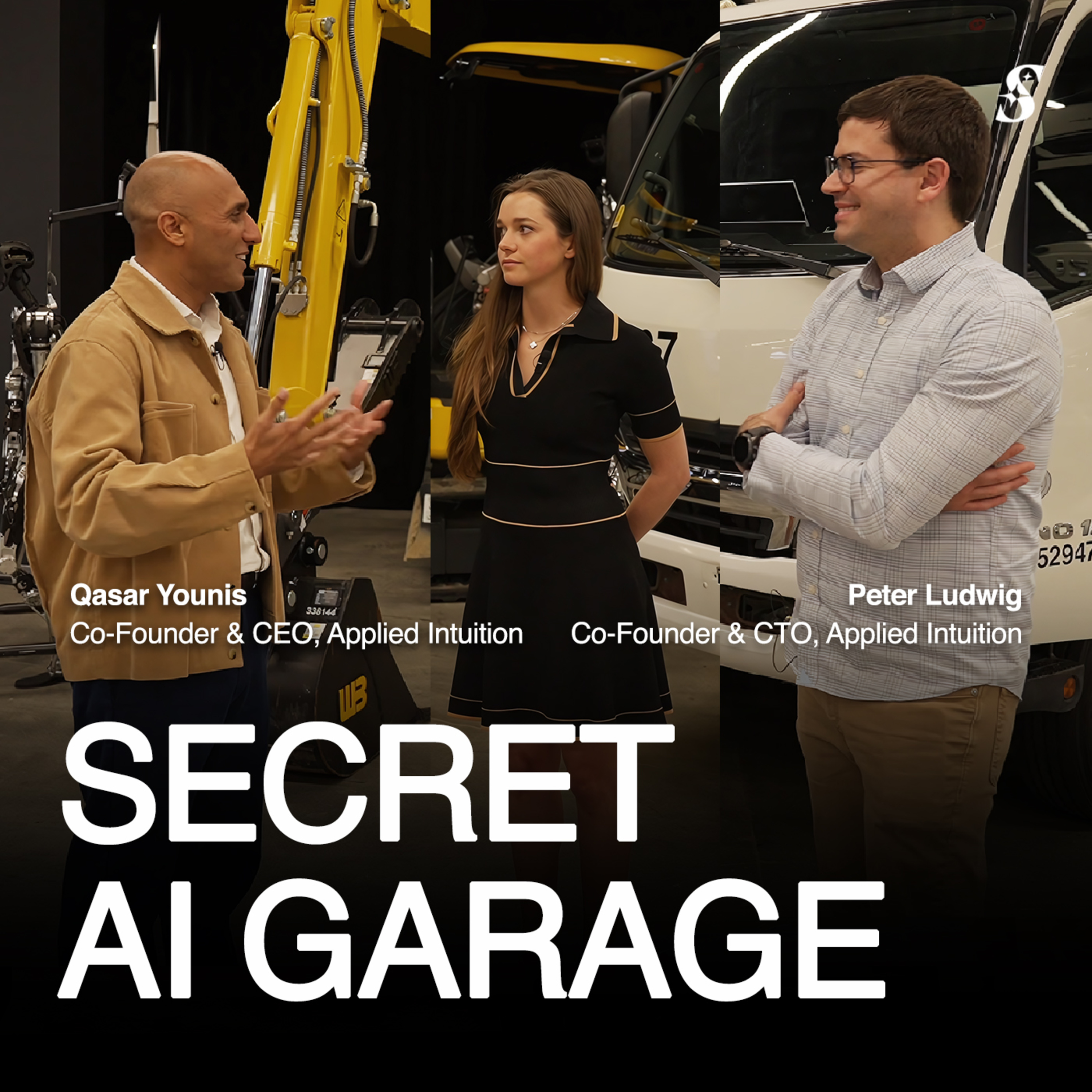
Applied Intuition uses the same fundamental software platform across cars, trucks, boats, and construction equipment. This is possible because all are machines interacting with the physical world governed by consistent laws of physics, enabling a scalable "Teslification" of multiple industrial sectors with a single core technology.
Successful "American Dynamism" companies de-risk hardware development by initially using off-the-shelf commodity components. Their unique value comes from pairing this accessible hardware with sophisticated, proprietary software for AI, computer vision, and autonomy. This approach lowers capital intensity and accelerates time-to-market compared to traditional hardware manufacturing.

The conflict in Ukraine exposed the vulnerability of expensive, "exquisite" military platforms (like tanks) to inexpensive technologies (like drones). This has shifted defense priorities toward cheap, mass-producible, "attritable" systems. This fundamental change in product and economics creates a massive opportunity for startups to innovate outside the traditional defense prime model.
After a casual challenge from the Secretary of the Army, Applied Intuition retrofitted its autonomous systems onto an infantry vehicle in 10 days. This proves complex defense applications can be rapidly developed, directly challenging the notion that military innovation requires multi-year procurement cycles.

Instead of building new autonomous vehicles from scratch, Bedrock Robotics develops technology to retrofit existing heavy machinery. This allows a contractor to turn their existing half-million-dollar Caterpillar excavator into an autonomous asset, a much more capital-efficient approach than replacing the entire fleet.

The Department of War's top AI priority is "applied AI." It consciously avoids building its own foundation models, recognizing it cannot compete with private sector investment. Instead, its strategy is to adapt commercial AI for specific defense use cases.

Unlike the Cold War era where military R&D fueled commercial tech, companies like Chariot are adapting breakthroughs from the commercial electric vehicle industry—like advanced batteries and power electronics—to meet the unique power demands of the modern military.

The venture capital mantra that "hardware is hard" is outdated for the American Dynamism category. Startups in this space mitigate risk by integrating off-the-shelf commodity hardware with sophisticated software. This avoids the high capital costs and unpredictable sales cycles of consumer electronics.

Traditional vehicles have complex, disparate wiring and compute systems. Applied Intuition first simplifies this into a centralized "one box" architecture, which is a necessary step before they can effectively deploy advanced autonomy and AI capabilities, much like developing apps for a modern smartphone.
The rise of drones is more than an incremental improvement; it's a paradigm shift. Warfare is moving from human-manned systems where lives are always at risk to autonomous ones where mission success hinges on technological reliability. This changes cost-benefit analyses and reduces direct human exposure in conflict.