Get your free personalized podcast brief
We scan new podcasts and send you the top 5 insights daily.
As drone hardware becomes commoditized, the key strategic value is shifting to software. Companies creating hardware-agnostic 'middleware' platforms to orchestrate diverse drone fleets, manage data, and enable swarming are becoming more critical than the drone manufacturers themselves.

Related Insights
While drones get the headlines, operators on the front lines in Ukraine identified Starlink as the most critical technology. This reveals that the foundational layer for future conflict is resilient, decentralized communication, which enables all other advanced systems to function in contested environments.

Warfare has evolved to a "sixth domain" where cyber becomes physical. Mass drone swarms act like a distributed software attack, requiring one-to-many defense systems analogous to antivirus software, rather than traditional one-missile-per-target defenses which cannot scale.

The conflict in Ukraine exposed the vulnerability of expensive, "exquisite" military platforms (like tanks) to inexpensive technologies (like drones). This has shifted defense priorities toward cheap, mass-producible, "attritable" systems. This fundamental change in product and economics creates a massive opportunity for startups to innovate outside the traditional defense prime model.

The proliferation of drones is fueled by consumer electronics. Companies like Qualcomm and Nvidia provide powerful "system on a chip" components and even reference designs, making it easy for non-state actors and smaller nations to build and deploy advanced military hardware that was previously inaccessible.
While first-wave defense tech leaders like Anduril pursue a vertically integrated "Apple" model (hardware and software), a new approach is emerging. Companies like Auterion are building a common, open operating system for drones from various manufacturers. This "Android for drones" strategy focuses on creating a wide, interoperable ecosystem rather than a closed, proprietary one.

Conceding the U.S. cannot out-manufacture China in a drone-for-drone war, Mock Industries' founder argues for an asymmetric strategy. This involves decentralized, easily deployed systems that make China's large, centralized assets (and our own) obsolete, shifting the battlefield dynamics entirely.

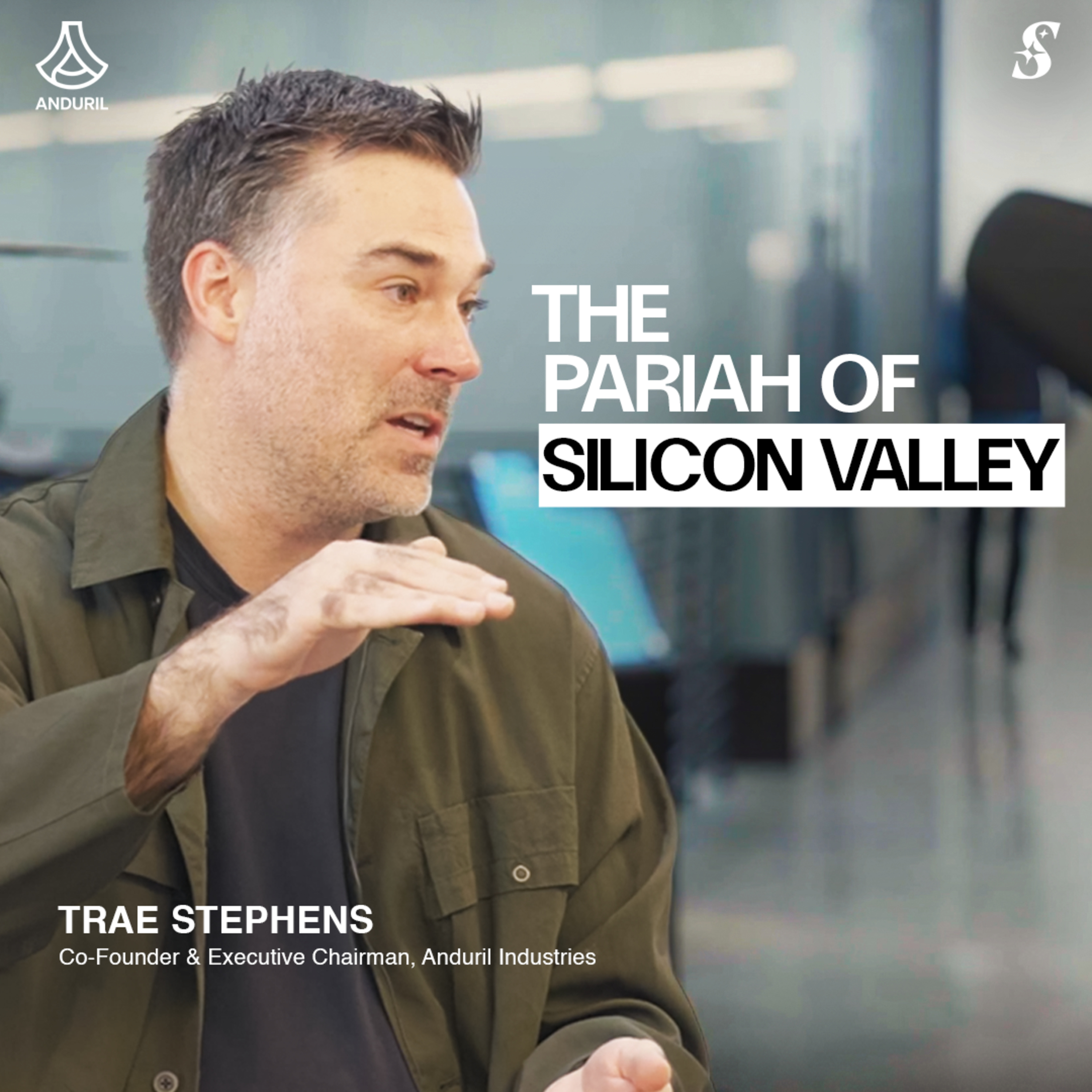
Despite building large physical systems like drones, Anduril's co-founder states their core competency and original vision is software. They are a "software-defined and hardware-enabled" company, which fundamentally differentiates their approach from traditional defense contractors who are the opposite.
The venture capital mantra that "hardware is hard" is outdated for the American Dynamism category. Startups in this space mitigate risk by integrating off-the-shelf commodity hardware with sophisticated software. This avoids the high capital costs and unpredictable sales cycles of consumer electronics.

The war in Ukraine has evolved from a traditional territorial conflict into a "robot war," with drones dominating the front lines. This real-world battlefield is accelerating innovation at an "unbelievable" pace, driving new solutions for secure communications and autonomous targeting, providing critical lessons for US drone strategy.
The rise of drones is more than an incremental improvement; it's a paradigm shift. Warfare is moving from human-manned systems where lives are always at risk to autonomous ones where mission success hinges on technological reliability. This changes cost-benefit analyses and reduces direct human exposure in conflict.