Get your free personalized podcast brief
We scan new podcasts and send you the top 5 insights daily.
While polished products from Anthropic and Notion make agentic AI more accessible, the host argues against skipping the complex setup of OpenClaw. The difficult process provides a deeper, hands-on education in the underlying primitives of agentic AI (like scheduling and remote access) before they are abstracted away by user-friendly commercial interfaces.

Related Insights
The rapid adoption of features like remote control and scheduled tasks by Anthropic, Perplexity, and Notion is not about copying the open-source OpenClaw project. Instead, it marks the industry's recognition of a new set of fundamental "primitives" for agentic AI: persistent, remotely accessible, and autonomous operation. These are becoming the new standard for AI interaction.
For AI agents requiring deep, nuanced training, the 'self-service' model is currently ineffective. These complex tools still demand significant, hands-on human expertise for successful deployment and management. Don't fall for vendors promising a cheap, self-trainable solution for sophisticated tasks.

Structure your AI automations architecturally. Create specialized sub-agents, each with a discrete 'skill' (e.g., scraping Twitter). Your main OpenClaw agent then acts as an orchestrator, calling these skilled sub-agents as needed. This frees up the main agent and creates a modular, powerful system.

Tools like ChatGPT are AI models you converse with, requiring constant input for each step. Autonomous agents like OpenClaw represent a fundamental shift where users delegate outcomes, not just tasks. The AI works autonomously to manage calendars, send emails, or check-in for flights without step-by-step human guidance.

The "magic" feeling of OpenClaw agents stems from clever engineering, not sentience. Systems like a "heartbeat" (a regular timer prompting action), scheduled jobs (crons), and queued messaging allow agents to perform background tasks and initiate actions proactively. This creates the illusion of an inner life, but is fundamentally a loop processing events.
When deploying a complex AI agent like OpenClaw, the first step should be creating a visual dashboard. The default chat interface is a black box; a dashboard provides critical visibility into the AI's memory, skills, and scheduled jobs, making it manageable.
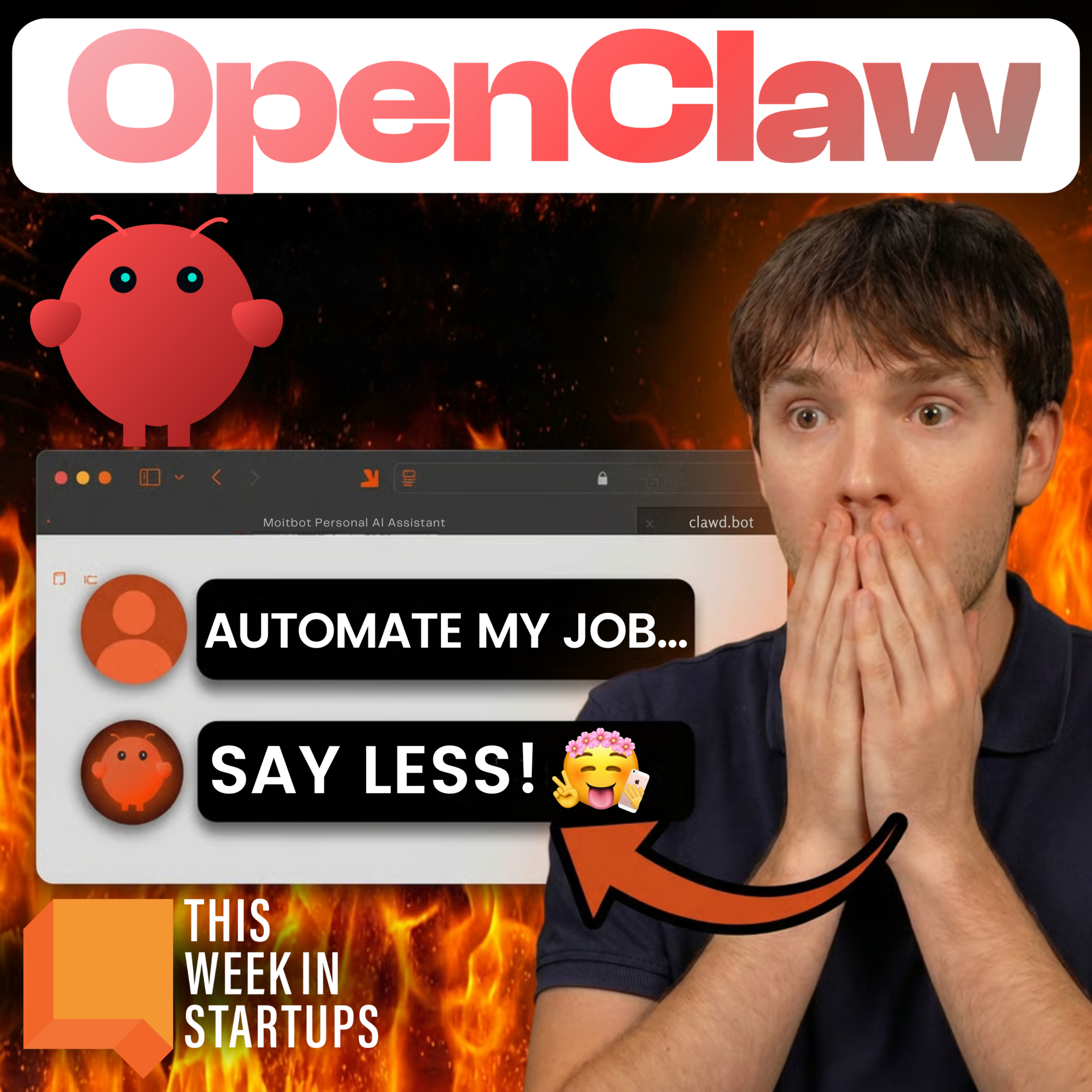
OpenClaw's viral developer adoption demonstrates a massive demand for truly autonomous AI agents, even if it means breaking safety guardrails. This grassroots movement has forced major AI labs to embrace the trend, as the desire for capability outweighs initial safety concerns.
Unlike other AI models, OpenClaw can be tasked to figure out how to interact with a new service (like email) and write a reusable "skill" for it. This self-learning capability allows it to continuously expand its own functionality without manual coding.

Clawdbot, an open-source project, has rapidly achieved broad, agentic capabilities that large AI labs (like Anthropic with its 'Cowork' feature) are slower to release due to safety, liability, and bureaucratic constraints.
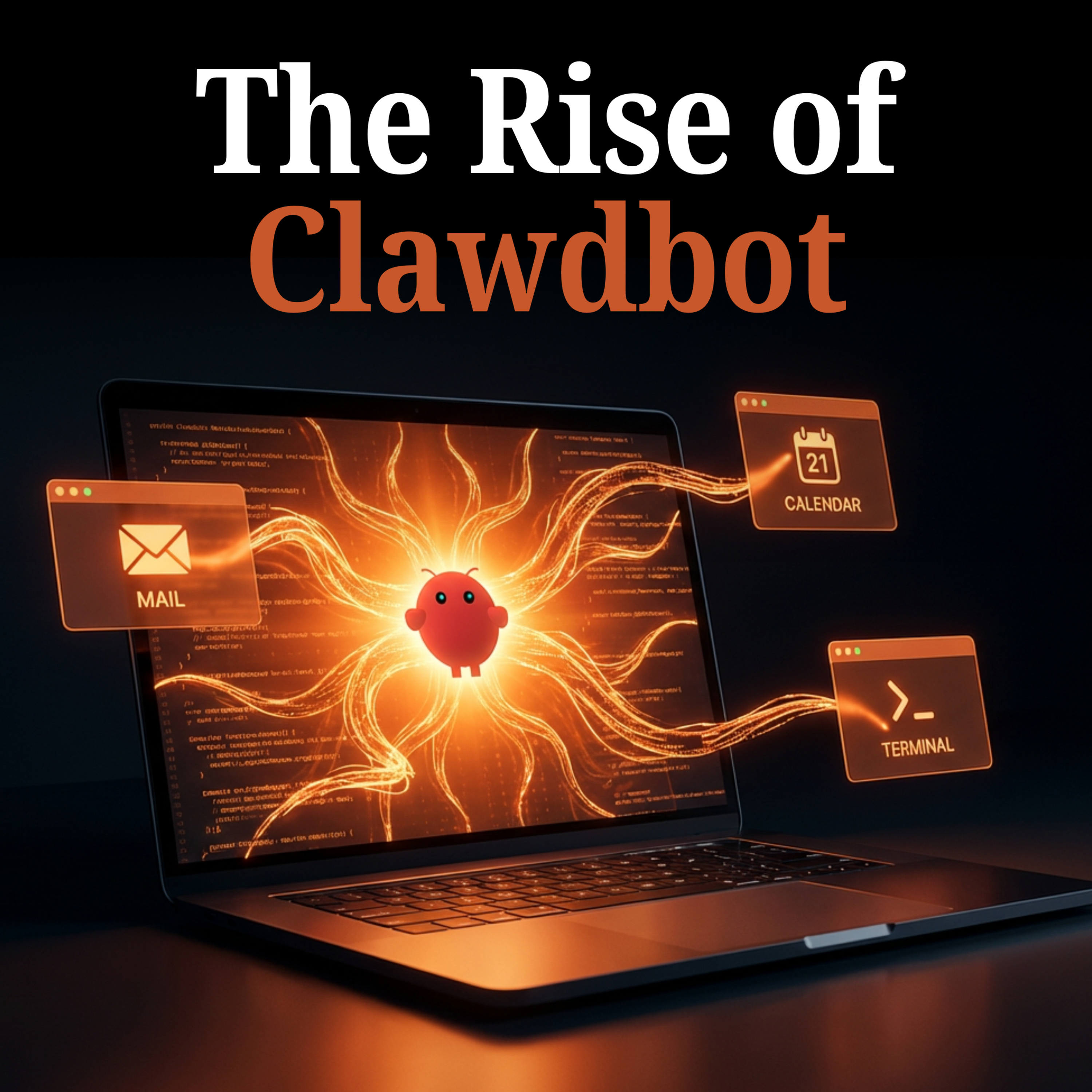
The excitement around tools like OpenClaw stems from their ability to empower non-programmers to create custom software and workflows. This replicates the feeling of creative power previously exclusive to developers, unlocking a long tail of niche, personalized applications for small businesses and individuals who could never build them before.