Get your free personalized podcast brief
We scan new podcasts and send you the top 5 insights daily.
OpenClaw's viral developer adoption demonstrates a massive demand for truly autonomous AI agents, even if it means breaking safety guardrails. This grassroots movement has forced major AI labs to embrace the trend, as the desire for capability outweighs initial safety concerns.
Related Insights
Unlike co-pilots that assist developers, Factory's “droids” are designed to be autonomous. This reframes the developer's job from writing code to mastering delegation—clearly defining tasks and success criteria for an AI agent to execute independently.

The AI.com Super Bowl ad was a wrapper for OpenClaw, an open-source agent framework that had only gone viral two weeks prior. This demonstrates the unprecedented speed of the current AI hype cycle, where a new technology can become the basis for a multi-million dollar ad campaign almost instantly.

Tools like ChatGPT are AI models you converse with, requiring constant input for each step. Autonomous agents like OpenClaw represent a fundamental shift where users delegate outcomes, not just tasks. The AI works autonomously to manage calendars, send emails, or check-in for flights without step-by-step human guidance.

The next frontier for AI in development is a shift from interactive, user-prompted agents to autonomous "ambient agents" triggered by system events like server crashes. This transforms the developer's workbench from an editor into an orchestration and management cockpit for a team of agents.

OpenAI is forcing a radical internal shift in its software development process. President Greg Brockman has set a deadline for engineers to use AI agents as their primary tool, replacing traditional editors and terminals. This extreme "dogfooding" signals that agent-driven development is an immediate operational reality, not a future concept.
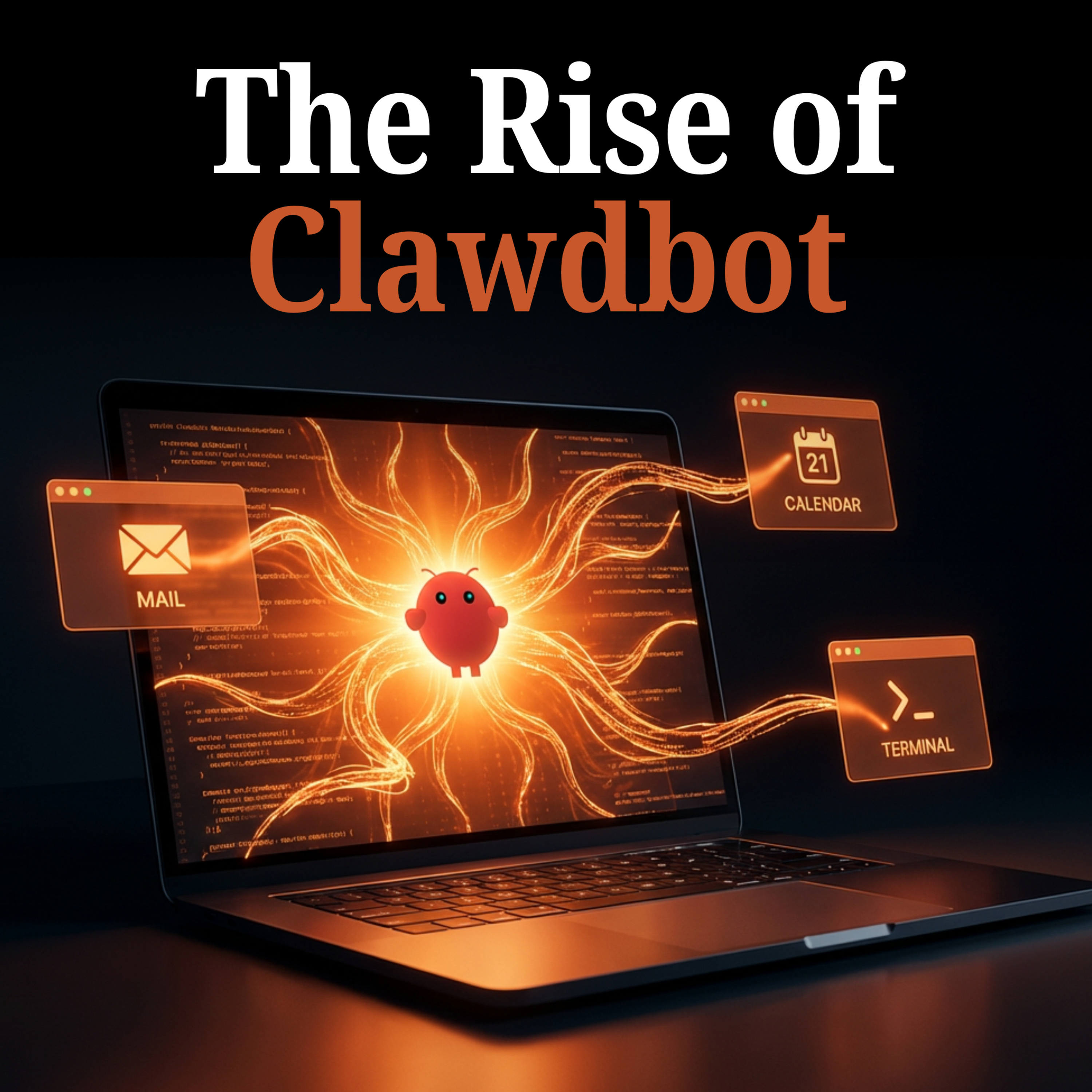
Clawdbot, an open-source project, has rapidly achieved broad, agentic capabilities that large AI labs (like Anthropic with its 'Cowork' feature) are slower to release due to safety, liability, and bureaucratic constraints.
The key safety threshold for labs like Anthropic is the ability to fully automate the work of an entry-level AI researcher. Achieving this goal, which all major labs are pursuing, would represent a massive leap in autonomous capability and associated risks.

The technical capabilities of OpenClaw are replicable; its real moat is the massive, self-reinforcing community of builders and resources that spontaneously converged around it. OpenAI acquired not just a tool, but the entire ecosystem's focal point for agentic AI development—a far more durable competitive advantage than code alone.
Entrepreneurs are predictably obsessed with tools like OpenClaw because they fulfill a core psychological drive: agency. These agents grant the ability to act on ideas immediately and at a scale that previously required a team, radically extending a founder's individual capacity to build and ship.
Altman praises projects like OpenClaw, noting their ability to innovate is a direct result of being unconstrained by the lawsuit and data privacy fears that paralyze large companies. He sees them as the "Homebrew Computer Club" for the AI era, pioneering new UX paradigms.