Get your free personalized podcast brief
We scan new podcasts and send you the top 5 insights daily.
Unlike other AI models, OpenClaw can be tasked to figure out how to interact with a new service (like email) and write a reusable "skill" for it. This self-learning capability allows it to continuously expand its own functionality without manual coding.

Related Insights
Agentic frameworks like OpenClaw are pioneering a new software paradigm where 'skills' act as lightweight replacements for entire applications. These skills are essentially instruction manuals or recipes in simple markdown files, combining natural language prompts with calls to deterministic code ('tools'), condensing complex functionality into a tiny, efficient format.
Structure your AI automations architecturally. Create specialized sub-agents, each with a discrete 'skill' (e.g., scraping Twitter). Your main OpenClaw agent then acts as an orchestrator, calling these skilled sub-agents as needed. This frees up the main agent and creates a modular, powerful system.

AI agents like OpenClaw learn via "skills"—pre-written text instructions. While functional, this method is described as "janky" and a workaround. It exposes a core weakness of current AI: the lack of true continual learning. This limitation is so profound that new startups are rethinking AI architecture from scratch to solve it.

Tools like ChatGPT are AI models you converse with, requiring constant input for each step. Autonomous agents like OpenClaw represent a fundamental shift where users delegate outcomes, not just tasks. The AI works autonomously to manage calendars, send emails, or check-in for flights without step-by-step human guidance.

Beyond using pre-made skills, users can simply prompt Claude to create a new skill for itself. The AI understands the required format and can generate the instructional text for a new capability, such as crafting marketing hooks that create FOMO. This democratizes the process of AI customization.
A key capability is creating skills that continuously search the web, Reddit, and X for the latest techniques on a topic. The agent then incorporates this new knowledge to improve its future outputs and stay current.
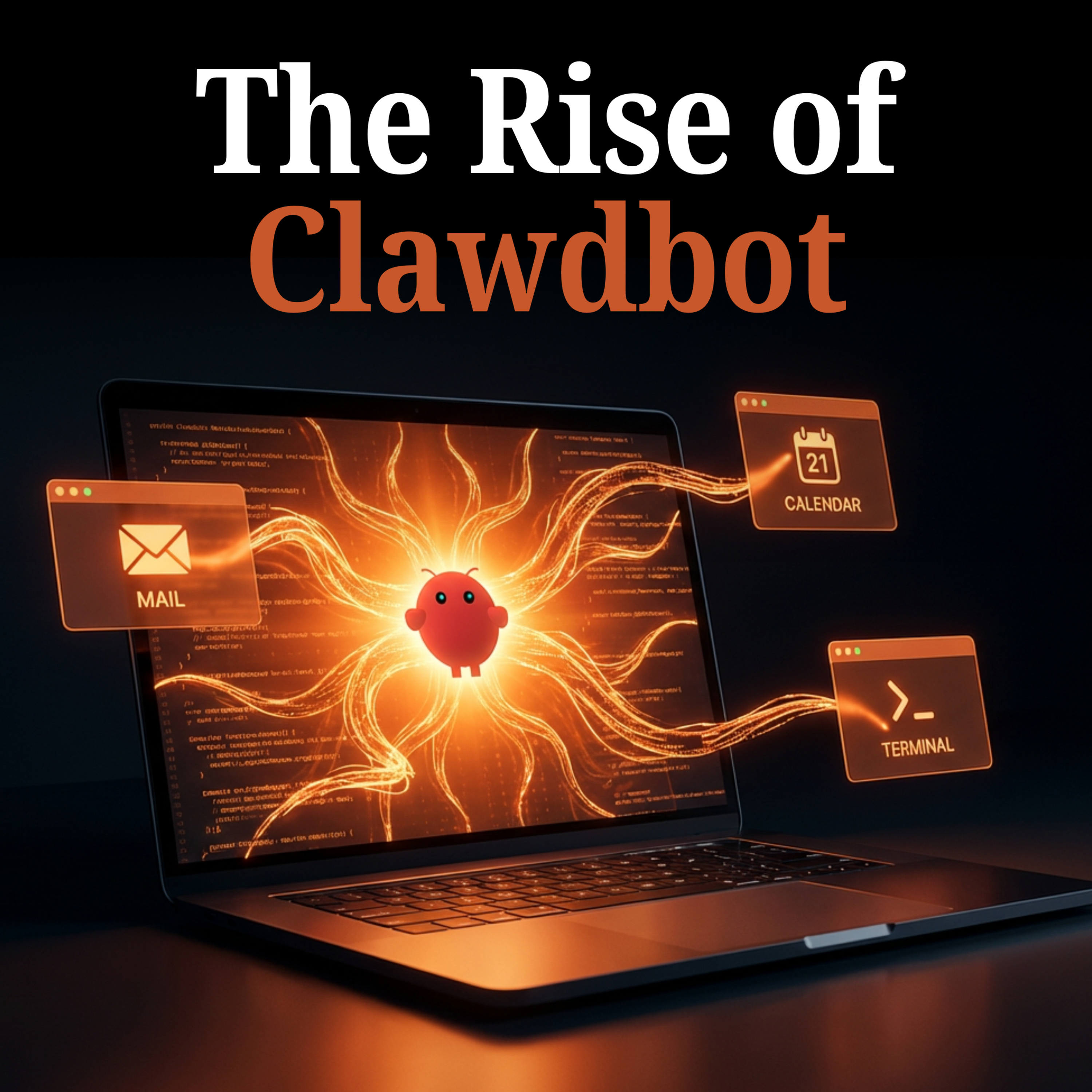
AI agents like OpenClaw dramatically lower the barrier to creating software. Founders with no prior coding experience can now build complex applications simply by issuing conversational commands, effectively making software development feel 'free' and accessible to anyone with an idea.
Instead of integrating with existing SaaS tools, AI agents can be instructed on a high-level goal (e.g., 'track my relationships'). The agent can then determine the need for a CRM, write the code for it, and deploy it itself.
The excitement around tools like OpenClaw stems from their ability to empower non-programmers to create custom software and workflows. This replicates the feeling of creative power previously exclusive to developers, unlocking a long tail of niche, personalized applications for small businesses and individuals who could never build them before.
The "Claudebot" system represents a new paradigm where users run a persistent, open-source AI agent on their own local hardware. The agent's key feature is its ability to self-improve by writing new skills on command, effectively becoming a 24/7 digital employee that continually expands its capabilities.
