Get your free personalized podcast brief
We scan new podcasts and send you the top 5 insights daily.
The rapid adoption of features like remote control and scheduled tasks by Anthropic, Perplexity, and Notion is not about copying the open-source OpenClaw project. Instead, it marks the industry's recognition of a new set of fundamental "primitives" for agentic AI: persistent, remotely accessible, and autonomous operation. These are becoming the new standard for AI interaction.

Related Insights
While polished products from Anthropic and Notion make agentic AI more accessible, the host argues against skipping the complex setup of OpenClaw. The difficult process provides a deeper, hands-on education in the underlying primitives of agentic AI (like scheduling and remote access) before they are abstracted away by user-friendly commercial interfaces.
The emergence of personal AI assistants that can be integrated with private data (email, Slack) and execute tasks (send emails, build CRMs) represents a new paradigm. This moves AI from a passive research tool to an active, autonomous agent capable of performing complex knowledge work, fundamentally changing productivity.
OpenAI has quietly launched "skills" for its models, following the same open standard as Anthropic's Claude. This suggests a future where AI agent capabilities are reusable and interoperable across different platforms, making them significantly more powerful and easier to develop for.

Tools like ChatGPT are AI models you converse with, requiring constant input for each step. Autonomous agents like OpenClaw represent a fundamental shift where users delegate outcomes, not just tasks. The AI works autonomously to manage calendars, send emails, or check-in for flights without step-by-step human guidance.

The introduction of scheduled tasks in platforms like Anthropic's Cowork represents a fundamental shift. AI is no longer just a conversational tool that responds to prompts ("chat was a toy"). It is becoming an autonomous worker that can execute recurring tasks without supervision ("a labor primitive"), fundamentally changing its role and value proposition in the workplace.
Recent updates from Anthropic's Claude mark a fundamental shift. AI is no longer a simple tool for single tasks but has become a system of autonomous "agents" that you orchestrate and manage to achieve complex outcomes, much like a human team.
OpenClaw's viral developer adoption demonstrates a massive demand for truly autonomous AI agents, even if it means breaking safety guardrails. This grassroots movement has forced major AI labs to embrace the trend, as the desire for capability outweighs initial safety concerns.
The rise of autonomous agents like OpenClaw dictates that the future of software is API-first. This architecture is necessary for agents to perform tasks programmatically. Crucially, it must also support human interaction for verification, collaboration, and oversight, creating a hybrid workflow between people and AI agents.

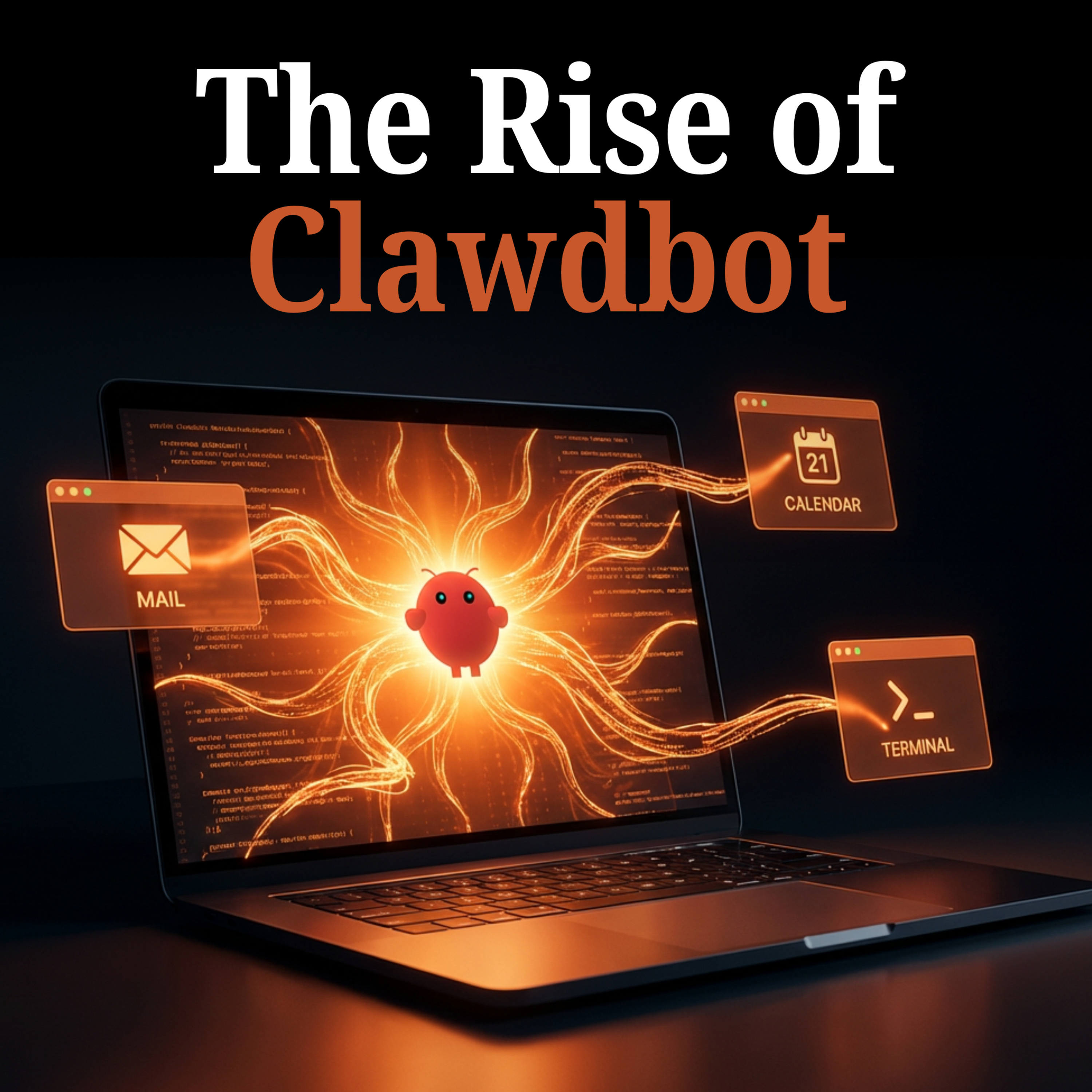
Clawdbot, an open-source project, has rapidly achieved broad, agentic capabilities that large AI labs (like Anthropic with its 'Cowork' feature) are slower to release due to safety, liability, and bureaucratic constraints.
Anthropic's upcoming 'Agent Mode' for Claude moves beyond simple text prompts to a structured interface for delegating and monitoring tasks like research, analysis, and coding. This productizes common workflows, representing a major evolution from conversational AI to autonomous, goal-oriented agents, simplifying complex user needs.