Get your free personalized podcast brief
We scan new podcasts and send you the top 5 insights daily.
Alex Honnold dismisses the idea his brain is inherently different, arguing 20 years of intense climbing rewired his neural responses. This shifts the narrative from genetic exceptionalism to the power of neuroplasticity, suggesting similar adaptations are possible for anyone through dedicated practice.

Related Insights
The popular notion of "rising to the occasion" is a myth. In high-pressure moments, individuals revert to their practiced habits and training. This is especially true for psychological skills; your response is dictated by how you've consistently trained your mind, not by sudden inspiration or willpower.

Mastery of a skill isn't about more brain activity, but more efficient activity. Experts transfer tasks from conscious effort ("software") to automated neural circuits ("hardware"), consuming fewer cognitive resources than a novice who is actively problem-solving.

A study of 34,000 elite performers found that 90% of top-flight adults were not top-flight teenagers, and vice versa. This suggests that early, intense specialization (hothousing) produces high competence but may hinder the development of true superstardom, which often arises from a different, less linear path.

Top performers don't eliminate the fear of rejection; they diminish its power through repeated exposure. This 'obstacle immunity' conditions them to act despite their brain's natural fear response, just as an expert skydiver still feels fear but jumps anyway.

Studies show that mindset can override biology. Athletes told they had a performance-enhancing gene performed better, even if they didn't. People believing they ate gluten had physical reactions without any present. This demonstrates that our expectations can create powerful physiological realities (placebo/nocebo effects).

To drive neuroplasticity—the process of building new neural connections—the brain needs to recognize a gap between its current capacity and a desired outcome. This gap is most clearly revealed through mistakes. Activities where you never fail or push your limits do not provide the necessary stimulus for adaptation.

Beyond the mid-20s, the primary mechanism for rewiring the brain (neuroplasticity) is making a prediction and realizing it was wrong. This makes mistakes a biological necessity for growth and becoming more capable. It reframes errors not just as learning opportunities, but as the central, physiological catalyst for adult learning and improvement.

After age 25, the brain stops changing from passive experience. To learn new skills or unlearn patterns, one must be highly alert and focused. This triggers a release of neuromodulators like dopamine and epinephrine, signaling the brain to physically reconfigure its connections during subsequent rest.

Just as a blind person's visual cortex is repurposed for heightened hearing and touch, savantism might be an extreme case of this principle. An individual may develop superhuman skills by allocating a disproportionate amount of neural resources to one area, often at the cost of others like social skills.
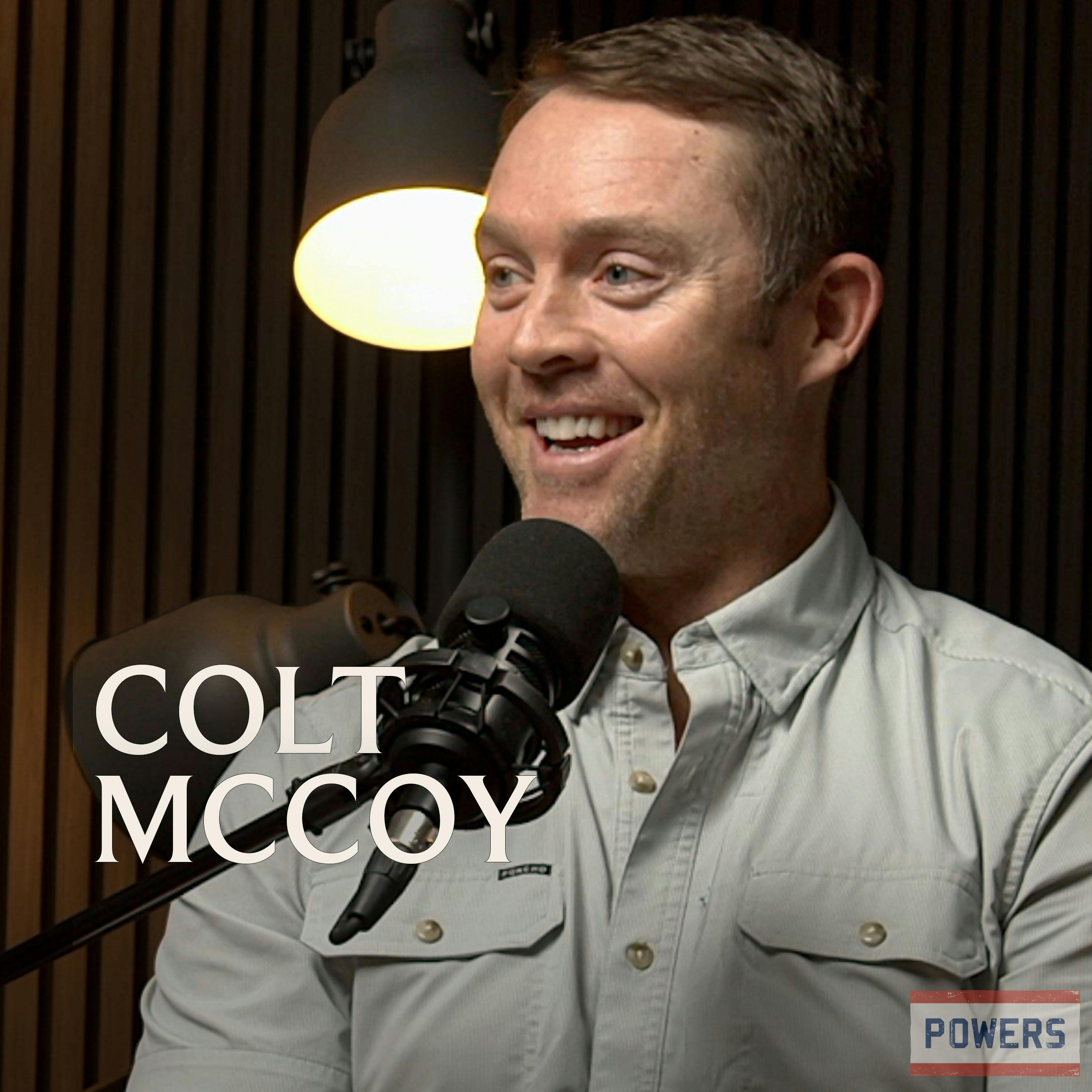
Succeeding NFL phenom Vince Young at Texas, Colt McCoy knew he couldn't match Young's physical gifts. He instead focused his energy on mastering the mental game—deeply understanding schemes, coverages, and play calls—to create his own unique and sustainable competitive advantage.