Get your free personalized podcast brief
We scan new podcasts and send you the top 5 insights daily.
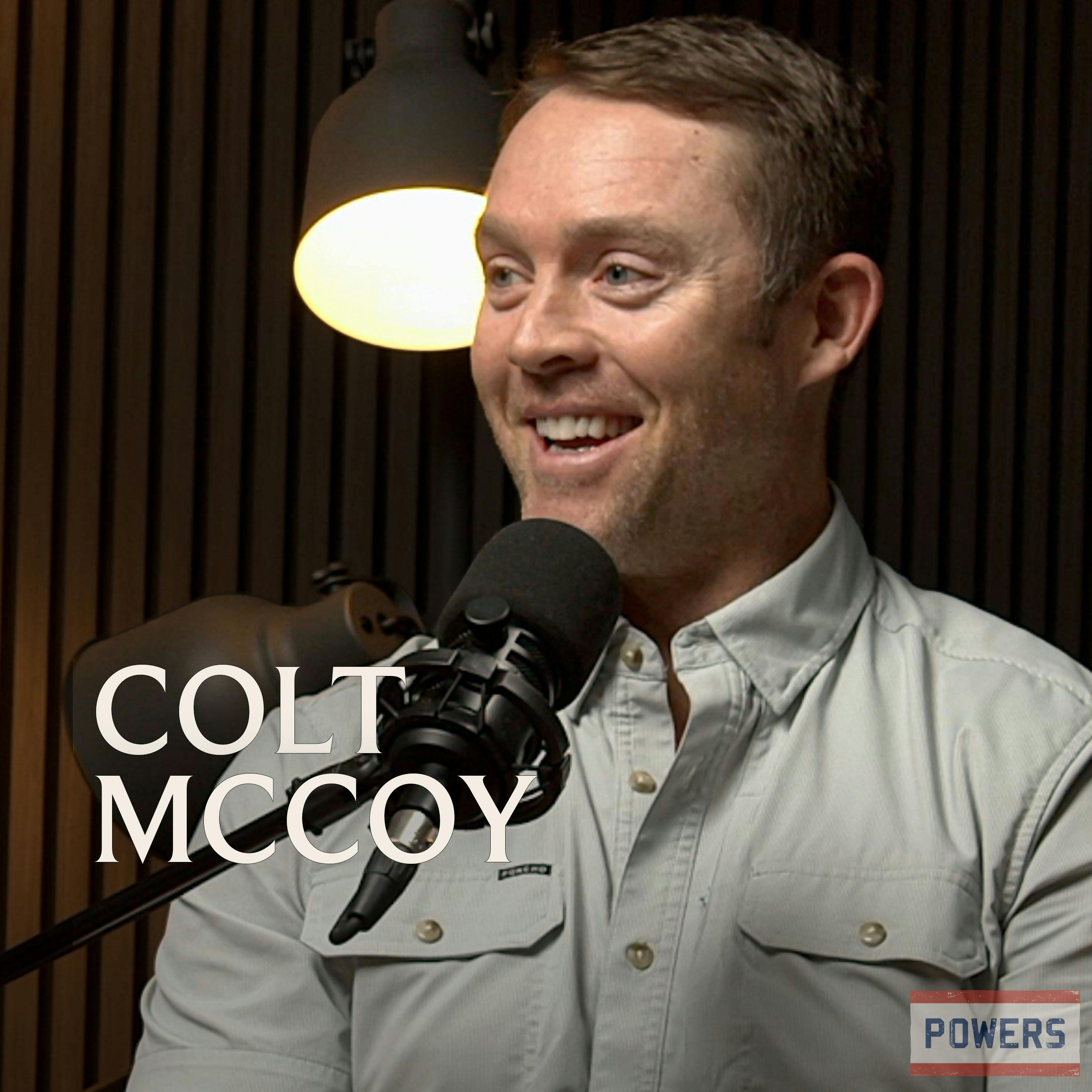
Succeeding NFL phenom Vince Young at Texas, Colt McCoy knew he couldn't match Young's physical gifts. He instead focused his energy on mastering the mental game—deeply understanding schemes, coverages, and play calls—to create his own unique and sustainable competitive advantage.
Related Insights
True competitive belief is not the delusion that you'll win every time. It's the persistent conviction that you *can* win, even against seasoned champions. This “chip on the shoulder” mentality fuels the underdog energy needed to create upsets and build momentum.

Mental toughness is not an innate trait but a developable skill. It can be deconstructed into four measurable components: Tolerance (hardship endured before cracking), Fortitude (how low you go), Resilience (how fast you recover), and Adaptability (whether you improve or decline afterward).

Top performers often exist in a state of constant calculation. The key to sustainable excellence is learning to consciously switch between being 'on the field' (strategizing) and 'off the field' (being present). Deliberately switching off sharpens focus and makes you more effective when you are back 'on'.
![Ari Emanuel - The Anti-AI Bet - [Invest Like the Best, EP.448] thumbnail](https://megaphone.imgix.net/podcasts/c5910280-c4dd-11f0-94be-ab6a7a5865b0/image/1e5a2263eb62fcde200846919e24419a.jpg?ixlib=rails-4.3.1&max-w=3000&max-h=3000&fit=crop&auto=format,compress)
The greatest performers, from athletes to companies, are not just the most talented; they are the best at getting better faster. An obsession with root-cause analysis and a non-defensive commitment to improvement is the key to reaching otherwise unachievable levels of success.

To overcome a mediocre career start, Peyton Manning didn't study his successes. He meticulously analyzed film of his interceptions and, more importantly, passes that *should have been* intercepted but weren't due to luck. This radical candor about both actual and potential failures is a key habit of elite performers.

The key differentiator for top performers is that their mind overrules their feelings. Feelings suggest quitting, offer excuses, and lead to overthinking. A strong mind makes a decision and executes, driving resilience and action despite emotional resistance or doubt.

Colt McCoy's ability to lead his college team in rushing was a key to his success. However, in the faster, more physical NFL, that style was a liability. He had to reinvent himself as a quick-decision pocket passer, demonstrating that advancing requires adapting or replacing previously successful skills.
After surviving cancer, runner Nick Thompson unconsciously anchored his marathon time to his pre-illness performance for over a decade. He only broke this plateau when a coach helped him reframe his expectations. This shows perceived limits are often mental barriers that require an external catalyst or a conscious mindset shift to overcome.
The common advice to "follow your strengths" is insufficient for high achievement. Truly ambitious goals require you to become something more and develop entirely new skills. High performers focus on the goal and then systematically "build into" it by acquiring the necessary abilities, regardless of their current strengths.
At the highest levels of competition, success comes from pushing the game into chaotic territory where standard playbooks fail. The goal is to master fear while navigating the "space after everyone's prepared." This psychological edge exploits opponents' discomfort in unpredictable situations, creating a significant advantage.