Get your free personalized podcast brief
We scan new podcasts and send you the top 5 insights daily.
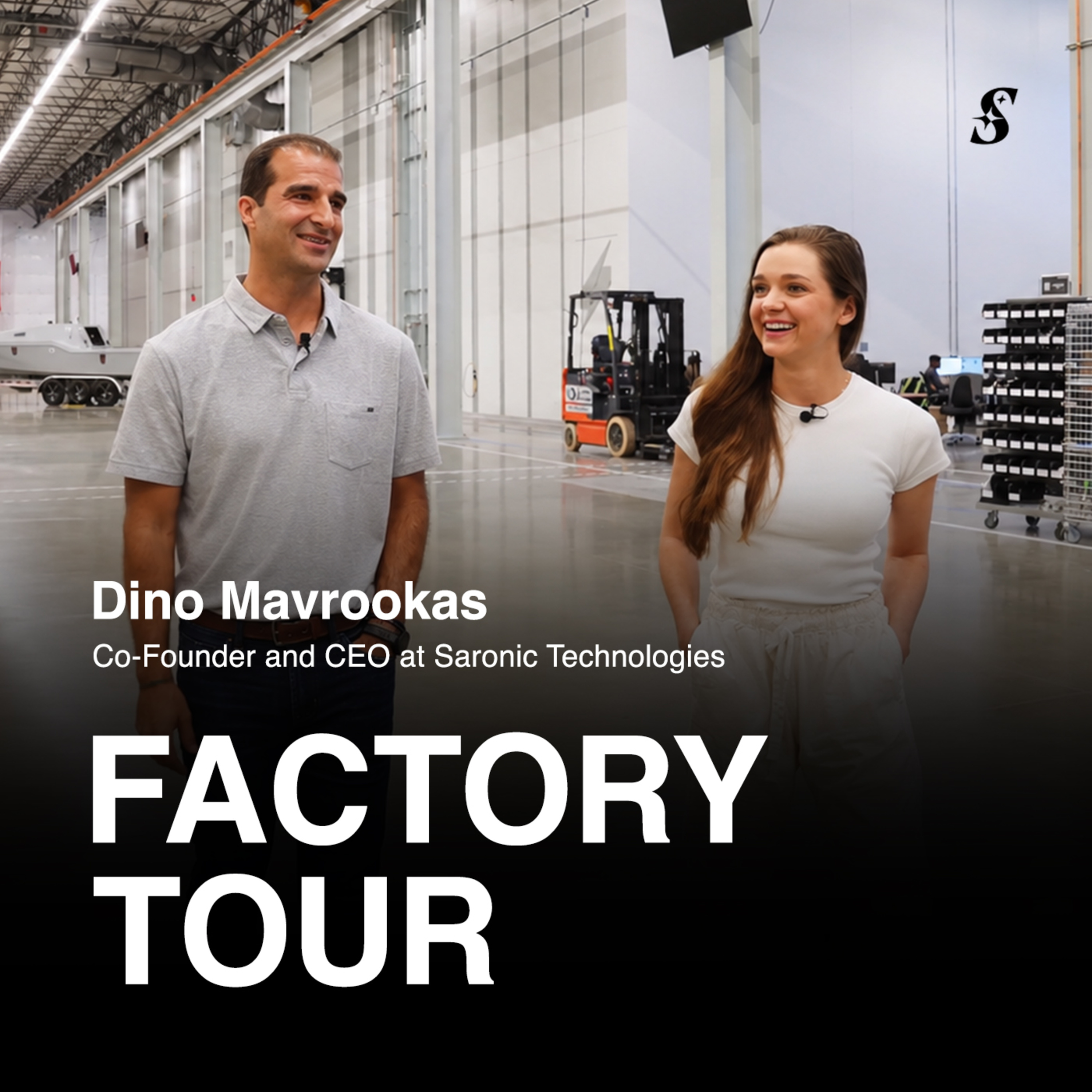
To accelerate development, Saronic built the entire internal propulsion and electronics stack in a room eight months before the actual ship was constructed. This allowed extensive software testing and iteration, solving problems long before the vessel ever hit the water.

Related Insights
In hardware automation, a "go slow to go fast" approach is essential. Iterations are too slow and costly once hardware is built. Front-loading validation through drawings and simulations avoids major architectural issues that often get buried later due to project momentum or "go fever."

To accelerate development, Saronic's software team used a cheap plastic raft and off-the-shelf electronics to build and test their autonomy stack in parallel while the hardware team developed the first purpose-built vessel. This scrappy approach de-risked and sped up their path to a finished product.
Counterintuitively, the "move fast and break things" mantra fails in hardware. Mock Industries achieved a 71-day aircraft development cycle not by rushing tests, but by investing heavily in software and hardware-in-the-loop simulation to run thousands of virtual cases before the first physical flight.

Saronic's CTO advocates a counter-intuitive approach: slow down the software lifecycle to be more methodical about infrastructure choices upfront. Simultaneously, speed up the hardware lifecycle by buying parts early and aggressively simplifying requirements to enable faster iteration.
Etched uses a strategy called "prefetching" to compress timelines. Before their silicon arrived, they built racks with mock thermal chips and ran their full software stack on FPGAs. This ensured everything was ready the moment the real chips landed, collapsing their bring-up time.
![Etched - Building AI Hardware to Make Inference Faster and Cheaper - [Invest Like the Best, EP.480] thumbnail](https://megaphone.imgix.net/podcasts/532910c4-743d-11f1-b7dc-b31915c88b79/image/810c9e3a23b5c4ea0a56e5e4cc8d7e47.jpg?ixlib=rails-4.3.1&max-w=3000&max-h=3000&fit=crop&auto=format,compress)
By vertically integrating, Saronic can optimize a ship's design for ease of manufacturing and simultaneously design the factory layout for that specific ship. This hardware-software co-design approach, common in chipmaking, is now being applied to heavy industry for massive efficiency gains.

Saronic physically co-locates engineers with its production line, ensuring hardware designers can immediately solve problems that arise during manufacturing. This tight feedback loop, inspired by Tesla, eliminates the integration failures that commonly plague complex hardware projects combining hardware and software.
Impulse Space accelerates development by being 'extremely vertically integrated.' Co-locating the machine shop, assembly areas, and a test area enables a tight 'build, assemble, test' loop, allowing the team to iterate on hardware designs with maximum speed.
To scale production, Saronic moves work from the final ship assembly line to pre-built sub-assemblies. This requires solving tough technical hurdles like getting automated aluminum welding (with partners like Path Robotics) to meet stringent maritime certifications.
Spacium's co-founders built their first space payload in just 5 months by owning 98% of their testing process. This approach allows them to "test it until it breaks" and improve it immediately, creating a rapid iteration cycle that mimics software development and bypasses traditional hardware bottlenecks.
