Get your free personalized podcast brief
We scan new podcasts and send you the top 5 insights daily.
Saronic's CTO advocates a counter-intuitive approach: slow down the software lifecycle to be more methodical about infrastructure choices upfront. Simultaneously, speed up the hardware lifecycle by buying parts early and aggressively simplifying requirements to enable faster iteration.

Related Insights
In hardware automation, a "go slow to go fast" approach is essential. Iterations are too slow and costly once hardware is built. Front-loading validation through drawings and simulations avoids major architectural issues that often get buried later due to project momentum or "go fever."

To accelerate development, Saronic's software team used a cheap plastic raft and off-the-shelf electronics to build and test their autonomy stack in parallel while the hardware team developed the first purpose-built vessel. This scrappy approach de-risked and sped up their path to a finished product.
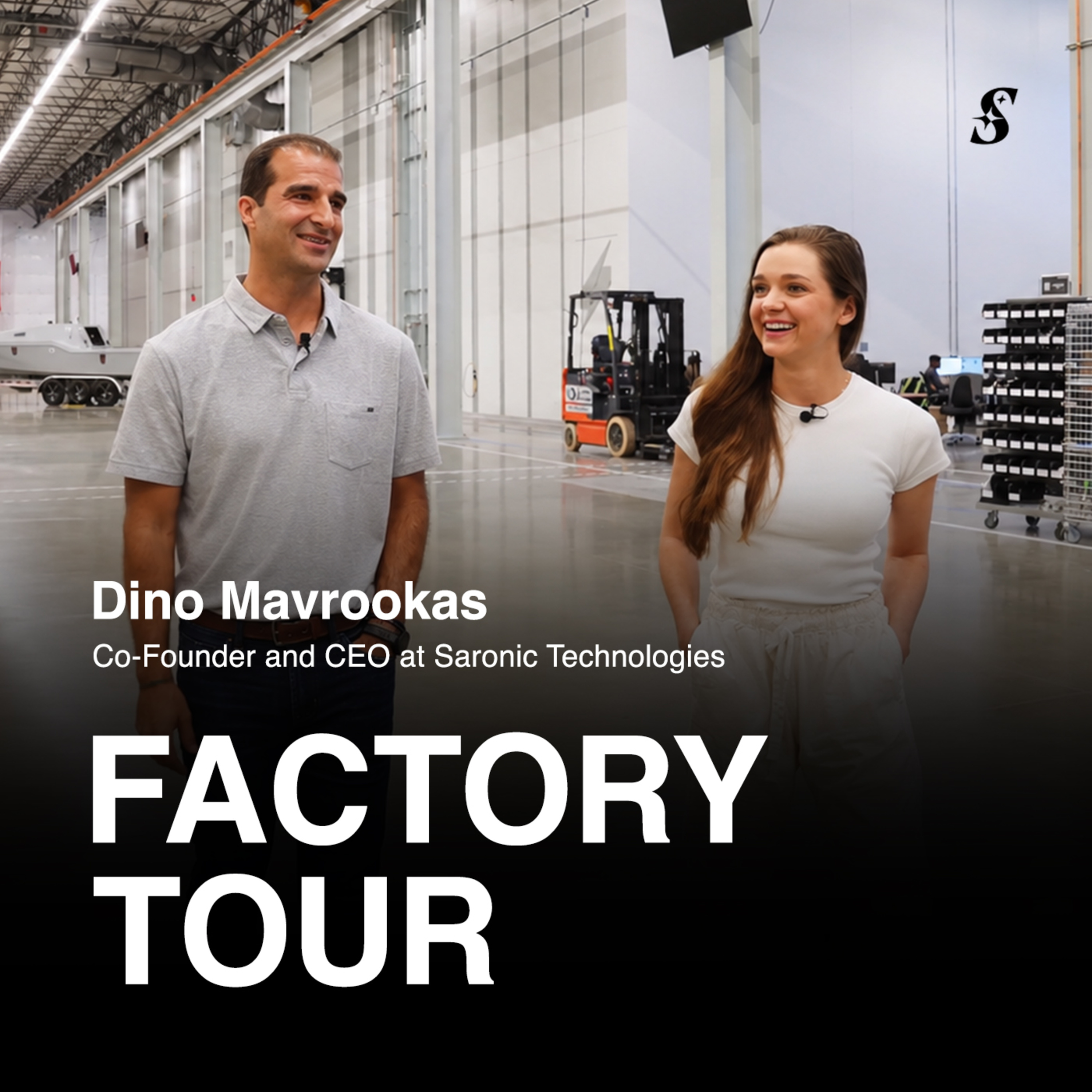
To accelerate development, Saronic built the entire internal propulsion and electronics stack in a room eight months before the actual ship was constructed. This allowed extensive software testing and iteration, solving problems long before the vessel ever hit the water.
Software companies struggle to build their own chips because their agile, sprint-based culture clashes with hardware development's demands. Chip design requires a "measure twice, cut once" mentality, as mistakes cost months and millions. This cultural mismatch is a primary reason for failure, even with immense resources.

Unlike software, hardware iteration is slow and costly. A better approach is to resist building immediately and instead spend the majority of time on deep problem discovery. This allows you to "one-shot" a much better first version, minimizing wasted cycles on flawed prototypes.

Unlike pure software, building software for a physical product imposes immovable deadlines dictated by hardware manufacturing and shipping lead times. This forces software teams to abandon flexible, continuous iteration in favor of a highly-focused, delivery-oriented mindset to ensure the software is ready when the hardware is.
Unlike software's daily compilations, hardware development allows only a few "compiles" (builds) in total. This necessitates a more conservative, upfront process focused on reliability and planning, as you can't ship over-the-air updates to fix physical products.

Boom Supersonic accelerates development by manufacturing its own parts. This shrinks the iteration cycle for a component like a turbine blade from 6-9 months (via an external supplier) to just 24 hours. This rapid feedback loop liberates engineers from "analysis paralysis" and allows them to move faster.

Hardware innovation culture is fundamentally different from software. Founders must be intrinsically motivated by the slow, deliberate, and expensive process of creating physical things. The reward is not quick iteration but conquering the immense difficulty of a process where mistakes are very costly.

Building custom components for early-stage prototypes is slow and expensive. A faster, more cost-effective approach is to buy existing commercial products that contain similar components, then scavenge those parts for your prototype. This enables rapid concept validation without investing in custom design and manufacturing.
