Get your free personalized podcast brief
We scan new podcasts and send you the top 5 insights daily.
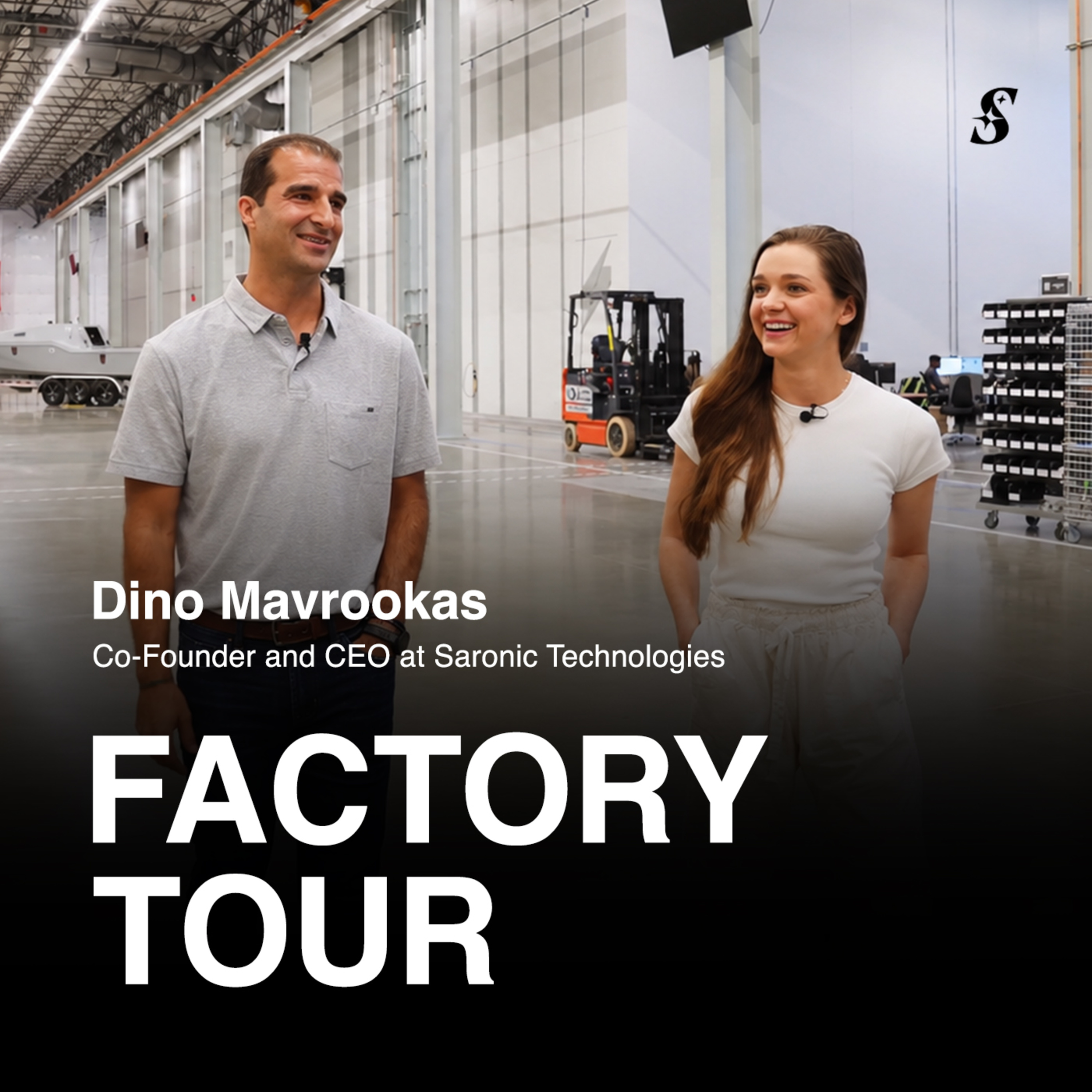
To accelerate development, Saronic's software team used a cheap plastic raft and off-the-shelf electronics to build and test their autonomy stack in parallel while the hardware team developed the first purpose-built vessel. This scrappy approach de-risked and sped up their path to a finished product.
Related Insights
Successful "American Dynamism" companies de-risk hardware development by initially using off-the-shelf commodity components. Their unique value comes from pairing this accessible hardware with sophisticated, proprietary software for AI, computer vision, and autonomy. This approach lowers capital intensity and accelerates time-to-market compared to traditional hardware manufacturing.

Autonomy enables a first-principles redesign of vessels. By eliminating the need for human crews, ships can be built with fundamentally less steel and fewer labor hours, drastically reducing costs and build times compared to traditional naval platforms.

The most significant expense in hardware development is the labor cost, not the physical materials, which can be sacrificed in testing. This insight, attributed to Elon Musk, justifies a "build, break, and iterate" approach to quickly get on the learning curve and reduce the cost of engineering hours.

Skydio uses its fleet of docked drones as a 24/7 autonomous testing rig. This creates a rapid feedback loop for hardware and software development, mirroring the CI/CD pipelines of software engineering but applied to physical systems operating in real-world conditions.

After a casual challenge from the Secretary of the Army, Applied Intuition retrofitted its autonomous systems onto an infantry vehicle in 10 days. This proves complex defense applications can be rapidly developed, directly challenging the notion that military innovation requires multi-year procurement cycles.
Saronic initially focused on building small, cost-effective autonomous boats (Corsair) to meet an immediate defense need. The success and capital from this initial product gave them the credibility and resources to tackle their larger, more audacious ambition: building massive shipyards to restore U.S. naval capacity.
Instead of using million-dollar aerospace computers, Zipline implements safety concepts like redundant flight computers by engineering solutions with components from the smartphone supply chain. This allows them to achieve comparable safety levels at a fraction of the cost and with much faster development cycles.

Spacium's co-founders built their first space payload in just 5 months by owning 98% of their testing process. This approach allows them to "test it until it breaks" and improve it immediately, creating a rapid iteration cycle that mimics software development and bypasses traditional hardware bottlenecks.

Building custom components for early-stage prototypes is slow and expensive. A faster, more cost-effective approach is to buy existing commercial products that contain similar components, then scavenge those parts for your prototype. This enables rapid concept validation without investing in custom design and manufacturing.

Startups building custom silicon for physical autonomy face immense capital costs. A staged approach can de-risk this by first developing and selling a hardware-agnostic software layer for model optimization. This generates early revenue, proves the market, and funds the gradual progression towards a full custom ASIC tape-out.
