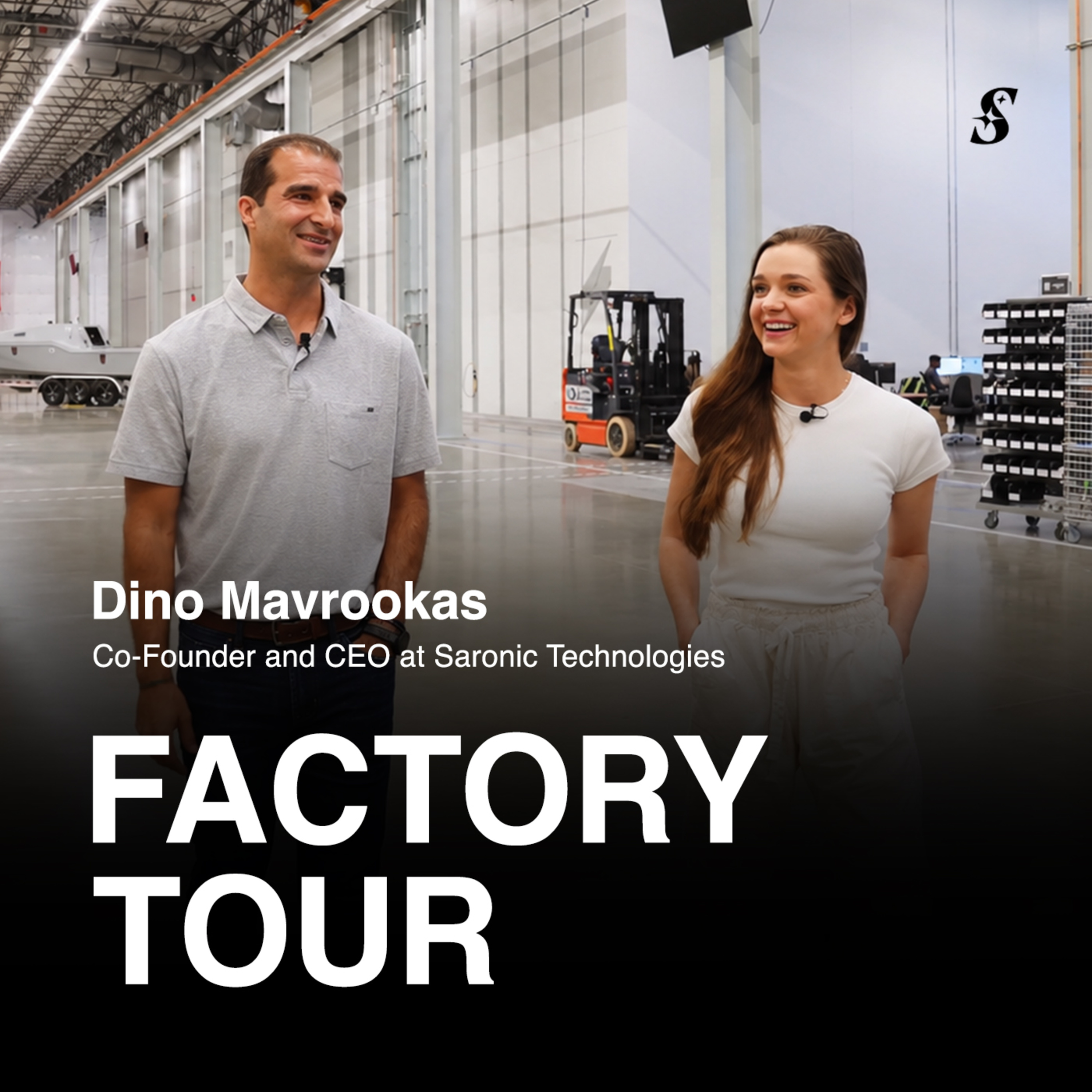
Saronic strategically based its headquarters in Austin, not a coastal city, to tap into a broader talent pool similar to auto manufacturing. The company correctly identified that access to people who could build complex systems at scale was a more significant constraint than proximity to the ocean.
Saronic focuses on a simple, linear production flow that acts as a replicable blueprint. This 'system that builds the system' allows them to quickly establish new manufacturing facilities in standard warehouses, enabling rapid scaling not just in the U.S. but also for international allies.
To accelerate development, Saronic's software team used a cheap plastic raft and off-the-shelf electronics to build and test their autonomy stack in parallel while the hardware team developed the first purpose-built vessel. This scrappy approach de-risked and sped up their path to a finished product.
Saronic initially focused on building small, cost-effective autonomous boats (Corsair) to meet an immediate defense need. The success and capital from this initial product gave them the credibility and resources to tackle their larger, more audacious ambition: building massive shipyards to restore U.S. naval capacity.
Instead of seeking a scarce, experienced workforce, Saronic designs ships for manufacturability. This counterintuitive approach allows them to train thousands of new workers, fundamentally solving the industry's talent bottleneck rather than just working around it and enabling a revitalization of the industrial base.
Saronic physically co-locates engineers with its production line, ensuring hardware designers can immediately solve problems that arise during manufacturing. This tight feedback loop, inspired by Tesla, eliminates the integration failures that commonly plague complex hardware projects combining hardware and software.