Get your free personalized podcast brief
We scan new podcasts and send you the top 5 insights daily.
The key lesson a factory-based business took from Y Combinator was to apply software scaling principles to the physical world. Instead of scaling by adding more people and machines, the focus is on scaling with code to automate quoting, inventory, and operations, reducing overhead.

Related Insights
Successful "American Dynamism" companies de-risk hardware development by initially using off-the-shelf commodity components. Their unique value comes from pairing this accessible hardware with sophisticated, proprietary software for AI, computer vision, and autonomy. This approach lowers capital intensity and accelerates time-to-market compared to traditional hardware manufacturing.

The most underrated factory improvement isn't complex automation, but "factory dumbing." This involves using software to make workflows so simple that technicians instinctively know where to go and what to do, maximizing human output before investing in expensive robotics.
Bootstrapped to over $100M in revenue, SendCutSend provides custom-machined parts. Its advantage isn't just cost, but speed and a simple software interface for engineers to upload designs—a focus on user experience that traditional manufacturing shops lack.

International expansion for hardware companies requires a fundamental shift in thinking. The challenge isn't just building a factory abroad, but creating a replicable production system that can operate without constant support from the core engineering team. The factory itself must become a product.

The most significant expense in hardware development is the labor cost, not the physical materials, which can be sacrificed in testing. This insight, attributed to Elon Musk, justifies a "build, break, and iterate" approach to quickly get on the learning curve and reduce the cost of engineering hours.

Exceptional results come from leverage, not harder work. Focus on mastering four key areas: Code (software, automation, AI), Content (repeatable processes, media), Capital (money), and Collaboration (people). These allow for small inputs to generate massive, scalable outputs.

As a company grows, its old operational systems and processes ('plumbing') become obsolete. True scaling is not about addition; it's about reinvention. This involves systematically removing outdated processes designed for a smaller scale and replacing them entirely.

Respona transitioned from pure service to a scalable "Service as Software" model. They started with fully manual delivery using Google Sheets, identified operational choke points as they grew, and then methodically built software to automate and streamline those specific bottlenecks, increasing margins and capacity.

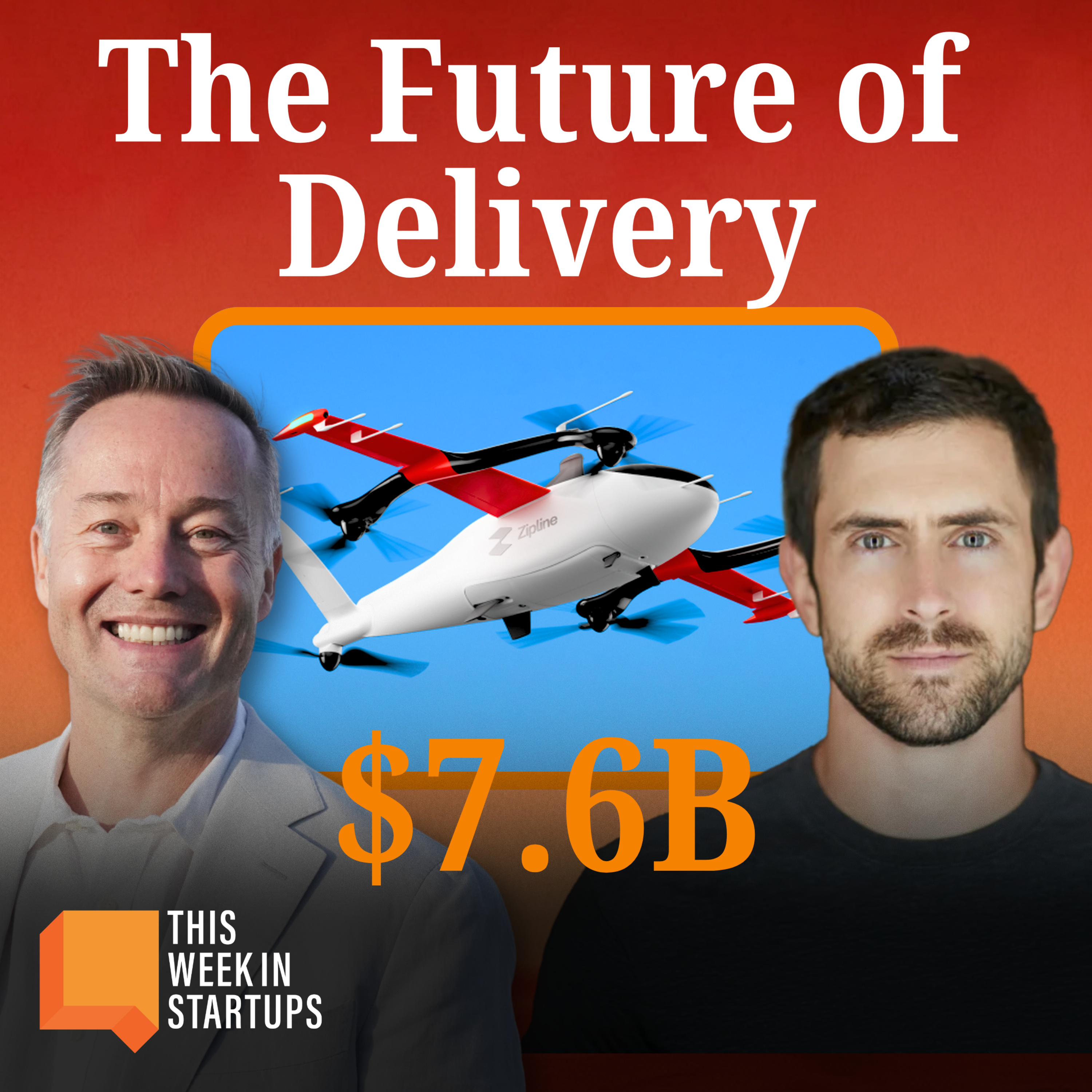
Zipline is quadrupling its factory to produce 20,000 drones annually, a necessity to service a 15% week-over-week growth curve. This highlights a unique hardware scaling challenge driven by software-like demand.
A startup's core function is to find one successful, repeatable customer 'case study' and then build a factory (pipeline, sales, delivery) to replicate it at scale. This manufacturing-based mental model prevents random acts of improvement and helps founders apply concepts like bottleneck theory to know exactly where to focus their efforts for maximum impact.
