Get your free personalized podcast brief
We scan new podcasts and send you the top 5 insights daily.
The most underrated factory improvement isn't complex automation, but "factory dumbing." This involves using software to make workflows so simple that technicians instinctively know where to go and what to do, maximizing human output before investing in expensive robotics.

Related Insights
Applying AI to an inefficient workflow with unnecessary approvals or handoffs won't solve the core problem. Teams must first optimize their manual processes to be efficient before looking to AI for automation. This ensures AI adds value rather than just automating existing flaws.

Many companies rush to automate messy processes, which only locks in inefficiency. Instead, learn and refine the process by doing it manually first, as early Amazon and DoorDash did. Only automate once the system is optimized, using technology to speed up good systems, not paper over bad ones.

To encourage employees to automate tasks, the process of creating the automation must be demonstrably easier and faster than performing the task manually. Otherwise, people will always default to the path of least resistance, which is the manual action.

The biggest gains from AI come not from automating steps in an existing process, but from starting with the desired outcome and co-creating a new workflow with AI. This "first principles" approach leverages AI's capabilities far more effectively than piecemeal automation.

Just as early electricity merely replaced steam engines in old factory layouts, the first wave of robotics just swapped a human for a robot. The new frontier is redesigning the entire factory from scratch with the primary goal of maximizing robot utilization, a fundamental shift that unlocks massive productivity gains.

Don't assume AI can effectively perform a task that doesn't already have a well-defined standard operating procedure (SOP). The best use of AI is to infuse efficiency into individual steps of an existing, successful manual process, rather than expecting it to complete the entire process on its own.
American Housing Corp's first factory was built for flexibility to iterate on the product, not for automated efficiency. They believe automation is the final step, implemented only after a process is validated and de-risked manually. Trying to automate an unproven process is a common and costly mistake.

Effective automation is not primarily a technological challenge but a cognitive one. The success of an automated system is limited by the clarity of the human minds that design it. Rushing to implement technology without first achieving a deep, clear understanding of the process and goals is a recipe for failure.

The most effective AI companies don't try to automate everything. They ask which specific, repetitive task creates the most value when partially automated. This pragmatic approach delivers measurable results by using AI to augment human workers, not replace them.
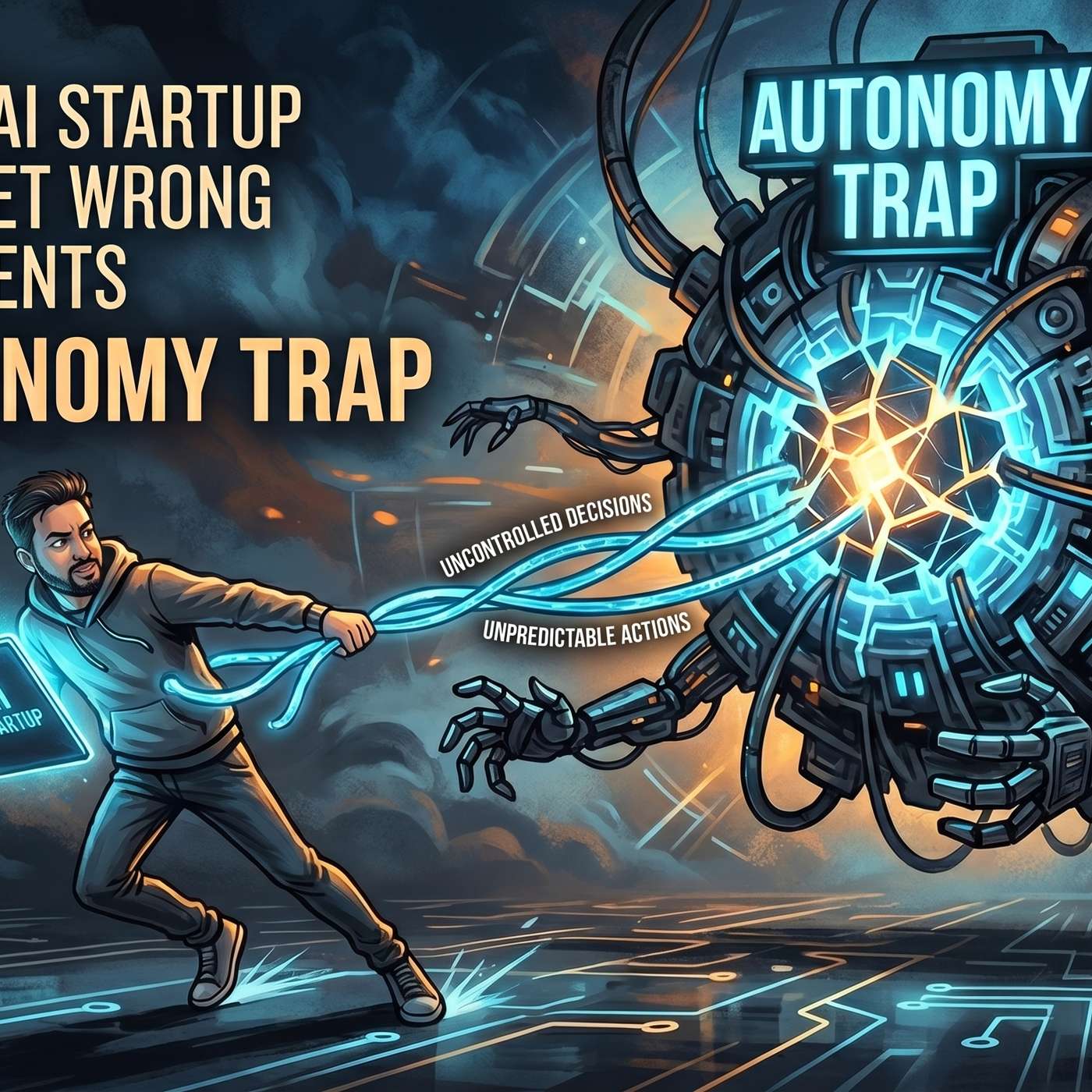
The most powerful automations are not complex agents but simple, predictable workflows that save time reliably. The goal is determinism; AI introduces a "black box" of uncertainty. Therefore, the highest ROI comes from extremely linear processes where "boring is beautiful" and predictability is guaranteed.
