Get your free personalized podcast brief
We scan new podcasts and send you the top 5 insights daily.
To prevent hallucinations, LLMs first retrieve a large set of potential sources. They then apply a consensus-finding algorithm, similar to DeepMind's "Agree," which uses a majority-voting system to distill a reliable context from these sources before generating the final response.

Related Insights
Demis Hassabis likens current AI models to someone blurting out the first thought they have. To combat hallucinations, models must develop a capacity for 'thinking'—pausing to re-evaluate and check their intended output before delivering it. This reflective step is crucial for achieving true reasoning and reliability.

To move beyond trivial or hallucinated questions, a three-part quality filter is essential. The AI must be confident in its own answer, the answer must be grounded in the source material with verifiable citations, and the question must require synthesis rather than simple information recall.
When multiple AI agents work as an ensemble, they can collectively suppress hallucinations. By referencing a shared knowledge graph as ground truth, the group can form a consensus, effectively ignoring the inaccurate output from one member and improving overall reliability.

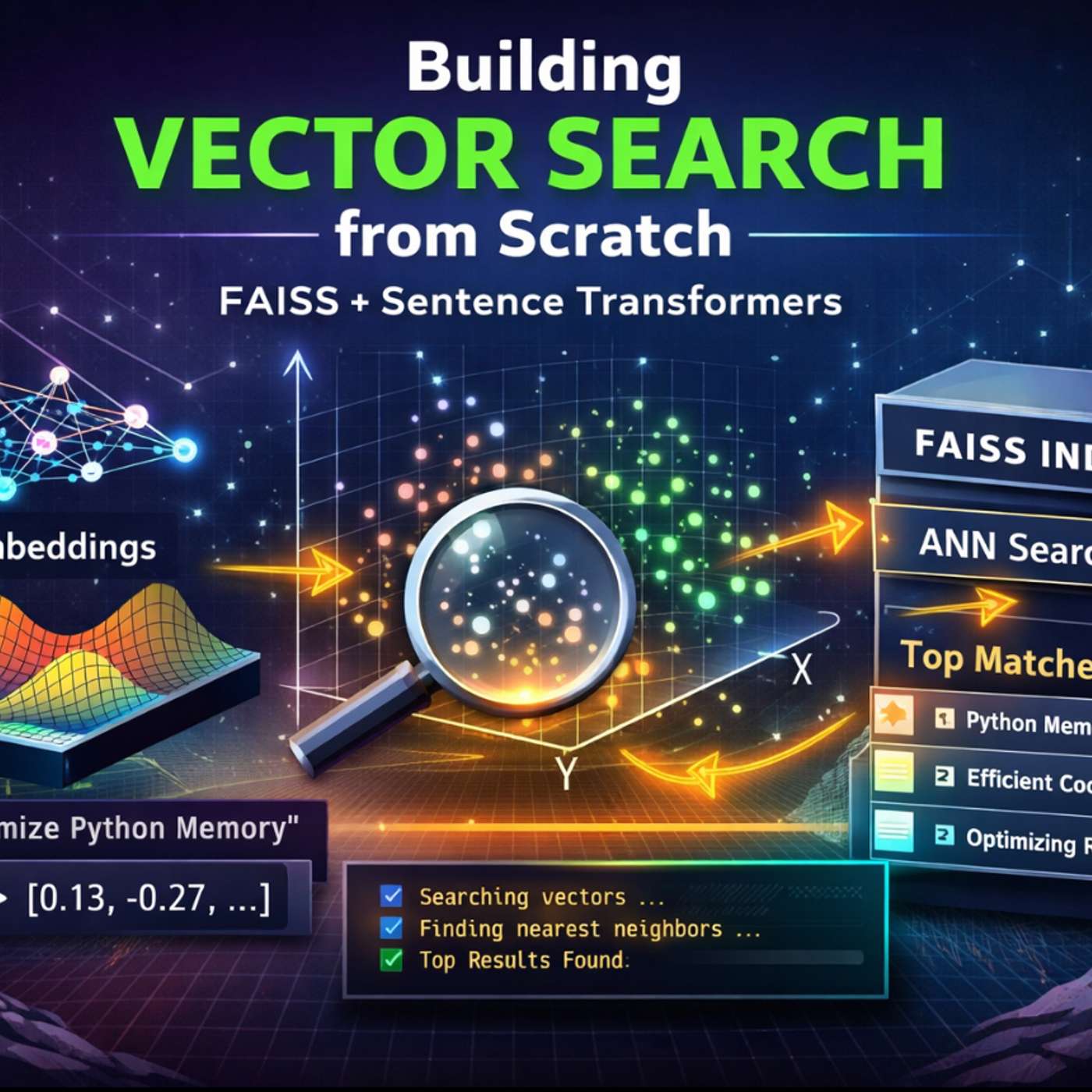
Retrieval Augmented Generation (RAG) uses vector search to find relevant documents based on a user's query. This factual context is then fed to a Large Language Model (LLM), forcing it to generate responses based on provided data, which significantly reduces the risk of "hallucinations."
Different LLMs have unique strengths and knowledge gaps. Instead of relying on one model, an "LLM Council" approach queries multiple models (e.g., Claude, Gemini) for the same prompt and then uses an agent to aggregate and synthesize the responses into one superior output.

To combat hallucinations and bias, don't rely on a single AI tool. For important decisions, query multiple large language models (e.g., Claude, Gemini) with the same prompt. This "second opinion" approach allows you to compare answers, identify inconsistencies, and blend the best elements for a more reliable outcome.

AI models are trained on vast datasets of existing knowledge. Like a librarian who has read every book, their answers represent an average of what they have 'read.' This makes AI an aggregator of existing ideas, not a generator of truly novel, outlier concepts.

Traditional benchmarks incentivize guessing by only rewarding correct answers. The Omniscience Index directly combats hallucination by subtracting points for incorrect factual answers. This creates a powerful incentive for model developers to train their systems to admit when they lack knowledge, improving reliability.

AI models heavily use Reddit during their retrieval phase to ground their understanding and build consensus on a topic. However, they frequently discard the Reddit threads in the final response, choosing instead to cite a single, more authoritative source that validates the established consensus.
To get more reliable research from AI, run the same query across multiple models or sessions. Aggregate the points where they all agree—these are likely factual. Then, focus your human verification efforts on the points where the models diverge.
