Get your free personalized podcast brief
We scan new podcasts and send you the top 5 insights daily.
The brain's "wanting" (dopamine) and "liking" (endorphins) systems are separate. Intense reinforcement of the wanting system can create a powerful craving for a person who no longer brings pleasure, explaining why people stay hung up on those who treat them badly or with whom there is no future.

Related Insights
Neuroscience shows pleasure and pain are co-located in the brain and work like a seesaw. When we experience pleasure, the brain immediately compensates by tilting towards pain to restore balance. This neurological 'come down' is why constant pleasure-seeking eventually leads to a state of chronic pain and craving.
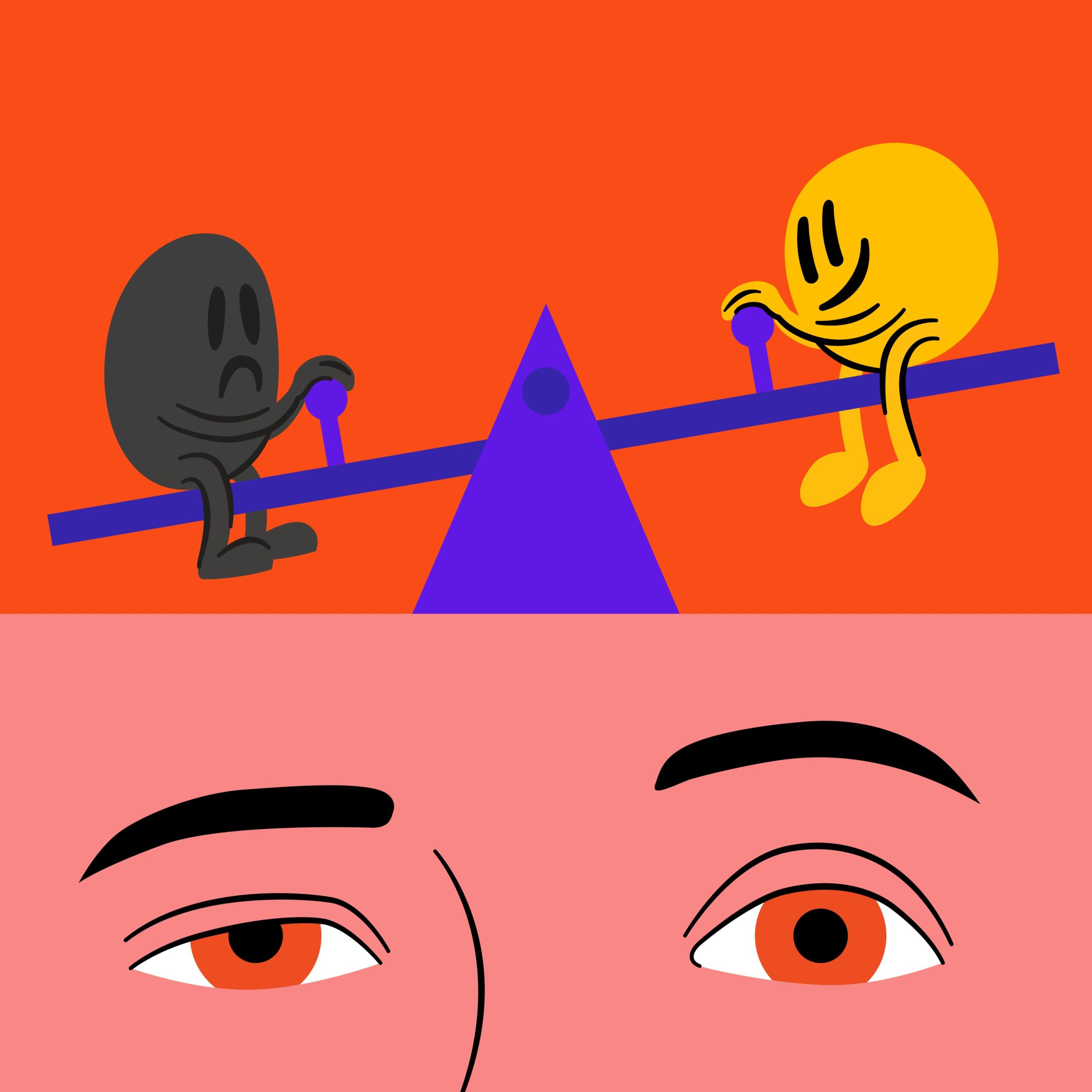
Dopamine is often misunderstood as a 'pleasure molecule.' Its more crucial role is in motivation—the drive to seek a reward. Experiments show rats without dopamine receptors enjoy food but won't move to get it, starving to death. This seeking behavior is often triggered by the brain's craving to escape a dopamine deficit state.
People with low self-esteem often only want partners who don't want them. If someone kind and available shows interest, their good judgment is questioned ('there must be something wrong with you'). Conversely, a disinterested person's rejection validates their negative self-view, making that person seem more valuable.

When someone says they're turned off by 'nice guys,' it often means their nervous system equates the feeling of love with a fight-or-flight response. Consistency and safety feel boring because they don't trigger the familiar anxiety and chase dynamic learned from past relationships or childhood.
While observing suffering typically activates empathy circuits, the brain's reward system activates if the person is perceived as a wrongdoer. This biological mechanism creates a powerful, lust-like desire to see punishment enacted, which psychologist Kathryn Paige Harden refers to as a "cruelty currency."

According to neuroscientist Tom Bellamy, the brain's dopamine reward system is most intensely activated by unpredictable rewards. This is why romantic uncertainty doesn't just cause anxiety; it actively strengthens desire and weakens self-control, driving infatuation into a state of "person addiction."
An obsessive attachment to another person is not about the qualities of that person (the "drug"). It is a symptom of deeper internal issues and traumas. The relationship is merely the mechanism you are using to cope with your own pain, creating a cycle of dependency.
Chaotic relationships are often mistaken for passion. They operate on a sympathetic nervous system level, driven by dopamine and cortisol. The 'highs' are just relief from anxiety, not genuine happiness. Healthy relationships are parasympathetic, fostering calm and safety through oxytocin and serotonin.
The feeling of dissatisfaction after achieving a major goal is a feature, not a bug. The brain's dopamine system is designed to keep you moving forward. If any single achievement—a partner, a food, a drug—were permanently satisfying, the drive to live and procreate would cease. The system ensures you always have another place to go.
The neurochemical for wanting (dopamine) is stronger than the one for liking (serotonin). This wiring creates the "arrival fallacy," where we perpetually chase achievements, mistakenly believing external validation will provide lasting fulfillment, which it is neurochemically unequipped to do.
