Get your free personalized podcast brief
We scan new podcasts and send you the top 5 insights daily.
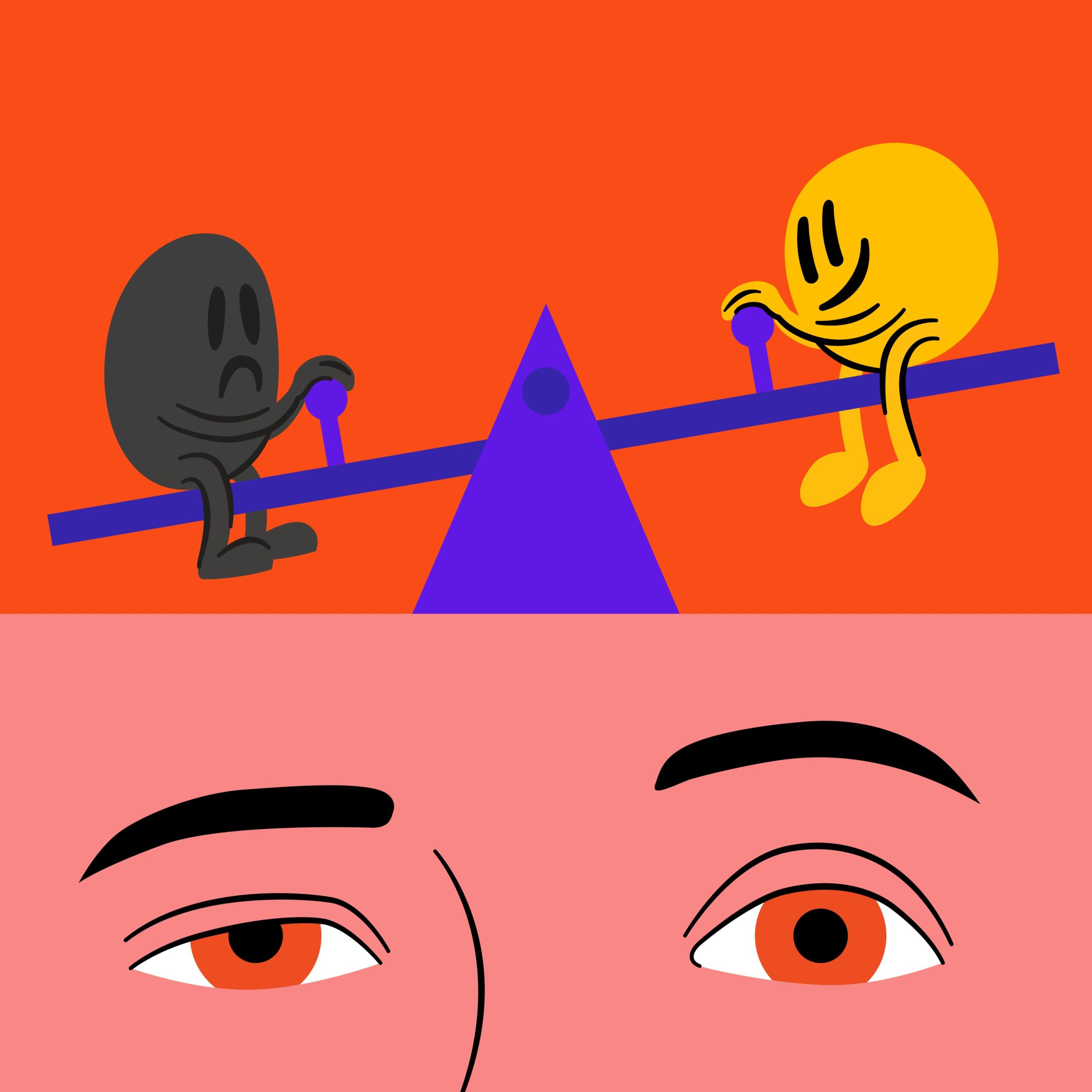
Neuroscience shows pleasure and pain are co-located in the brain and work like a seesaw. When we experience pleasure, the brain immediately compensates by tilting towards pain to restore balance. This neurological 'come down' is why constant pleasure-seeking eventually leads to a state of chronic pain and craving.
Related Insights
Modern society turns normal behaviors like eating or gaming into potent drugs by manipulating four factors: making them infinitely available (quantity/access), more intense (potency), and constantly new (novelty). This framework explains how behavioral addictions are engineered, hijacking the brain’s reward pathways just like chemical substances.
The jarring transition from a high-stress state to a relaxed one can be so uncomfortable that people subconsciously choose to remain in a state of low-grade, constant stress. This psychological principle, "contrast avoidance theory," explains why it feels so difficult to switch off. Recognizing this discomfort as a temporary transitional phase is key to breaking the cycle.

Instead of medicating or ignoring symptoms like fatigue or mood swings, view them as your body's way of signaling an underlying issue. By treating symptoms as messages, you can focus on the root cause (like glucose spikes), which makes the 'messages' disappear.

Dopamine is often misunderstood as a 'pleasure molecule.' Its more crucial role is in motivation—the drive to seek a reward. Experiments show rats without dopamine receptors enjoy food but won't move to get it, starving to death. This seeking behavior is often triggered by the brain's craving to escape a dopamine deficit state.
Alcohol temporarily reduces anxiety by boosting the neurotransmitter GABA. However, the brain overcompensates by converting GABA into glutamate, an excitatory neurotransmitter. This rebound effect leaves you more anxious than before, creating a self-perpetuating cycle of self-medication.

Psychiatrist Anna Lemke links rising rates of depression and anxiety in the world's richest nations to the overstimulation of our dopamine pathways. Constant access to high-pleasure foods, entertainment, and products creates a chronic dopamine deficit state, leaving people unhappier, more irritable, and unable to enjoy simple pleasures.
Addiction isn't defined by the pursuit of pleasure. It's the point at which a behavior, which may have started for rational reasons, hijacks the brain’s reward pathway and becomes compulsive. The defining characteristic is the inability to stop even when the behavior no longer provides pleasure and begins causing negative consequences.
Constantly bombarding our reward pathways causes the brain to permanently weigh down the 'pain' side of its pleasure-pain balance. This alters our baseline mood, or 'hedonic set point,' meaning we eventually need our substance or behavior not to get high, but simply to escape a state of withdrawal and feel normal.
The crash following a glucose spike activates the brain's craving center. This is a physiological command, not a lack of willpower. Stabilizing glucose levels eliminates the biological trigger for intense cravings, making them naturally disappear.
Resolutions often fail because a specific brain network, the "value system," calculates choices based on immediate, vivid rewards rather than distant, abstract benefits. This system heavily discounts the future, meaning the present pleasure of a milkshake will almost always outweigh the vague, far-off goal of better health, creating a constant internal conflict.