Get your free personalized podcast brief
We scan new podcasts and send you the top 5 insights daily.
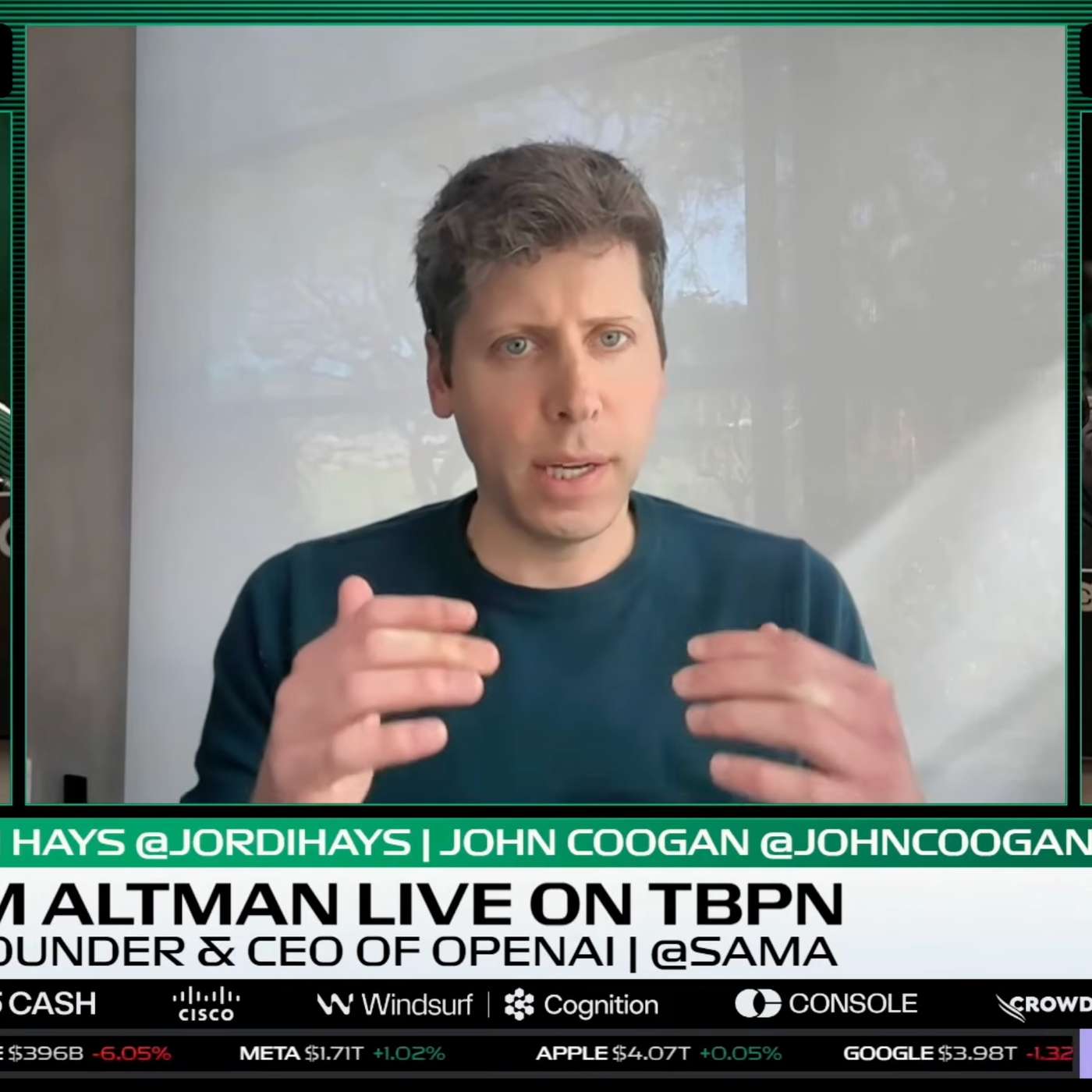
Altman predicts a volatile period for software, with both booms and sell-offs. The fundamental shift is that AI agents will interact with services via APIs, effectively turning every business into an API provider, whether they have a formal API strategy or not.
Related Insights
The next generation of software may lack traditional user interfaces. Instead, they will be 'API-first' or 'agent-first,' integrating directly into existing workflows like Slack or email. Software will increasingly 'visit the user' rather than requiring the user to visit a dashboard.

Ubiquitous local AI agents that can script any service and reverse-engineer APIs fundamentally threaten the SaaS recurring revenue model. If software lock-in becomes impossible, business models may shift back to selling expensive, open hardware as a one-time asset, a return to the "shrink wrap" era.

AI is making core software functionality nearly free, creating an existential crisis for traditional SaaS companies. The old model of 90%+ gross margins is disappearing. The future will be dominated by a few large AI players with lower margins, alongside a strategic shift towards monetizing high-value services.

Turing's CEO claims SaaS is dead for two reasons. First, powerful foundation models drastically lower the cost of building custom software internally. Second, existing SaaS products are built for human interaction via GUIs, not for AI agents that will increasingly use APIs and tool-calling functions directly.

Ben Thompson's analysis suggests the era of siloed SaaS growth is over. With AI enabling infinite software creation, companies will be forced to attack adjacent business functions to grow. This shifts the market from collaborative expansion to a competitive battle for existing customer spend, with AI model providers as the key "arms dealers."

Value in the AI stack will concentrate at the infrastructure layer (e.g., chips) and the horizontal application layer. The "middle layer" of vertical SaaS companies, whose value is primarily encoded business logic, is at risk of being commoditized by powerful, general AI agents.

Wall Street believes AI is 'eating' software, causing stocks for giants like Salesforce and Oracle to plummet. AI tools like Anthropic's Claude Code, which can create software from simple prompts, threaten to undercut the value proposition of traditional Software-as-a-Service (SaaS) companies by democratizing and simplifying software creation.

The fundamental shift from AI isn't about replacing foundational model companies like OpenAI. Instead, AI creates a new technological substrate—productized intelligence—that will engender an entirely new breed of software companies, marking the end of the traditional SaaS playbook.
To succeed in the AI era, SaaS companies cannot just add AI features. They must undergo a 'brutal' transformation, changing everything from their org chart and GTM strategy to their core metrics and pricing model. This is a non-negotiable, foundational shift.
A 'tale of two cities' exists in SaaS. Traditional software budgets are frozen, with spending eaten by price hikes from incumbents. Simultaneously, new, separate AI budgets are creating massive opportunities, making the market feel dead for classic SaaS but booming for AI-native solutions.