Get your free personalized podcast brief
We scan new podcasts and send you the top 5 insights daily.
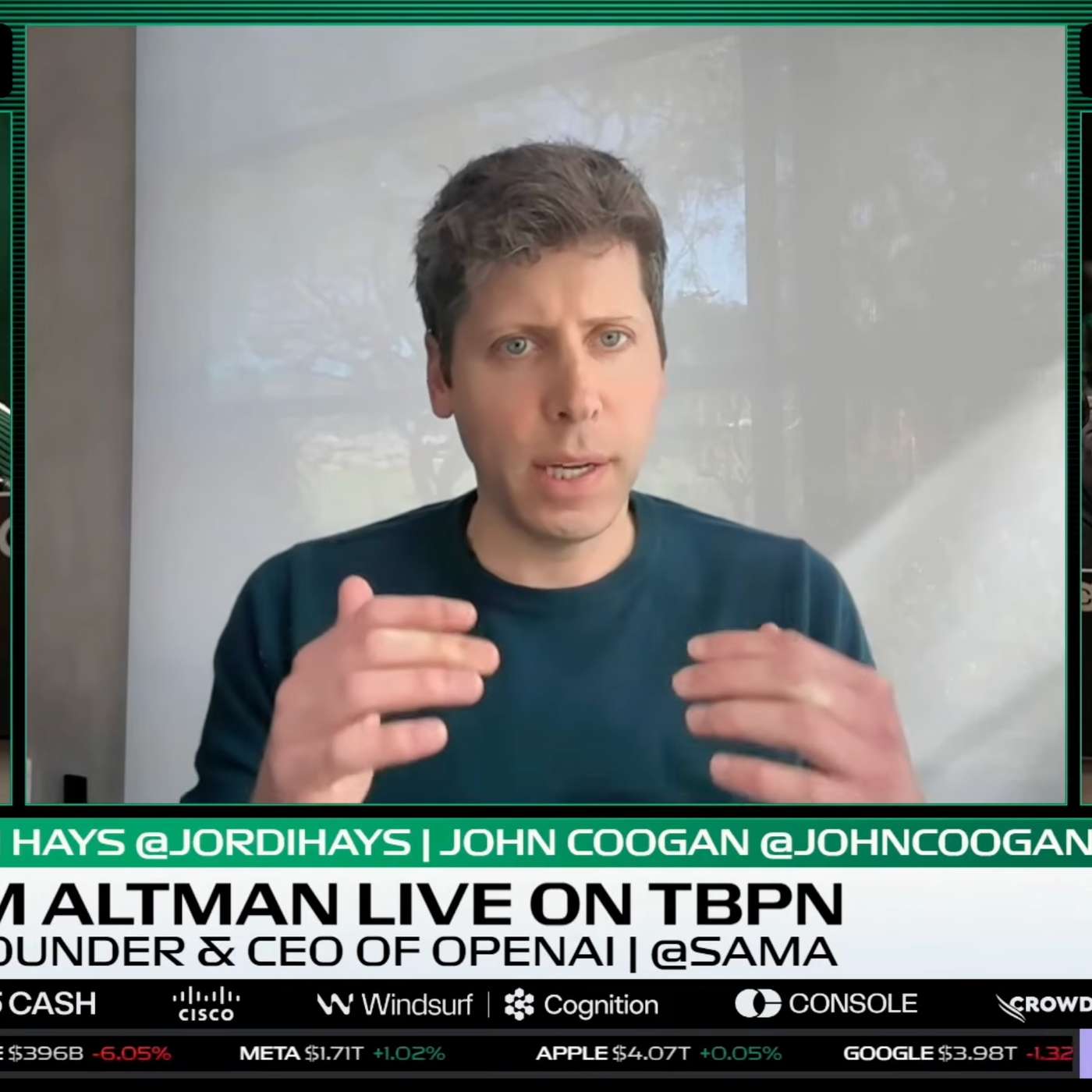
Sam Altman observes an asymmetry in AI-generated media: users love creating personalized content with tools like Sora, but show little interest in consuming AI content made by others. This creator-consumer gap is a key hurdle for generative AI as a mainstream entertainment medium.
Related Insights
Generative AI tools like OpenAI's Sora face a huge hurdle in becoming content consumption platforms. Users inherently want to post their creations where the audience already exists (TikTok, Instagram, X), making it incredibly difficult for a new, single-tool platform to gain critical mass.

The backlash to Meta's AI video feed "Vibes" stemmed from its impersonal, generic content. This contrasts with ChatGPT's viral "Studio Ghibli" filter, which succeeded by letting users apply an AI aesthetic to their own photos. Successful consumer AI must empower self-expression, not just serve curated assets.
Users despise AI "slop" but admire the "farmer" who creates. This paradox highlights a tension: is an AI content creator still a noble artisan, or just a purveyor of low-quality feed for the masses? The value of "craft" is being re-evaluated.
AI video tools like Sora optimize for high production value, but popular internet content often succeeds due to its message and authenticity, not its polish. The assumption that better visuals create better engagement is a risky product bet, as it iterates on an axis that users may not value.

Ben Thompson argues that ChatGPT succeeded because the creator was also the consumer, receiving immediate, personalized value. In contrast, AI video is created for an audience. He questions whether Sora's easily-made content is compelling enough for anyone other than the creator to watch, posing a major consumption hurdle.
Sam Altman argues the AI vs. human content debate is a false dichotomy. The dominant creative form will be a hybrid where humans use AI as a tool. Consumers will ultimately judge content on its quality and originality ('is it slop?'), not on its method of creation.

Platforms like Sora 2 struggle to retain users as social destinations. The core driver of social networks—the status game tied to authentic, personal representation—is lost when content is known to be AI-generated. These apps function as powerful creator tools for existing platforms, not as new social graphs.

Many users of generative AI tools like Suno and Midjourney are creating content for their own enjoyment, not for professional use. This reveals a 'creation as entertainment' consumer behavior, distinct from the traditional focus on productivity or job displacement.

Unlike traditional social media's 1% creator rule, OpenAI's Sora sees 70% of its users actively creating content. This makes the platform a "lean-forward" experience, more akin to an immersive video game than a passive "lean-back" feed like Instagram.
Platforms like Sora represent a new phase where content is generated on the fly, tailored to maximize individual user attention. This devalues the role of human creators, as platforms no longer depend on them to fill their content catalogs, fundamentally altering the media landscape.