Get your free personalized podcast brief
We scan new podcasts and send you the top 5 insights daily.
Snyder argues that modern democratic backsliding stems from lingering imperial habits. Historically, European empires applied rights to an internal group while exploiting an out-group. For former expanding powers like the United States, maintaining a viable republic requires moving past the instinct to create internal tiers of citizenship, mass incarceration, or disenfranchisement, and instead embracing universal rights; otherwise, societies risk sliding back into oligarchy or imperial collapse.

Related Insights
Appreciation for liberal democracy is not innate; it's forged by experiencing or remembering life under oppressive regimes. As generations pass without this memory, the system's benefits are taken for granted and its flaws are magnified, making it vulnerable to critique.

Liberal democracy is a relatively recent and fragile experiment. For most of human history, societies have been organized under autocratic rule like monarchies or warlords. The US founders studied the fall of Rome and Athens, aware of this fragility.

In conceptualizing 'superpower suicide,' Snyder argues that leaders undermining American democratic institutions view the Soviet collapse as an inspirational template rather than a warning. Aspiring oligarchs who depend on state power to acquire personal wealth see the end of the Soviet Union as a moment where a few individuals broke public systems to seize resources. This mindset drives policies aimed at breaking down national institutions for personal gain.
For decades, the US served as the aspirational model for liberal democracy. Its current internal political turmoil signals that the model is flawed, giving credibility to authoritarian alternatives and fueling global pessimism about democracy's future.
The failure of Western nation-building highlights a key principle: establishing durable institutions must precede the promotion of democratic ideals. Without strong institutional frameworks for order, ideals like "freedom" can lead to chaos. America’s own success was built on inherited institutions, a luxury many developing nations lack, making the export of democracy exceptionally difficult.
The contemporary threat to democracy isn't a violent overthrow. It's a gradual erosion of neutral institutions like courts, media, and electoral commissions by leaders who were democratically elected, a model pioneered by Hungary's Viktor Orbán.
Governments originate from a collective need to organize and control violence for defense. However, this very concentration of power is predisposed to become oppressive, reflecting a cyclical pattern in human history where freedom is lost to tyranny, regained, and then threatened once again.

Like the Roman Empire after defeating Carthage, the US lacks a major external enemy, risking its aggressive energy turning inward. Having no external threat to unite against, internal divisions over wealth and power can escalate into civil strife, a historical pattern for dominant powers that achieve total victory.

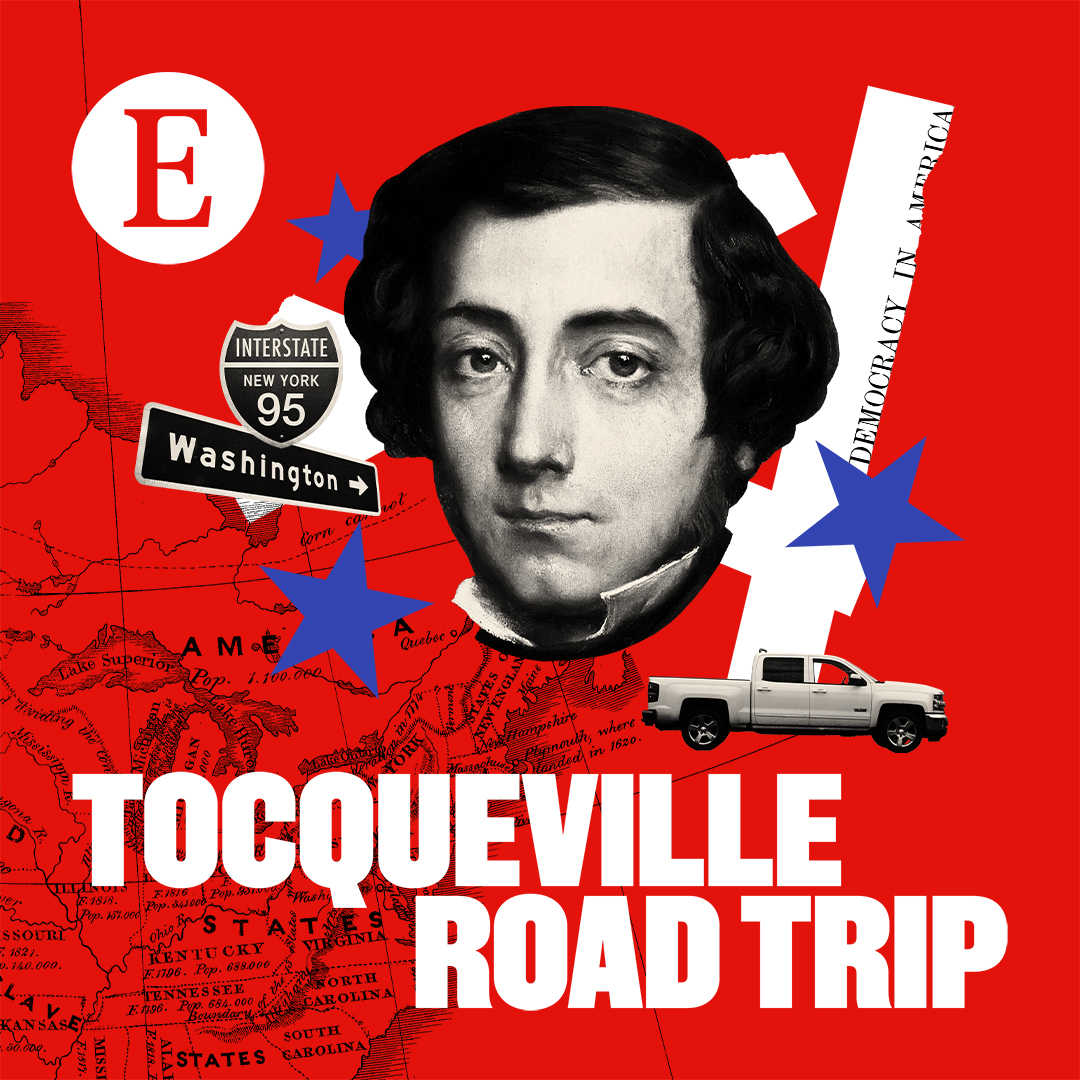
Tocqueville saw America as a novel society where citizens, not kings, made the rules. Today, this foundational principle is under fire from a wide spectrum of its own people—from political operatives proud of defying the government to citizens who feel the system has failed them.
The US was structured as a republic, not a pure democracy, to protect minority rights from being overridden by the majority. Mechanisms like the Electoral College, appointed senators, and constitutional limits on federal power were intentionally undemocratic to prevent what the founders called "mobocracy."