Get your free personalized podcast brief
We scan new podcasts and send you the top 5 insights daily.
The future of patient interaction involves personal AI assistants (like Siri) managing healthcare tasks. A patient will tell their phone's AI to refill a prescription, which will then communicate directly with the pharmacy's AI to process the request, schedule pickup, and even navigate dependencies like renewing a doctor's visit.
Related Insights
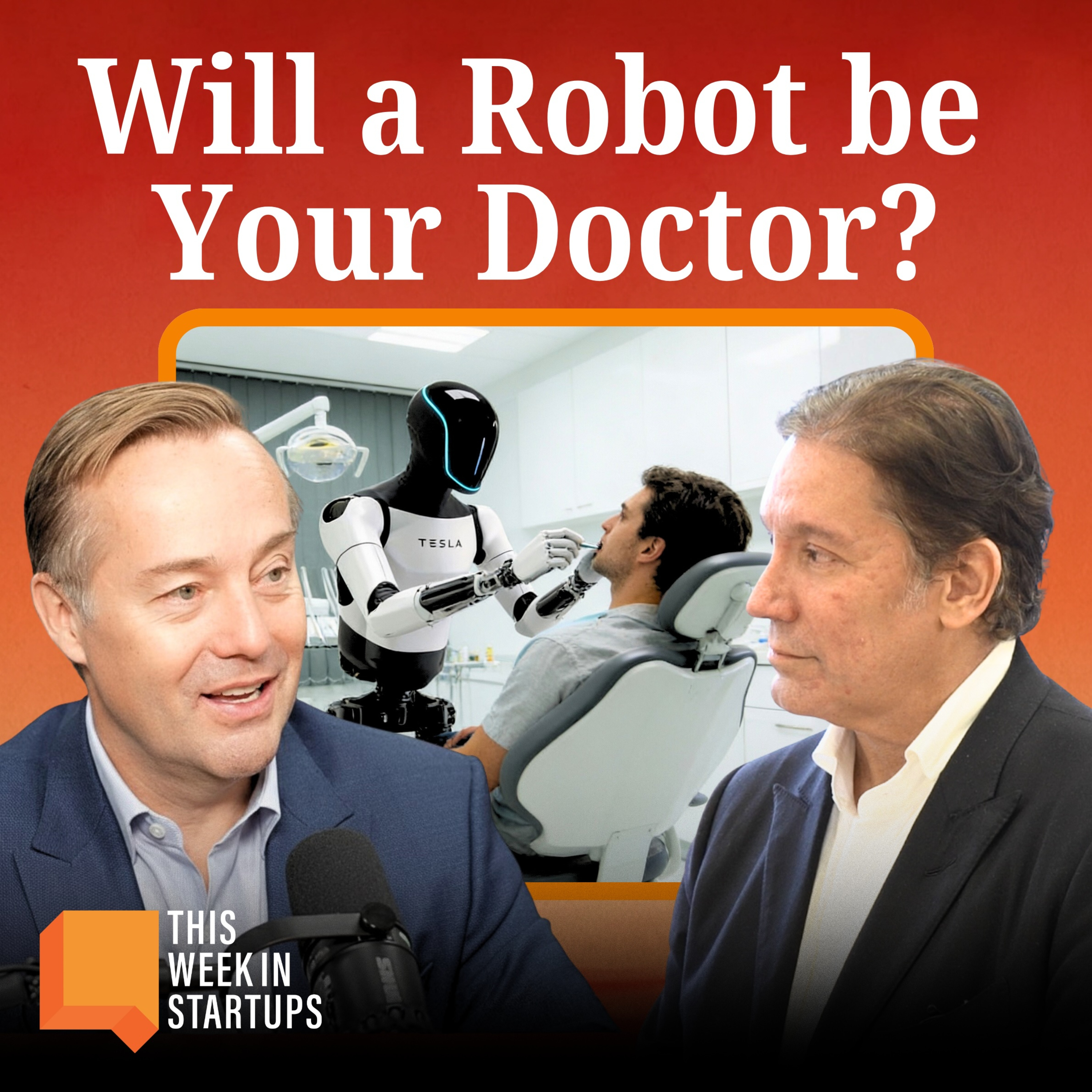
The future of healthcare will see AI handling initial patient consultations, effectively becoming the primary care doctor. This will streamline the process, sending patients directly to specialized clinics for diagnostic tests, bypassing traditional, inefficient doctor visits.
A single, context-aware AI assistant with access to various APIs will replace dozens of specialized apps for tasks like fitness tracking, to-do lists, or flight check-ins. Users will interact conversationally with their assistant, rendering most single-purpose apps redundant.

The next evolution in personalized medicine will be interoperability between personal and clinical AIs. A patient's AI, rich with daily context, will interface with their doctor's AI, trained on clinical data, to create a shared understanding before the human consultation begins.
Simple text reminders for medication adherence are common. The real opportunity is using two-way, AI-powered texting to create conversations that uncover the specific reasons (out of over 250 identified) why a patient might stop taking their medication, allowing for timely and personalized interventions.
The most significant opportunity for AI in healthcare lies not in optimizing existing software, but in automating 'net new' areas that once required human judgment. Functions like patient engagement, scheduling, and symptom triage are seeing explosive growth as AI steps into roles previously held only by staff.

The friction of navigating insurance and pharmacies is so high that chronic disease patients often give up, skipping tests or medications and directly worsening their health. AI can automate these tedious tasks, removing the barriers that lead to non-compliance and poor health outcomes.

An effective AI strategy in healthcare is not limited to consumer-facing assistants. A critical focus is building tools to augment the clinicians themselves. An AI 'assistant' for doctors to surface information and guide decisions scales expertise and improves care quality from the inside out.

The widespread use of AI for health queries is set to change doctor visits. Patients will increasingly arrive with AI-generated analyses of their lab results and symptoms, turning appointments into a three-way consultation between the patient, the doctor, and the AI's findings, potentially improving diagnostic efficiency.

Chronic disease patients face a cascade of interconnected problems: pre-authorizations, pharmacy stockouts, and incomprehensible insurance rules. AI's potential lies in acting as an intelligent agent to navigate this complex, fragmented system on behalf of the patient, reducing waste and improving outcomes.
AI assistants can democratize medical knowledge for patients. By processing personal health data and doctor's notes, these tools can explain complex conditions in simple terms and suggest specific questions to ask medical professionals, improving collaboration.